
Flooded Basement Restoration in Canton
Water in the basement never waits for a convenient moment. A pipe bursts, a drain backs up, or rain pushes groundwater through cracks. Suddenly, the space you count on for storage or living turns into a mess. Once water gets in, it spreads quickly, soaking walls, floors, and anything in its path. Mold and rot don’t take long to follow, and many Canton homeowners know how quickly things can escalate.
How We Spot Trouble Before It Spreads
Most basement water problems don’t start with a dramatic flood. Instead, they creep in quietly, leaving behind subtle signs that something’s wrong. Noticing these early makes all the difference, and we’ve seen firsthand how catching them quickly can save a basement from major repairs.
- Damp Spots on Walls or Floors: Discoloration, soft drywall, or persistent wet patches signal water is getting in and staying put.
- Musty Smells: That stale, earthy odor lingers even after cleaning, hinting at hidden moisture or mold.
- Visible Mold Growth: Dark spots or fuzzy patches show up on walls, ceilings, or near pipes. Clear evidence of ongoing moisture.
- Warped or Buckling Floors: Tiles lift, wood swells, or carpet stays damp, all pointing to water beneath the surface.
- Rust or Corrosion: Metal fixtures and appliances start to show wear from repeated moisture exposure.
These aren’t just cosmetic issues. Left alone, they lead to structural problems, health risks, and repair costs that climb fast. Many calls we get in Canton start with a homeowner noticing just one or two of these signs, and acting quickly keeps the damage contained.
Steps We Take When Water Hits
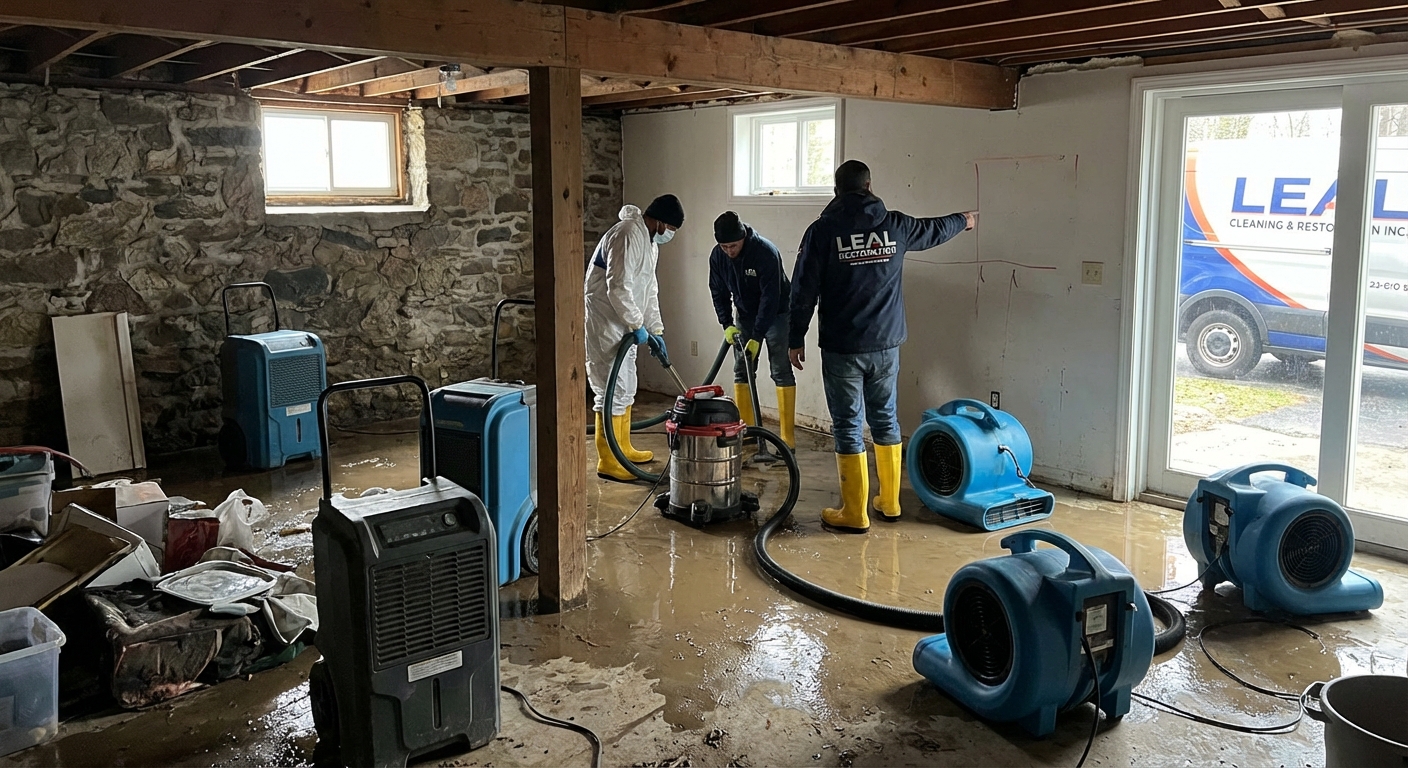
When water shows up, every minute counts. The first move is always to stop the source and protect what matters most. We move fast to limit the spread and start the cleanup before things get worse.
- Shut Off the Water: For burst pipes or broken lines, we turn off the main valve right away.
- Cut the Power: If water is near outlets or the electrical panel, we shut off power to the basement for safety.
- Move Valuables: Furniture, boxes, and anything that can be saved gets moved to higher ground immediately.
- Document the Damage: Photos and videos capture the water level and affected areas for insurance claims.
- Call Our Team: We bring in professional extraction, drying, and moisture control equipment, not just fans and towels.
Trying to dry out a basement with household tools leaves moisture trapped in walls, under floors, and inside insulation. We’ve opened up spaces that looked dry on the surface, only to find soaked materials underneath. That hidden water leads to mold and long-term damage if not handled right, especially in older Canton homes where basements are more vulnerable.
Drying Out Every Inch
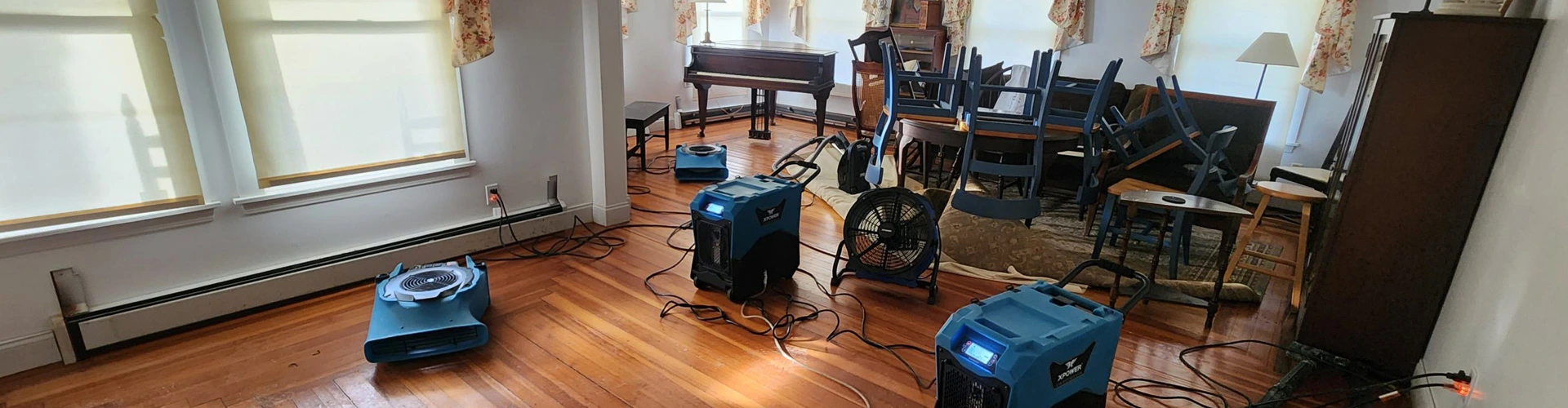
When water is gone, the real work begins. We use industrial pumps to clear standing water, then set up air movers and dehumidifiers to pull moisture from every surface. Moisture meters help us find water hiding behind baseboards, inside wall cavities, and under flooring. If insulation is wet, we remove it. Soft drywall gets cut away. Leaving anything damp behind guarantees mold will follow.
Thermal imaging cameras reveal cold spots where water lingers. Dehumidifiers run as long as needed, sometimes days, until humidity levels return to normal. We don’t leave until the basement is dry, stable, and ready for repairs. That’s the only way to make sure the space is safe to use again.
Sanitizing and Cleaning After Water Removal
Once the basement is dry, cleaning and sanitizing come next. Floodwater brings in dirt, bacteria, and contaminants. Even clean water from a pipe can pick up grime as it spreads. Every surface that got wet needs attention before the space is safe again.
- Antimicrobial Treatments: Applied to walls, floors, and framing to kill bacteria and stop mold from taking hold.
- HEPA Filtration: Air scrubbers clear out airborne spores and dust stirred up during cleanup.
- Odor Removal: Deodorizers and ozone treatments get rid of musty smells left behind by water damage.
- Surface Disinfection: Hard surfaces are wiped down with hospital-grade cleaners to remove any lingering contamination.
- Debris Removal: Damaged materials, soaked insulation, and anything unsalvageable are hauled out and disposed of properly.
We treat every flooded basement as if it’s contaminated until proven otherwise. That’s how we protect your health and make sure the space is truly ready for what comes next.
Restoring What Matters Most
After the water and debris are gone, repairs begin. Drywall, flooring, baseboards, trim, and insulation all need to be replaced. Electrical outlets and wiring get checked and fixed if they were underwater. Sump pumps and drainage systems often need upgrades to prevent another flood. Foundation cracks are sealed, and grading outside is corrected to keep water away for good. Our team has repaired countless basements throughout Canton, ensuring families can return to a safe, dry space.
We coordinate with trusted plumbers, electricians, and contractors to handle every step. Managing the process from start to finish means you’re not left guessing what comes next. Our focus is on fixing the damage and addressing the cause, so your basement stays dry and safe long after we leave.
Let's Get Your Basement Back
Flooding doesn't fix itself. The longer water sits, the worse the damage gets. Call Leal Cleaning & Restoration Inc. at 978-778-6676 or schedule an appointment to start the cleanup.