
Flooded Basement Restoration in Burlington
Water moves fast. One storm, a burst pipe, or a blocked drain can leave your basement underwater before you know it. Carpets soak up gallons. Drywall swells and crumbles. Boxes of keepsakes turn to pulp. The longer water sits, the more it destroys. Quick action isn’t just helpful—it’s the only way to keep damage from spreading, especially for Burlington homeowners facing unpredictable weather.
How We Pinpoint the Source of Basement Flooding
Flooding rarely comes with a warning. Sometimes it’s obvious—a failed sump pump or a pipe that gives out under pressure. Other times, water sneaks in through cracks you never noticed or from gutters that dump rain right next to your foundation. unpredictable storms, and yards that don’t always drain the way they should. Spring thaw brings melting snow, while summer storms can drop inches of rain in an hour. If your basement sits below grade or near a low spot, you’re already on the front line. Add in poor grading or a broken sewer line, and water finds its way inside.
What We Look for When Water Damage Spreads
Hidden water damage doesn’t announce itself with a flood siren. Instead, it lingers behind walls, under floors, and in the air you breathe. A musty odor that never fades, stains creeping up drywall, or paint that bubbles near the floor—these are all signs water is working where you can’t see. Even after the storm passes, damp carpet or warped flooring means trouble is brewing underneath.
- Warped or Buckling Floors: Wood and laminate swell and shift after soaking up moisture for too long.
- Mold Growth on Walls or Ceilings: Black or green spots show water has lingered long enough for spores to thrive.
- Rust on Metal Fixtures or Appliances: Corrosion sets in quickly when metal stays wet.
- Soft or Crumbling Drywall: Once drywall gets saturated, it loses strength and needs to be replaced.
- Standing Water or Puddles: Even small pools signal a bigger issue hiding below the surface.
Letting these signs go unchecked only drives up repair costs. Water seeps into insulation, weakens framing, and creates a perfect home for mold. Acting early keeps the damage contained, which is especially important for Burlington residents dealing with frequent storms.
Our Emergency Response for Basement Water Removal
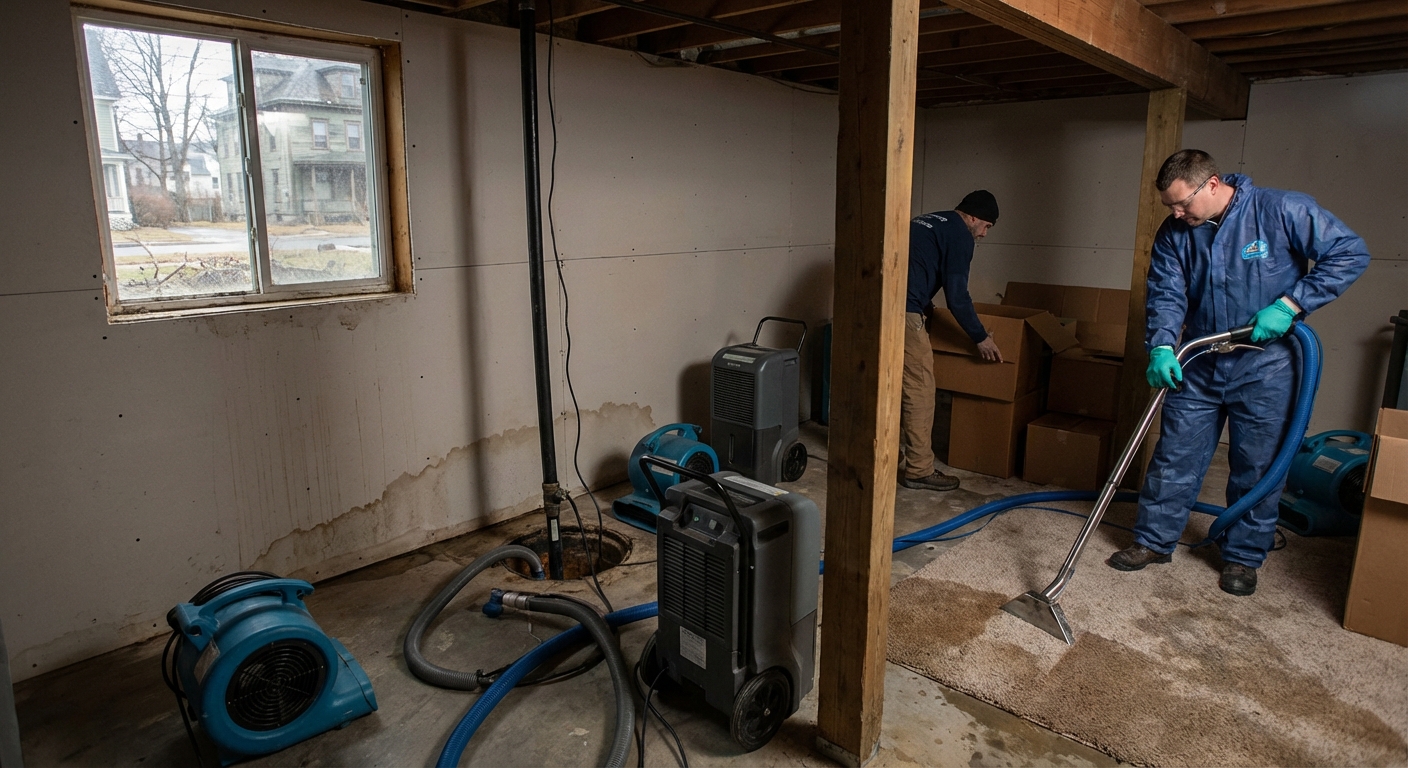
When water fills your basement, there’s no time to waste. We arrive with industrial pumps and extractors, pulling water from carpets, padding, and every hard surface. No guessing. No delays. We check under flooring, behind walls, and in crawl spaces to make sure nothing gets missed. The goal is simple: get your basement dry and safe as quickly as possible.
Drying Out Every Surface Before Repairs Begin
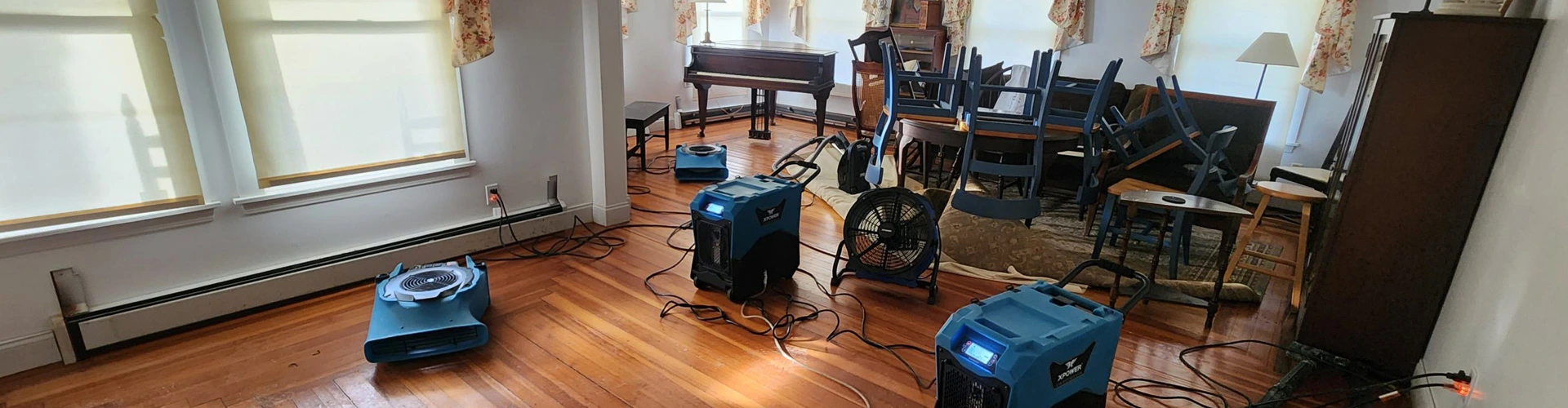
Once the water’s out, the real work starts. Wet drywall, studs, and insulation hold onto moisture long after the floor looks dry. That’s when mold takes hold and wood starts to rot. We bring in commercial dehumidifiers and air movers, targeting every surface until moisture readings show it’s safe to rebuild.
- Drywall and Insulation: These materials soak up water fast and often need forced air drying or replacement.
- Wood Framing and Studs: Structural wood warps or weakens if moisture lingers.
- Concrete Floors and Walls: Concrete holds water longer than most expect, so we extend drying time as needed.
- Carpet Padding and Subflooring: Padding rarely survives a flood, and subflooring needs thorough drying to prevent rot.
We monitor moisture levels throughout. Only when everything reads dry do we move forward. Skipping this step leads to bigger headaches down the road.
Restoring What Matters After the Water Is Gone
With the basement dry, we turn to restoration. Some materials can be saved with cleaning or refinishing. Others, like soaked drywall or carpet that sat in dirty water, need to be replaced. We sort through what’s salvageable and what’s not, working with you to make the right calls. Hardwood floors might need sanding. Furniture may need deep cleaning or disposal. Stored belongings—photos, books, keepsakes—get special attention, but not everything can be saved. Our team helps you rebuild, focusing on safety and getting your space back to normal. We’ve handled restorations for families throughout Burlington, always prioritizing a safe and thorough recovery.
How We Help Prevent Future Basement Floods
When the cleanup ends, prevention begins. We look for the root cause. Maybe a foundation cracks need sealing. Sometimes gutters need cleaning or extensions to keep water away from the house. Grading around the foundation might be sending water toward your basement instead of away. We recommend fixes that fit your home and budget, so you’re not facing the same mess next time.
- Sump Pump Installation or Upgrades: A reliable sump pump with backup power keeps water out during storms.
- Foundation Crack Sealing: Even small cracks let in water over time and need professional attention.
- Improved Drainage Systems: French drains and better grading move water away from your home’s foundation.
- Waterproof Coatings on Walls: Interior sealants add a layer of defense against seepage.
- Regular Maintenance Checks: Keeping gutters, downspouts, and drains clear stops surprise floods before they start.
Homes in Burlington see their share of heavy rain and aging pipes. One flood is enough to ruin a basement. Taking steps now means you’re not repeating the same cleanup every year.
Let's Get Your Basement Dry and Safe Again
Basement flooding doesn't fix itself. The faster you act, the less damage you'll face. Call Leal Cleaning & Restoration Inc. at 978-778-6676 or schedule an appointment to get started.