
Waltham Flooded Basement Restoration
Standing water in a basement never arrives with warning. It’s sudden—heavy rain, a pipe bursts, or snowmelt pushes water where it doesn’t belong. One moment, the floor is dry. The next, you’re facing inches of water and the clock is ticking. Flooded basement restoration isn’t just about removing water; it’s about stopping damage before it spreads and making sure your Waltham home stays solid.
How We Identify the Source of Basement Flooding
Every flooded basement tells a story, and the details matter. Sometimes the cause is obvious, like a failed sump pump or a pipe that gave out overnight. Other times, water creeps in through hairline cracks or backs up from a clogged sewer line. We look for the real reason water found its way inside, not just the symptoms on the surface.
- Heavy Rainfall and Drainage Issues: Water collects near the foundation when gutters overflow or the yard slopes the wrong way, then seeps through weak spots.
- Sump Pump Problems: A pump that stalls or loses power leaves water with nowhere to go during storms.
- Plumbing Failures: Pipes under pressure, old fittings, or frozen lines can break and flood a basement in minutes.
- Foundation Cracks: Even small gaps let groundwater push through, especially after long wet spells.
- Sewer Backups: Blocked lines or overwhelmed municipal systems send wastewater back into the lowest part of the house.
Pinpointing the source means you’re not just cleaning up. You’re stopping the next flood before it starts.
What We Do First When Water Hits
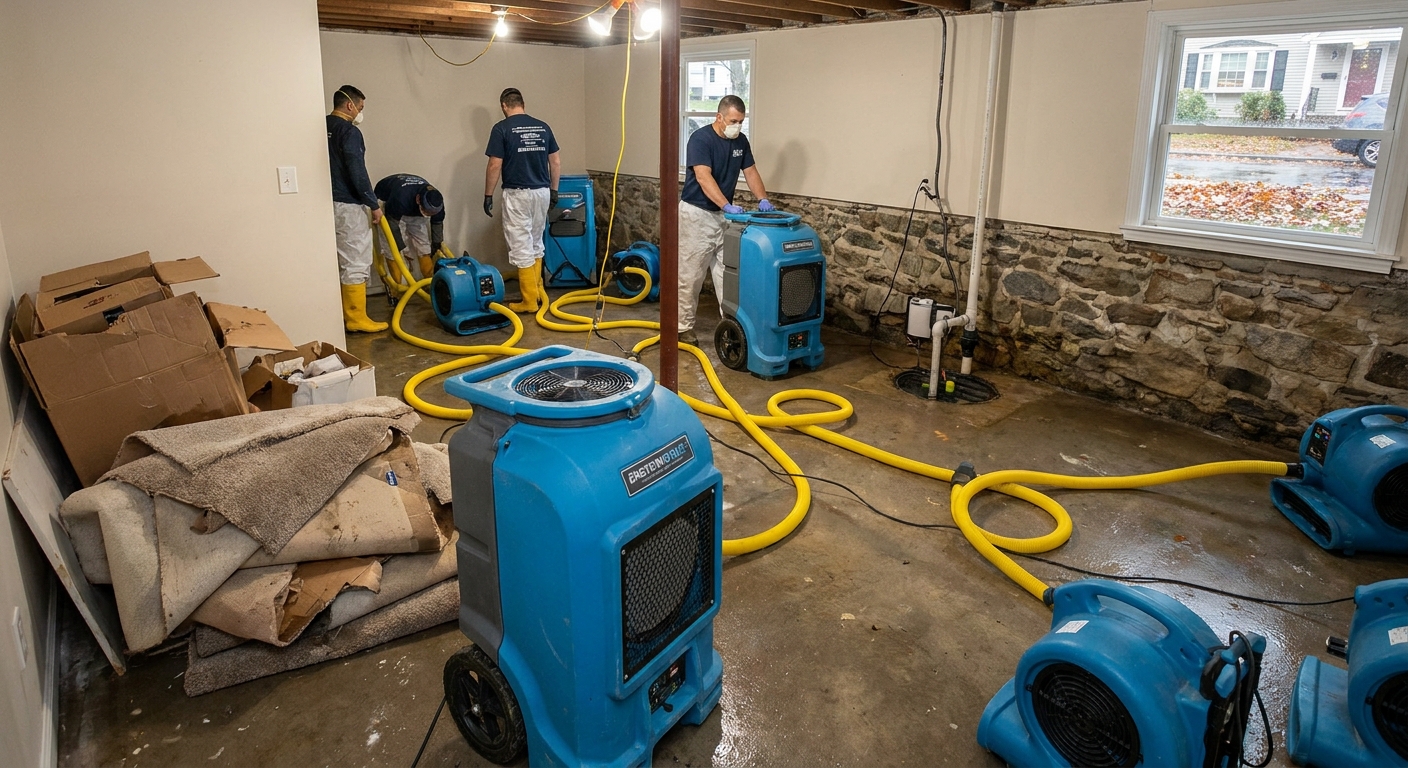
When water gets in, hesitation costs more than time. We move fast, but never recklessly. The first step is always safety. Electricity and water don’t mix, so we cut power to the basement before setting foot inside. Next, we track down the source and shut it off, whether that means closing a valve or checking the sump pump. Anything salvageable—furniture, boxes, electronics—comes out immediately to limit damage.
- Power Shutoff: Prevents electrical hazards before cleanup begins.
- Source Control: Stops more water from entering, whether it’s plumbing or storm runoff.
- Item Removal: Moves belongings upstairs to keep them dry and out of the way.
- Insurance Documentation: Photos and notes capture the damage for claims.
- Rapid Response: Our team arrives with extraction gear, ready to start work on the spot.
Every minute counts. We don’t waste time, and we don’t leave anything to chance.
How We Remove Water Without Harming Your Home
With the source contained, water extraction begins. Rushing this step risks more than a wet floor. Pulling water too quickly can stress foundation walls or force moisture into hidden spaces. We use industrial pumps and extractors, starting at the deepest point and working methodically toward drains. Removal speed is monitored to avoid sudden shifts that could crack concrete or push water into wall cavities.
Hidden water is a silent threat. We check under stairs, behind appliances, and in crawl spaces for pockets that standard cleanup misses. Leaving moisture behind guarantees future headaches. Mold, rot, and lingering odors. Our process covers every inch, not just the obvious puddles.
Drying and Restoring Every Surface
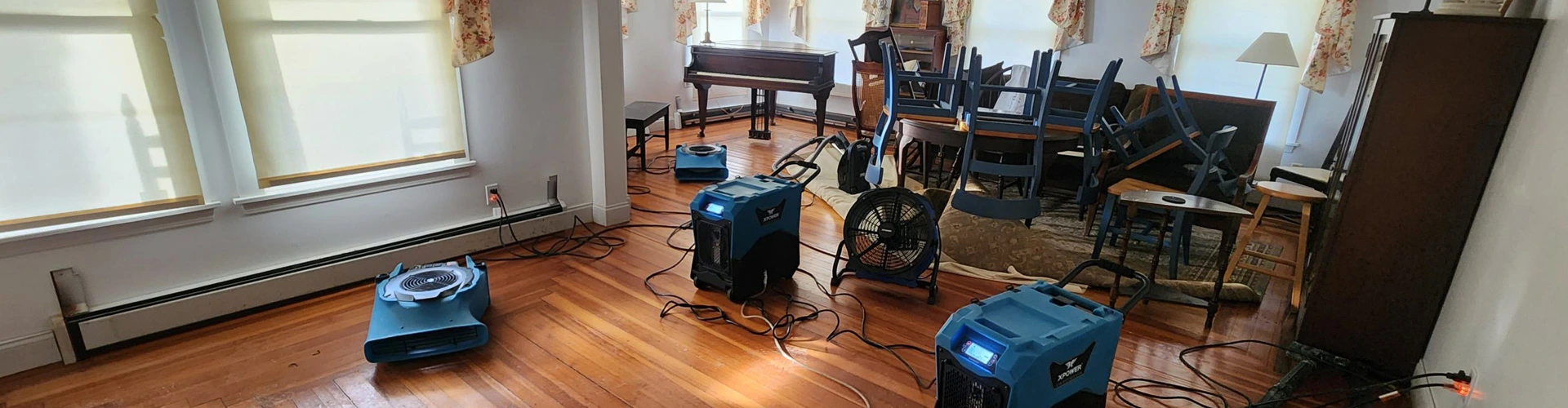
After water is gone, the real challenge begins. Wet drywall, insulation, and framing hold onto moisture long after the floor looks dry. We bring in air movers and commercial dehumidifiers, running them around the clock. Moisture meters track progress inside walls and floors, not just on the surface. If insulation is soaked, it comes out. There’s no shortcut here.
- Air Movers: Direct airflow across wet surfaces to speed up evaporation.
- Dehumidifiers: Pull moisture from the air, keeping humidity low and preventing reabsorption.
- Moisture Monitoring: Daily checks ensure every material reaches safe levels before rebuilding.
- Insulation Replacement: Removes what can’t be dried, stopping mold before it starts.
- Ventilation: Open windows or vents cycle out damp air and bring in fresh, dry air.
We don’t guess. Every step is measured, and we keep equipment running until the job is truly done.
How We Eliminate Odors and Hidden Contamination
Even after the water is gone, a musty smell can linger. That odor signals bacteria or mold hiding where you can’t see. We treat every surface with antimicrobial cleaners, focusing on floors, walls, and any area touched by contaminated water. If the smell persists, we inspect HVAC ducts and carpet padding. These are places that trap moisture and breed problems.
Air scrubbers with carbon filters run alongside drying equipment, pulling odor particles from the air. We don’t mask smells; we remove what causes them. Ignoring odor means missing the real issue, so we keep searching until the air is clean and the space is safe for your Waltham property.
How We Prevent Future Floods for Good
When the basement is dry and clean, prevention takes priority. Flooding once is a warning. Without real fixes, it can happen again. We walk the property, checking for foundation cracks, poor grading, or gutter systems that dump water too close to the house. Solutions are practical and specific to each home in Waltham.
- Foundation Sealing: Hydraulic cement or epoxy closes gaps that let water in during storms.
- Sump Pump Upgrades: Reliable pumps with battery backups keep water out, even when the power fails.
- Gutter Improvements: Redirecting downspouts away from the foundation keeps water from pooling near basement walls.
- Waterproofing Barriers: Interior or exterior coatings block moisture before it reaches living space.
- Drainage Corrections: Adjusting soil grade or adding drains moves water away from the house, not toward it.
We don’t offer one-size-fits-all fixes. Each solution matches the real risks your property faces, so you’re not left guessing or hoping for the best in Waltham.
Let's Get Your Basement Back
Water damage doesn't wait, and neither should you. Call Leal Cleaning & Restoration Inc. at 978-778-6676 or schedule an appointment to start your restoration.