
Flooded Basement Restoration in Topsfield
Water finds its way into basements when the ground outside can’t handle the load. On rural properties, grading often falls short, culverts clog, and heavy rain turns soil into a sponge. When runoff has nowhere to go, it settles in the lowest spot—your basement. We step in to remove the water, dry out every surface, and help you address the root of the problem so it doesn’t return, especially for homes throughout Topsfield.

How We Solve Drainage Issues That Cause Basement Flooding
Many older homes rest on land shaped long before anyone thought about modern drainage. Over time, ditches fill with debris, and downspouts dump water right at the foundation. Clay soil holds onto moisture, refusing to let it drain away. When storms roll through, these factors combine and basements pay the price.
In rural areas around Topsfield, there’s no municipal storm system to catch excess water. Runoff flows wherever gravity takes it, often straight toward homes with sloped driveways and unprotected foundations. We see these patterns every season and know how to spot the weak points that let water in. Our team doesn’t just clean up. We help you understand what’s happening outside so you can stop the cycle.
What We Look for When Checking for Hidden Water Damage
Flooding isn’t always obvious. Sometimes water creeps in quietly, hiding behind walls or soaking into insulation. You might not notice until drywall buckles or a musty smell lingers. We look for the subtle signs that point to trouble beneath the surface.
- Musty Odors: Persistent damp smells that linger even after airing out the basement.
- Stains on Walls or Floors: Discoloration near the base of walls or across concrete where water has pooled.
- Soft or Warped Baseboards: Wood that feels spongy or pulls away from the wall after soaking up moisture.
- Efflorescence on Concrete: White, powdery residue left behind as water evaporates through the foundation.
- Peeling Paint or Bubbling Drywall: Surface layers that separate due to trapped moisture.
These clues tell us where water has been, even if the basement looks dry. We check every corner, behind finishes and under flooring, to make sure nothing gets missed. Mold, rot, and structural problems often start small, so we dig deeper than surface-level fixes.
Our Approach to Fast Water Extraction
When water fills a basement, every minute counts. We arrive with pumps and extractors built for the job, clearing out standing water before it can soak further into floors and walls. The process starts with the deepest spots, then moves to carpets, padding, and anything else that holds moisture. We don’t leave until the space is ready for drying equipment and the risk of further damage drops.
Speed matters, but so does precision. We track progress as we go, making sure no pockets of water remain. Our team treats every flooded basement in Topsfield with the same urgency, knowing that quick action protects your home and everything in it.
How We Dry Framing, Insulation, and Floors
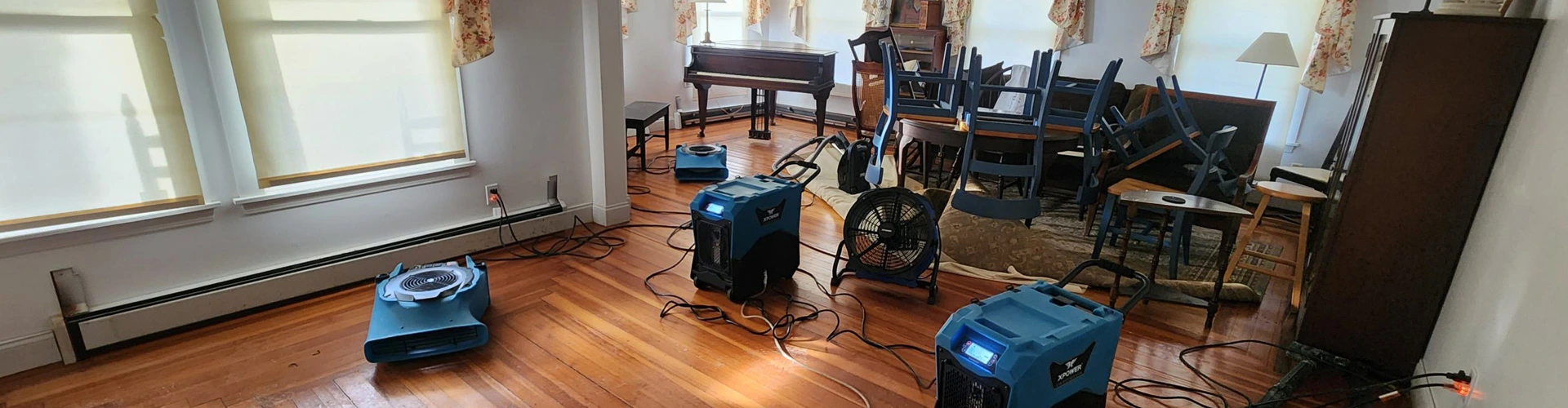
Once the water is out, the real work begins. Drying takes patience, airflow, and constant monitoring. We set up dehumidifiers and air movers to pull moisture from wood, insulation, and subfloors. Each material reacts differently, so we adjust our approach based on what we find.
- Wood Framing: Studs and joists that need steady drying to avoid warping or rot.
- Fiberglass Insulation: Loses its ability to insulate when wet and often requires replacement.
- Subfloors and Underlayment: Plywood or OSB that can swell and weaken if not dried thoroughly.
- Drywall and Baseboards: Lower sections that wick up water and may need to be cut out and replaced.
- Carpet and Padding: Usually unsalvageable after flooding, especially if groundwater or sewage is involved.
We measure moisture levels daily, adjusting equipment as needed. Leal Cleaning & Restoration Inc. only removes drying gear when readings confirm the area is safe for repairs. This careful process keeps mold and long-term damage at bay.
How We Clean and Disinfect After Floodwater Exposure
Floodwater brings more than just moisture. It carries bacteria, chemicals, and debris from outside. After extraction and drying, we clean and disinfect every surface that came in contact with water. Floors, walls, and salvageable belongings all get treated with antimicrobial solutions made for restoration work.
Our team scrubs, wipes, and treats each area to remove contaminants and prevent mold. This step is essential, especially when groundwater or runoff is involved. We don’t cut corners, and we make sure your basement is safe to use again for families in the Topsfield area.
What We Recommend to Prevent Future Flooding
When the cleanup is done, we focus on stopping the next flood. Our team identifies drainage problems and suggests solutions that fit your property. Sometimes that means regrading soil, extending downspouts, Other times, a French drain or swale makes the difference by guiding water away from your foundation.
We don’t push unnecessary fixes. Instead, we explain what’s causing the issue and what will actually solve it. Many homeowners in older houses think basement flooding is just part of the deal, but with the right changes, it doesn’t have to be. We’ve helped plenty of families in Topsfield break the cycle for good.
Let's Get Your Basement Dry and Keep It That Way
Call Leal Cleaning & Restoration Inc. at 978-778-6676 or schedule an appointment to start your restoration.