
Flooded Basement Restoration in Ipswich
Heavy rain can turn a quiet afternoon into a scramble when water starts creeping into your basement. Ipswich homes, especially those near the coast, face this reality more often than most. Water doesn’t just pool on the floor—it seeps into wood, drywall, and anything left on the ground. Once it’s in, the damage spreads fast. That’s why our team moves quickly, bringing the right equipment and a clear plan to every job.
How We Respond When Storms Hit Ipswich Basements
When a storm pushes water toward your home, it finds every weak spot: cracks in the foundation, gaps around pipes, or clogged drains. Older basements, built before modern waterproofing, take the brunt. Even newer homes can’t always keep up when the ground is saturated and drainage fails. We’ve seen water pour in during storms that barely made the news, and we know how quickly a trickle can turn into a flood.
Our crew arrives ready to assess the situation, not just react. We check where water is entering, how deep it’s gone, and what needs immediate attention. No guessing—just a direct approach to stop the flooding and start the cleanup.
Spotting Trouble Before It Turns Into a Flood
Sometimes, the first sign of a problem isn’t standing water—it’s a smell, a stain, or a soft spot underfoot. When moisture builds up below ground, it rarely stays hidden for long. Early detection makes a real difference in what can be saved and how much disruption you’ll face, especially for properties in Ipswich where groundwater levels can rise quickly.
- Musty Smell: That lingering odor signals trapped moisture, even if the floor looks dry.
- Wet Spots on Walls or Floors: Discoloration or damp patches point to water sneaking in.
- Condensation on Pipes or Windows: Beads of water on cold surfaces show humidity is rising below ground.
- Warped Baseboards or Soft Drywall: Materials that buckle or feel spongy have been wet for a while.
- Mold Growth: Black or green spots on surfaces or stored items mean moisture has stuck around too long.
When these signs show up, we don’t wait for a downpour to make things worse. Our team inspects the space, tracks down the source, and lays out a plan to dry things out and keep moisture from coming back.
Our Process for Fast Water Extraction
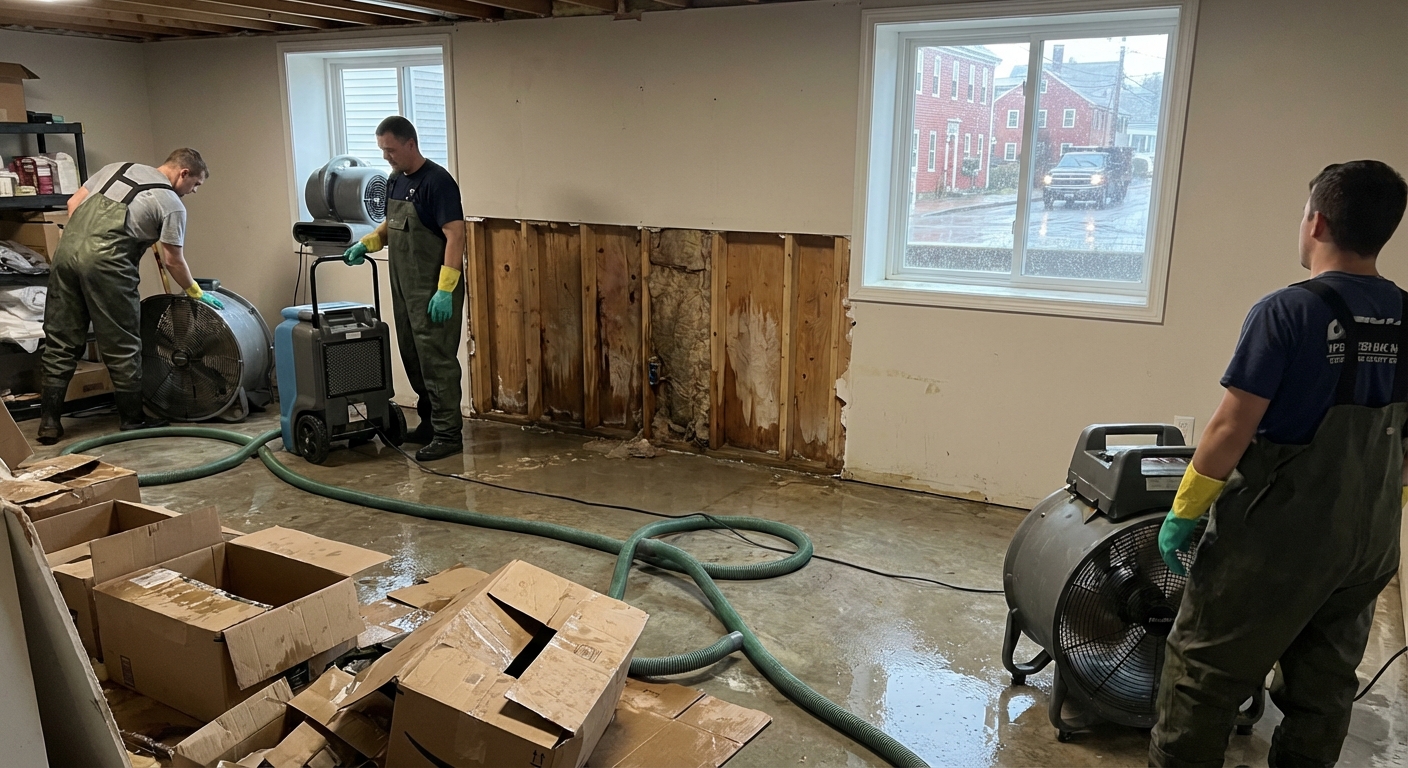
With water in the basement, every minute counts. We bring in pumps and extractors to clear out standing water, starting with the deepest spots and working methodically through the space. Once the water’s gone, we check what’s wet and what can be saved. Carpet and padding rarely make it. Concrete and tile often do. We don’t rely on air-drying or shortcuts. Industrial equipment pulls moisture from surfaces and the air, so nothing stays damp long enough for mold or rot to take hold.
Drying Out Framing and Insulation the Right Way
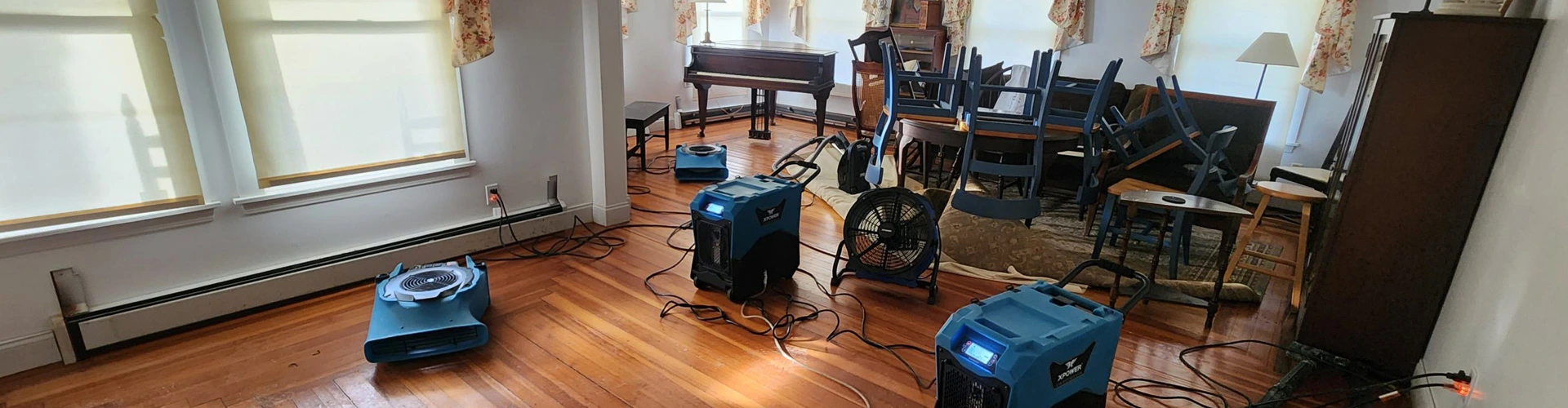
When insulation and wood framing get soaked, the problems don’t stop with surface water. Moisture lingers deep inside, leading to warped studs, sagging floors, and hidden mold. Using moisture meters, we check how far the water has traveled. Air movers and dehumidifiers run until readings show materials are safe again. Drying takes patience and constant monitoring, not just powerful fans. If insulation is saturated or framing shows signs of rot, we’ll let you know exactly what needs to be replaced before repairs move forward.
What We Remove During Cleanup
- Soaked Carpet and Padding: These trap water quickly and rarely dry out without causing odor or mold.
- Damaged Drywall and Baseboards: Once saturated, drywall loses strength and can’t be salvaged.
- Wet Insulation: Fiberglass and cellulose hold onto moisture, making mold a real risk if left in place.
- Ruined Stored Belongings: Boxes, furniture, and personal items that sat in water often can’t be restored.
- Warped Flooring: Laminate, hardwood, and vinyl that buckle or separate after flooding need full replacement.
We remove all damaged materials and haul them away. No piles left behind. With the debris gone, we focus on drying the structure and restoring your basement to a safe, usable space. Our team handles every step, so you’re not left sorting through the mess alone. We’ve handled flooded basement restoration everywhere from backyards to tight spaces around Ipswich neighborhoods.
How We Help Prevent Future Basement Flooding
Once the water’s out, we look at what caused the problem in the first place. Our team checks gutters, downspouts, grading, and any drainage systems to see where water is pooling or flowing toward the house. Sometimes, a simple fix like extending downspouts or regrading soil does the trick. Other times, it takes more: installing a sump pump, adding interior drains, or sealing foundation cracks. We explain what’s happening and what it takes to keep your basement dry, so you can make the right call for your property. Preventing future flooding is especially important for Ipswich homeowners who want to avoid repeat water damage.
Let's Get Your Basement Dry and Keep It That Way
Basement flooding doesn't fix itself. The longer you wait, the worse the damage gets. Call 978-778-6676 or schedule an appointment to get your basement inspected and dried out the right way.