
Flooded Basement Restoration in Ashland
Rain doesn’t just soak the ground. It finds its way inside, especially when foundations have cracks or the grading sends water toward your house. Water slips through gaps, seeps under doors, and spreads fast across basement floors. Older homes with stone or aging concrete foundations let water in even faster. Overflowing gutters and downspouts that dump water too close to the house only speed things up. Once inside, water moves quickly, soaking drywall, insulation, and anything stored below ground level in Ashland homes.
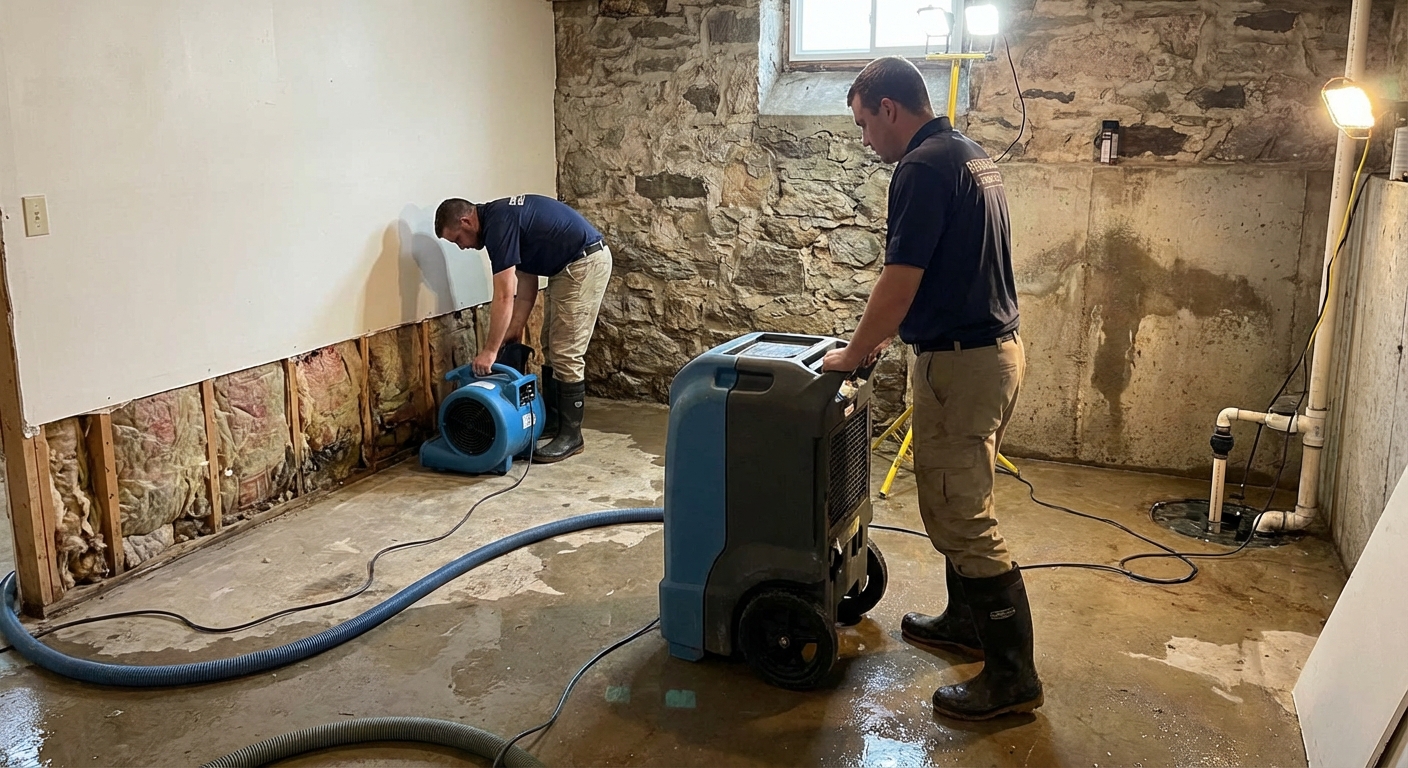
Basements in Ashland neighborhoods see flooding every spring and after heavy storms. Saturated ground, rising water tables, and overwhelmed sump pumps all play a part. If your basement has flooded before, it’s likely to happen again unless the root cause gets fixed. Our team moves quickly, removing water and drying everything before mold can take hold.
What We Watch for as Damage Spreads
When water gets in, it doesn’t just pool on the floor. It creeps up walls, seeps into insulation, and soaks wood framing. The longer it sits, the more damage it causes. You might spot puddles or damp spots, but the real trouble often hides behind walls and under floors. Drywall softens, baseboards swell, and carpet padding stays wet long after the surface looks dry. A musty smell or dark stains on walls means water has already moved further than you think.
- Soft or Bulging Drywall: Water weakens drywall, causing it to sag or crumble and lose its shape.
- Warped Baseboards or Trim: Wood swells and pulls away from the wall after soaking up moisture.
- Musty Odors: That stale, damp smell signals trapped water and the start of mold growth.
- Stains or Discoloration: Brown or yellow marks show where water has lingered behind surfaces.
- Peeling Paint or Bubbling Surfaces: Moisture pushes through finishes, making them lift or crack.
These problems don’t resolve on their own. Water keeps moving, materials break down, and mold can start in less than two days. We remove damaged materials, dry the structure, and keep the situation from getting worse in Ashland properties.
How We Respond When Basements Flood
Flooding rarely waits for a convenient time. When water fills your basement, you need a team that answers the call and gets there fast. We show up with pumps, extractors, and dehumidifiers, ready to pull out water before it spreads further. Our crew checks every wall, floor, and hidden space to make sure nothing gets missed.
Whether the water comes from storms, burst pipes, or failed sump pumps, we’ve seen it all. We assess the situation, explain the next steps, and get to work. No confusion, no wasted time. Just a clear plan and immediate action to protect your home.
What We Remove After Water Is Gone
Getting rid of standing water is only the start. Materials like drywall, flooring, and insulation hold onto moisture long after the surface looks dry. Leaving them in place means mold will grow and the structure will weaken. We pull out anything that’s soaked through and can’t be saved. Baseboards, carpet padding, sections of drywall, and insulation that’s been sitting in water all come out.
- Soaked Drywall: Loses strength and stability, so it needs to be replaced to restore the wall.
- Wet Carpet and Padding: Traps moisture and odors, making it impossible to fully clean or dry.
- Damaged Insulation: Stops working once wet and can keep moisture hidden inside walls.
- Warped Baseboards and Trim: Swells and separates, so new pieces are needed for a clean finish.
- Saturated Flooring: Laminate, hardwood, or tile often buckles or separates after being underwater.
We haul everything away, leaving your basement clear and ready for drying and repairs. No debris left behind, no soaked materials sitting around. Just a clean slate for the next phase in Ashland homes.
Drying Out Every Surface
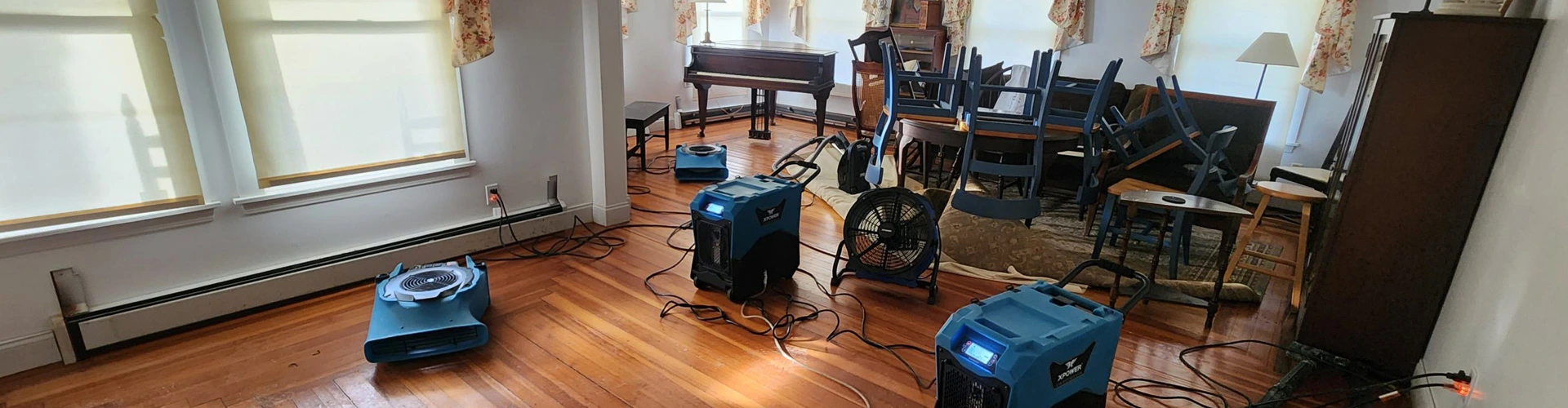
When the visible water is gone, moisture still hides in concrete, wood framing, and behind walls. If it stays, mold grows and wood starts to rot. We set up industrial dehumidifiers and air movers to pull moisture out of every surface. These machines run for days, not just hours, to make sure everything dries completely.
We track moisture levels in walls, floors, and framing, checking progress until readings show the space is truly dry. This step takes patience, but it’s the only way to avoid long-term problems. Skipping it or rushing through leads to bigger headaches down the road.
Restoring Your Basement After Water Damage
Once the basement is dry, repairs begin. Most jobs call for new drywall, fresh insulation, and replacement flooring. Baseboards, trim, and doors often need to be swapped out. Electrical outlets and wiring that got wet may need inspection or replacement for safety. We coordinate with trusted contractors, electricians, and plumbers to make sure every repair is handled the right way.
- Drywall Replacement: New panels installed, finished, and painted to match the rest of your space.
- Insulation Installation: Fresh insulation added to restore comfort and energy efficiency.
- Flooring Repairs: New carpet, laminate, or tile installed after the subfloor is dry and secure.
- Baseboard and Trim Work: Replacement pieces cut, painted, and installed for a finished look.
- Electrical Checks: Inspections and repairs to keep everything safe and up to code.
We don’t just dry out your basement and leave. Our team guides you through every step, making sure your space is safe, clean, and ready to use again. Whether it’s a single room or the entire lower level, we have the crew and equipment to handle it for Ashland residents.
Is Your Basement Still Wet?
Water damage doesn't fix itself. The longer you wait, the more it costs to repair. Call 978-778-6676 or schedule an appointment to get your basement dried out and restored.