
Flooded Basement Restoration in Salem
Heavy rain hits, and water finds its way into basements fast. In Salem, basements sit below ground, making them the first place water collects when storms roll through. Once water starts pooling, it doesn’t stop to ask how old your house is or whether you’ve kept up with maintenance. It just fills the lowest space it can reach—your basement.
How We Tackle Storm Flooding in Basements
Storms off the coast don’t just bring wind. They dump water faster than the ground can handle. When drains clog or overflow, basements become the catch basin. Older homes often lack modern waterproofing, but even newer builds can’t always keep up when the rain keeps coming. Water slips through cracks, seeps around windows, and pushes past sump pumps that can’t keep pace.
During high tides and storm surges, the water table rises. That pressure forces groundwater up through basement floors and walls. Add a downpour, and the space floods in minutes. This isn’t rare. Salem neighborhoods see it every storm season, and it doesn’t take a hurricane to leave a mess behind.
What We Look for Before the Flood Hits
Basement water problems rarely start with a dramatic flood. More often, they creep in quietly, leaving behind subtle warnings. Spotting these early makes all the difference.
- Damp Spots on Walls or Floors: Persistent moisture signals water is making its way through the foundation, not just surface condensation.
- Musty Smells: That odor points to mold growing in places you can’t see, fed by hidden dampness.
- Efflorescence: White, powdery residue on concrete means water is moving through and leaving minerals behind.
- Cracks in Foundation Walls: Even hairline cracks let water in, and they only get worse with time and pressure.
- Pooling Water After Rain: Standing water after every storm means drainage isn’t doing its job.
Ignoring these signs lets water damage spread. Once it starts, it moves fast and finds every weak spot. We’ve handled jobs where a small leak turned into a full gut because no one caught it early enough.
Our Approach to Fast Water Removal
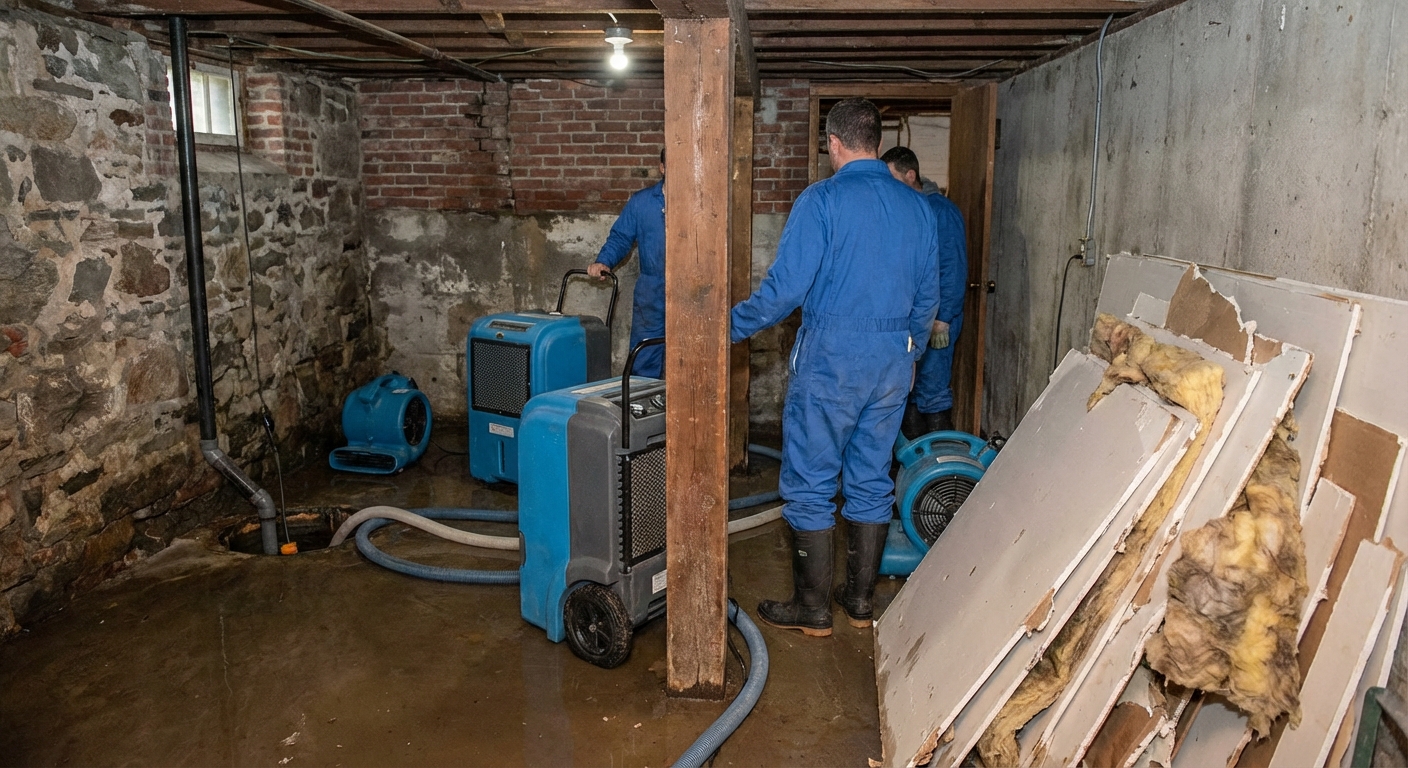
When water fills a basement, every minute counts. Soaked drywall, ruined insulation, warped flooring. Water doesn’t wait. Mold can start in less than two days, and the longer it sits, the more it destroys. We bring in industrial pumps and extractors built for speed and volume. This isn’t a job for a shop vac and a mop. Once the water’s out, we sort what can be saved and what needs to go. Our team handles the mess, so you don’t have to risk your health or guess what’s safe to keep.
Making Sure Everything Gets Dry
Getting rid of standing water is just the start. True restoration means pulling moisture out of every surface and the air itself. Concrete, wood, and insulation hold onto water longer than most people realize. If they stay damp, mold and rot follow.
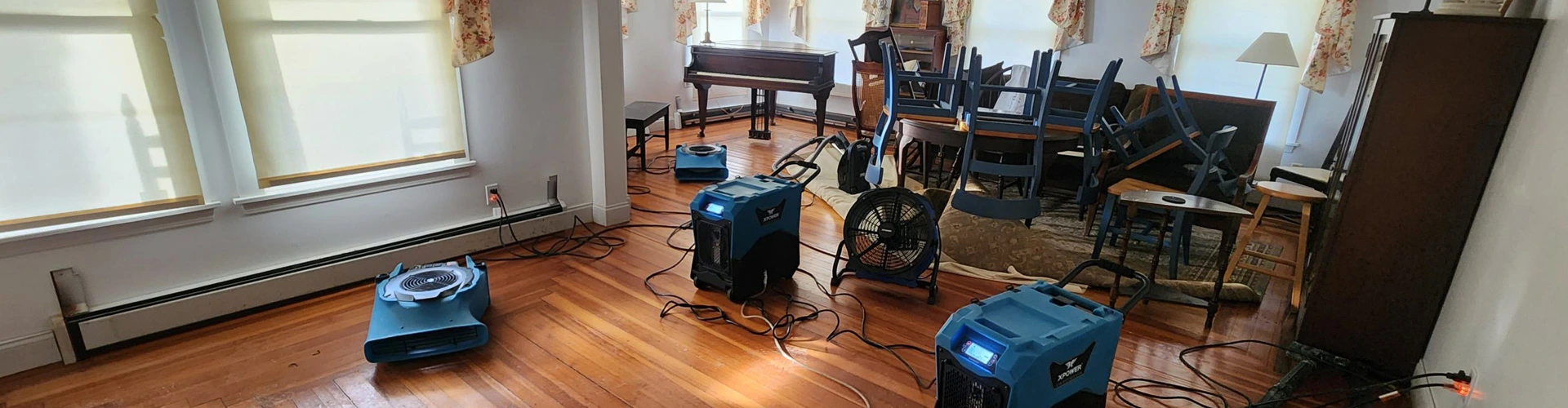
- Air Movers: High-powered fans that push air across every surface, speeding up evaporation and drying hidden pockets.
- Dehumidifiers: Commercial units that pull moisture from the air, stopping it from settling back into walls and floors.
- Moisture Meters: Devices that check inside materials to confirm nothing stays wet beneath the surface.
- Thermal Imaging: Cameras that spot wet areas invisible to the eye, so nothing gets missed.
We monitor the process from start to finish. Equipment stays until readings show everything is truly dry. Skipping this step leads to hidden damage that shows up weeks later, so we don’t cut corners.
How We Clean and Sanitize After Flooding
Floodwater brings more than just rain. It carries bacteria, chemicals, and debris from outside. Once it’s in your basement, every surface it touches needs more than a wipe-down. We scrub hard surfaces with antimicrobial cleaners. Porous materials, like drywall and insulation, usually can’t be saved and must be removed. Anything that soaked up contaminated water becomes a health risk, so we bag it and haul it away. Salvageable items get treated to kill bacteria and stop mold before it starts. Our team handles the dirty work, making sure nothing dangerous gets left behind.
Restoring Your Basement After the Water’s Gone
With everything dry and clean, repairs begin. Flooded basements often need more than patchwork. We seal foundation cracks, replace damaged drywall, and install new flooring where needed. we’ll talk about upgrades or backup systems to keep you protected next time.
Electrical systems exposed to water need careful inspection. Water and wiring are a bad mix, so we coordinate with licensed electricians to make sure everything is safe and up to code. Structural repairs, waterproofing improvements, and mold remediation all fall under our scope. We manage the process from start to finish, so you’re not left coordinating multiple contractors or worrying about what comes next.
Can We Help You Recover From Basement Flooding?
Flooding doesn’t wait for a convenient time, and neither do we. Whether you’re dealing with water right now or trying to prevent the next storm from doing damage, we’re here to help. Call 978-778-6676 or schedule an appointment to get your basement back in shape with Leal Cleaning & Restoration Inc.