
Flooded Basement Restoration in Westford
Rain comes hard and fast, and basements take the brunt. Water slips through cracks, finds weak seals, and pools in the lowest spots. You look down and see water creeping across the floor, soaking everything in its path. In these moments, waiting isn’t an option. Action is the only move that makes sense for homeowners in Westford.
How We Tackle Basement Flooding When Storms Hit
Basements, by design, sit below ground, making them magnets for water when the soil gets saturated. Water presses against foundation walls, seeps through even the smallest cracks, and pushes up through floor drains. Homes without solid drainage or with aging waterproofing see this first. Gutters overflow, downspouts dump water too close, and the basement becomes a catch basin. Sump pumps help, but when the power cuts out or a clog hits, water rises unchecked. In neighborhoods across Westford, this cycle repeats every season. Heavy rain, saturated ground, and basements filling up. We see it, we know it, and we’re ready for it.
Spotting Water Damage Before It Spreads
Water doesn’t always announce itself with puddles. Sometimes, it hides behind walls or under floors, quietly causing trouble. You might notice a musty smell that lingers, stains creeping across drywall, or paint starting to peel. Floors buckle, and mold patches show up in corners you rarely check. These aren’t just cosmetic issues. They signal deeper problems that only get worse with time. Here’s what we look for when we inspect a basement after a storm:
- Musty Odors: Persistent damp smells that stick around even after cleaning point to trapped moisture.
- Discolored Walls or Ceilings: Stains in yellow or brown shades often mean water is moving through drywall or insulation.
- Peeling Paint or Bubbling Wallpaper: Surfaces pull away as moisture spreads underneath.
- Warped or Buckled Flooring: Swelling in wood or laminate signals water has gotten below the surface.
- Visible Mold Growth: Black, green, or white spots on walls or stored items show ongoing moisture issues.
Ignoring these signs only lets the damage grow. We move quickly to find and address every hidden problem, stopping the spread before it takes over your basement.
Our Approach to Fast Water Extraction
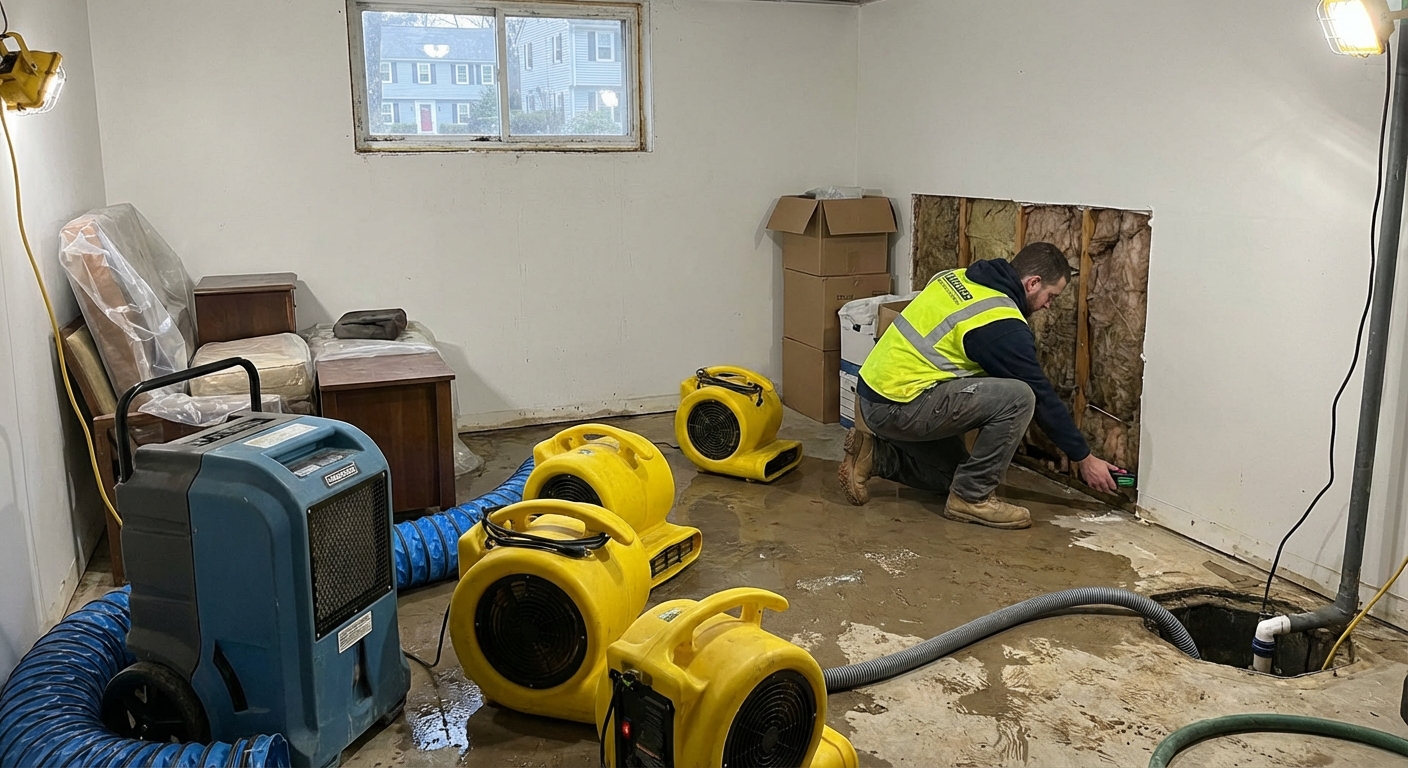
When water fills a basement, speed is everything. We bring in industrial pumps and extractors. No household vacuum can keep up with this job. Water comes out fast, but we don’t stop there. Moisture lingers in corners, under baseboards, and inside wall cavities. Using moisture meters, we track down every wet spot. The goal is simple: get the water out before it has a chance to cause more trouble. Our team arrives ready, equipped to pull water and start drying right away, so you’re not left waiting while damage spreads. Many Westford residents have seen how quickly a basement can flood and how vital rapid extraction is to prevent lasting damage.
Drying Out Every Material the Right Way
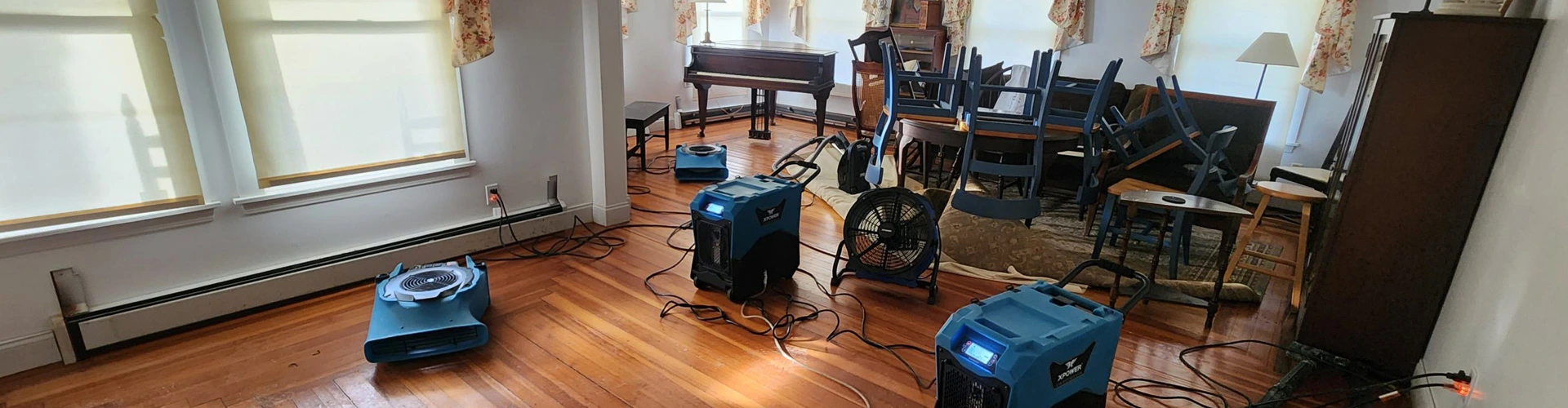
After extraction, the real work begins. Drying takes patience and the right tools. We set up commercial dehumidifiers and air movers to pull moisture from concrete, wood, and framing. Concrete holds water deep inside, and wood swells if left damp. Rushing this step leaves hidden pockets that turn into mold later. We monitor moisture levels throughout, adjusting equipment and checking every surface until readings show the space is truly dry. Each material dries at its own pace, and we don’t cut corners. Thorough drying now means fewer problems down the line.
What We Remove and Why It Matters
Some things just can’t be saved after a flood. Materials that hold water or trap bacteria need to go, no matter how much you want to keep them. We handle removal and disposal, making sure nothing contaminated stays behind. Here’s what we typically take out:
- Soaked Carpeting and Padding: These absorb dirty water and rarely dry out without developing odors or mold.
- Water-Damaged Drywall: Sections that stay wet lose strength and can’t be trusted to hold up.
- Ruined Insulation: Wet insulation clumps together, loses its ability to insulate, and becomes a mold risk.
- Cardboard Boxes and Paper Goods: Once soaked, these break down and can’t be salvaged.
- Wooden Furniture and Stored Items: Pieces that sit in water often warp or develop mold deep inside joints.
We remove everything that poses a risk, clean and disinfect the area, and prepare the space for rebuilding. You don’t have to juggle multiple crews or worry about what’s safe to keep. Our team handles it all, start to finish.
Upgrades We Recommend to Prevent Future Floods
When the cleanup is done, it’s time to think about what comes next. Basements in Westford face repeat flooding, especially during spring and fall storms. We look at drainage first. Gutters and downspouts should move water well away from your foundation. Grading around the house needs to slope outward, not in. Sump pumps work best with regular checks and a backup power source. For homes that flood again and again, French drains or exterior waterproofing add another layer of defense. We walk you through the options, explain what fits your property, and handle the improvements so you’re not left guessing. Our goal is to keep water out and your basement dry, no matter what the weather brings.
Let's Get Your Basement Dry and Safe Again
Flooded basements don't fix themselves. The faster you act, the less damage you'll face. Call 978-778-6676 or schedule an appointment to get started.