
Flooded Basement Restoration in Needham
Basements in Needham rarely get a warning before water starts pouring in. Rain pounds the ground, and water slips through every gap it finds. Gutters spill over, downspouts clog, and drainage systems that usually keep up just can’t handle the surge. Water collects fast, and before you know it, the basement floor is slick and rising. The storm doesn’t care about your schedule or your plans. It just keeps coming until the rain stops or the system fails.
Homes built decades ago face even tougher odds. stall out. Floor drains fill with grit and leaves. Over time, the ground around the house settles, sending water straight toward the foundation instead of away from it. When the soil can’t hold any more, pressure builds and water forces its way through cracks you never noticed. Flooding isn’t always about bad luck. Sometimes, it’s just what happens when water finds a path.
How We Spot Water Trouble Before It Spreads
Most basement floods don’t start with a dramatic rush of water. Instead, the signs creep in quietly. Damp patches that linger, a musty smell that never fades, or a white film on the walls. These clues often go unnoticed until the damage is already done, but catching them early makes all the difference.
- Damp Spots on Walls or Floors: Persistent moisture signals water is sneaking in after every storm, not just during the big ones.
- Musty Smells That Won't Go Away: Mold grows in hidden corners where water lingers, and that odor is the giveaway.
- Efflorescence on Concrete: White, powdery residue means water is moving through the wall, leaving minerals behind.
- Warped Baseboards or Peeling Paint: Materials near the floor soak up water first, breaking down before you ever see a puddle.
- Cracks in Foundation Walls: Even hairline cracks let water in, and each storm makes them worse.
Letting these signs slide only gives water more time to do its work. Damage spreads behind walls and under floors, weakening the structure and giving mold a foothold. In Needham, these problems show up after every heavy rain, and waiting to act only raises the cost and complexity of repairs. We’ve opened up basements that looked fine on the surface, only to find soaked insulation and rotting wood hidden out of sight.
What We Do When Water Fills Your Basement
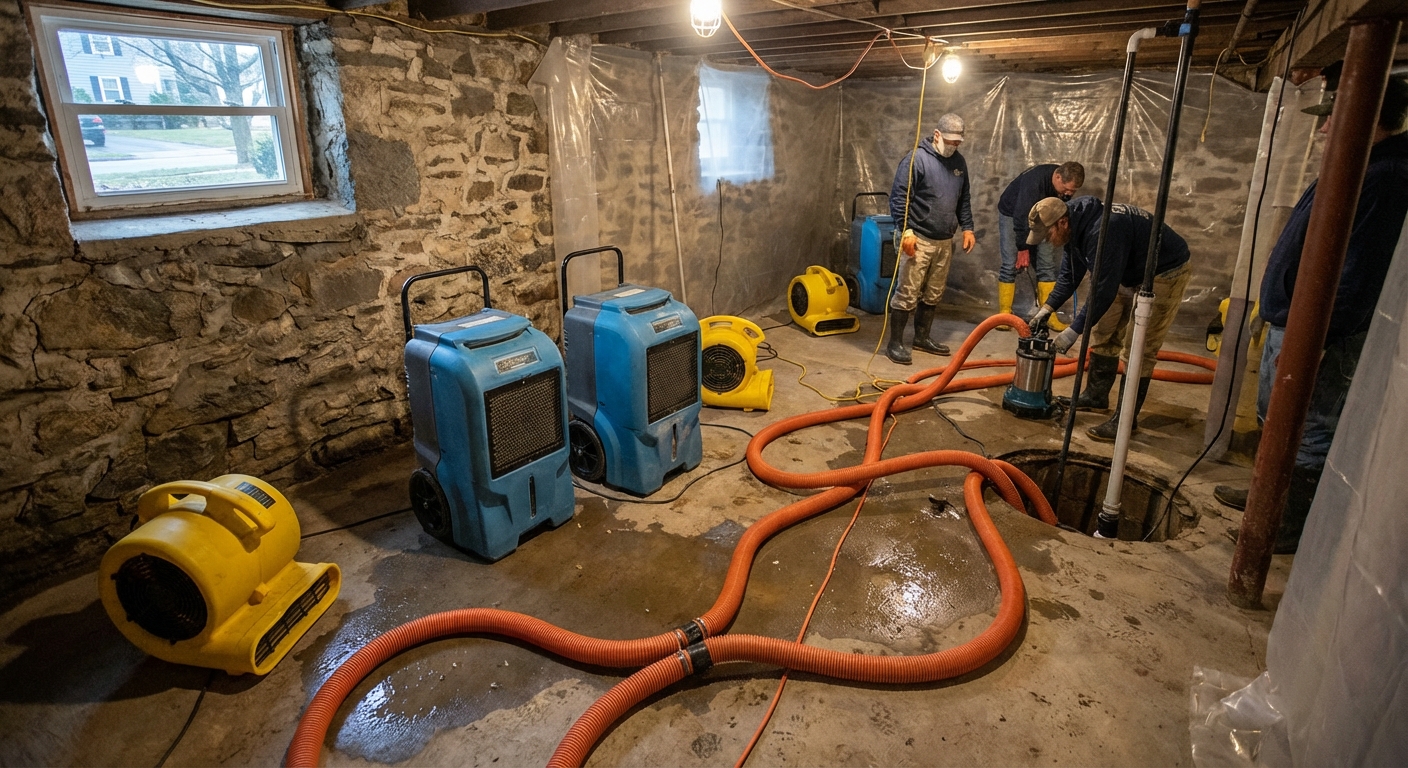
Floodwater doesn’t wait, and neither do we. As soon as we arrive, industrial pumps and extractors go to work, pulling water from the deepest spots and moving through every corner. Carpets, drywall, and even concrete hold onto moisture long after the surface looks dry. Our team uses truck-mounted equipment for the heavy lifting, then switches to smaller extractors for tight spaces and delicate materials.
Once the standing water is gone, we check every surface and item for hidden moisture. Some things dry out with the right tools, but others, like soaked drywall or insulation, need to be removed right away. We measure moisture in walls, floors, and belongings to make sure nothing gets missed. Local experience matters here; we know where water hides in Needham basements and how to get it out for good.
Drying Out Every Inch That Got Wet
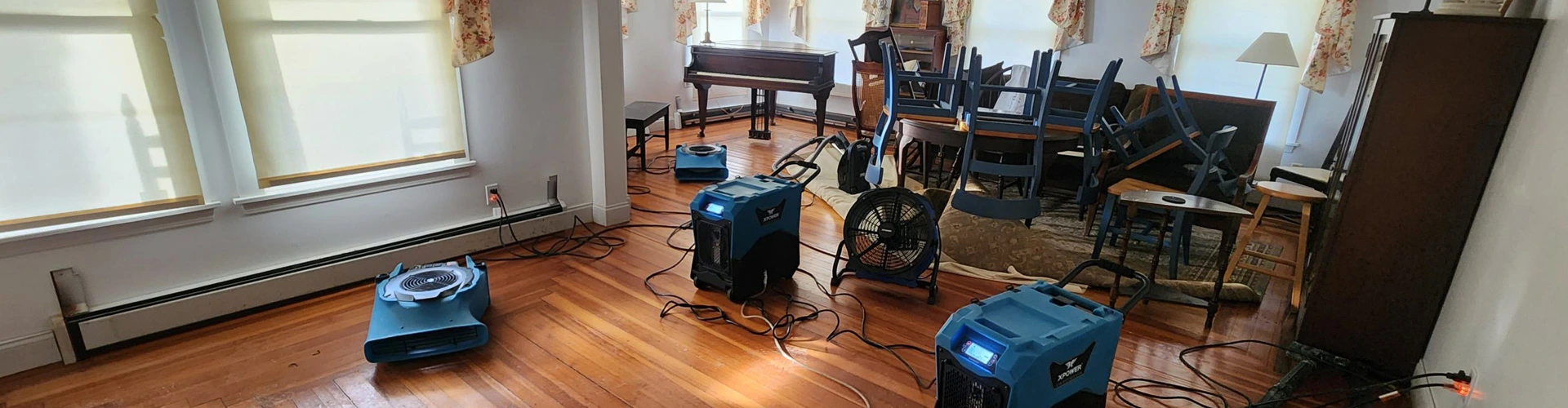
When the water’s gone, the real work begins. Drying takes more than just time. It needs airflow, heat, and constant monitoring. We set up commercial dehumidifiers and air movers to pull moisture from the air and push dry air into every affected space. Each material needs its own approach, and we adjust our setup to match.
- Drywall and Insulation: These soak up water fast and hold it deep inside, so we focus airflow to dry them thoroughly.
- Wood Framing and Studs: Wet wood swells and can twist or rot if left damp, so we monitor it closely from the start.
- Concrete Floors and Slabs: Moisture seeps deep into concrete, taking weeks to dry without the right equipment.
- Carpets and Padding: Padding rarely survives, but carpets sometimes can, if we get to them quickly.
- Furniture and Personal Items: Wood furniture and stored boxes need immediate attention to avoid lasting damage or mold.
We track moisture levels every day, making sure nothing gets left behind. Materials that feel dry on the outside can still hide water inside, and that’s where mold takes hold. Our equipment runs nonstop until every reading is safe. Needham basements often struggle with humidity and poor airflow, so we adjust our approach to each space and situation.
How We Remove What Can’t Be Saved
Some things just don’t make it through a flood. Drywall turns soft and crumbles. Insulation loses its shape and becomes a magnet for mold. Flooring that buckles or separates won’t recover, no matter how long you wait. We cut out damaged sections with care, removing only what’s necessary to keep the rest of your basement intact.
Contaminated water brings its own set of problems. If the floodwater isn’t clean, maybe it’s mixed with sewage or debris, everything it touches is at risk. We follow strict safety protocols to remove and dispose of these materials, protecting your home and everyone in it. Water damage restoration in Needham often means dealing with more than just rainwater, and we’re prepared for every scenario.
Steps We Recommend to Keep Basements Dry
After cleanup, the focus shifts to prevention. Some fixes are straightforward, while others take more planning, but each one lowers the odds of another flood.
- Sump Pump Installation or Replacement: A reliable sump pump moves water out before it collects, and a backup keeps it running during outages.
- Improved Grading Around the Foundation: Sloping the soil away from your house keeps water from pooling near basement walls.
- Gutter and Downspout Extensions: Directing water farther from the foundation helps prevent soil saturation right next to your home.
- Foundation Crack Sealing: Sealing up cracks blocks water entry and eases pressure on the walls.
- Interior Drainage Systems: French drains or perimeter drains catch water early and send it to the sump pump before it reaches the floor.
We walk through your property, pointing out weak spots and suggesting improvements that fit your home and budget. Not every basement needs a full overhaul. Sometimes better drainage or a new sump pump is enough. Our recommendations come from what we see, not from a checklist.
Let's Get Your Basement Dry and Safe Again
Flooded basements don't fix themselves, and waiting only makes things worse. Call 978-778-6676 or schedule an appointment to start your restoration.