
Flooded Basement Restoration in Bedford
Water in the basement never stays put. It seeps into drywall, creeps under flooring, and leaves behind more than just puddles. Once it’s there, the damage spreads. It weakens supports, feeds mold, and turns a finished space into a headache. Cleaning up isn’t a matter of grabbing a mop. It takes the right tools, a sharp eye for hidden trouble, and a team that knows how to get every last drop out for homes and businesses in Bedford.
How We Solve Drainage Issues That Lead to Basement Flooding
Drainage problems don’t announce themselves until the rain comes hard and fast. By then, water is already pressing against your foundation, looking for a way in. Over time, small issues stack up. Gutters fill, grading shifts, pumps fail. When the system breaks down, water finds the path of least resistance straight into your basement. Our job is to spot these weak points and address them before cleanup even begins.
- Clogged Gutters and Downspouts: Overflowing gutters dump water right at your foundation, setting the stage for leaks and seepage after every storm.
- Poor Grading Around the Foundation: Soil that slopes toward the house channels rainwater directly to basement walls, making flooding almost inevitable.
- Failed Sump Pumps: When pumps quit during a downpour, water has nowhere to go but inside.
- Cracked Foundation Walls: Even hairline cracks let moisture sneak through, especially when the ground is saturated.
- Overwhelmed Storm Drains: When city drains back up, water pressure builds and forces its way into basements across the block.
We don’t just clear the water. We look for the source. Fixing drainage is the first step to making sure you don’t face the same mess again in your Bedford property.
When We Step In for Professional Basement Restoration
Sometimes, a basement looks fine at first glance. Other times, the signs are obvious. Standing water, warped floors, or a smell that won’t go away. Even a small leak can turn into a major repair if it’s ignored. We know when a situation calls for more than a quick cleanup, and we act before the damage spreads deeper.
- Standing Water That Won’t Drain: Water that lingers is already soaking into everything it touches, from subfloors to studs.
- Musty Odors That Linger: Persistent damp smells point to hidden moisture, even if surfaces look dry.
- Visible Mold Growth: Mold on walls, ceilings, or stored items means water has been present long enough for spores to take hold.
- Warped or Buckling Floors: Flooring that swells or lifts signals water damage below the surface.
- Stains on Walls or Ceilings: Discoloration marks the path water has traveled, often hiding bigger problems behind the scenes.
We bring in moisture meters and extraction gear, not just fans and towels. Our approach digs deeper, making sure nothing gets missed behind walls or under floors in Bedford homes.
Equipment We Use for Fast, Thorough Water Removal
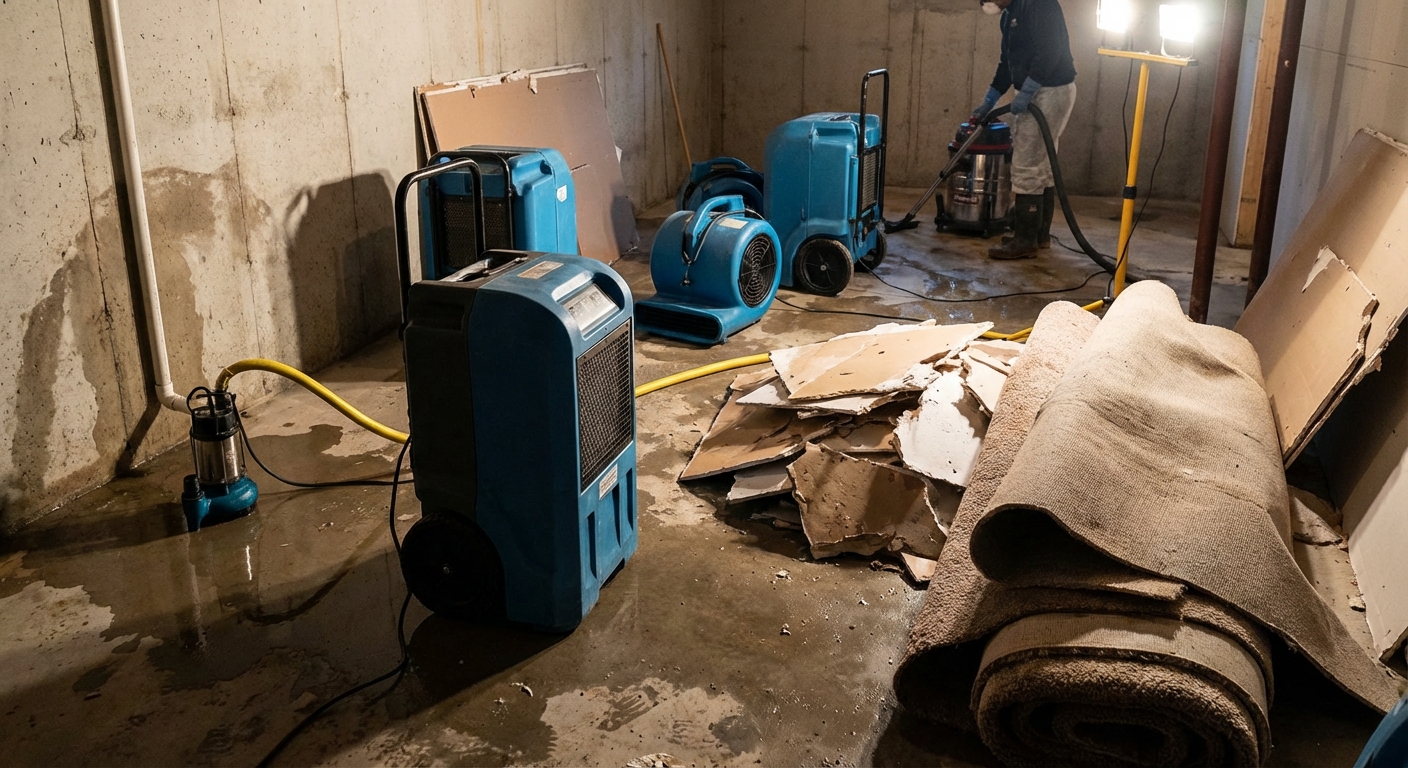
When water fills a basement, it doesn’t just sit on the surface. It seeps into concrete, hides in corners, and soaks into every material it touches. Household tools can’t reach it all. That’s why we rely on professional-grade equipment built for the job.
- Submersible Pumps: Move large volumes of water quickly, clearing out the worst of the flood in hours, not days.
- Wet Vacuums: Reach tight spots and smaller pools that pumps can’t handle.
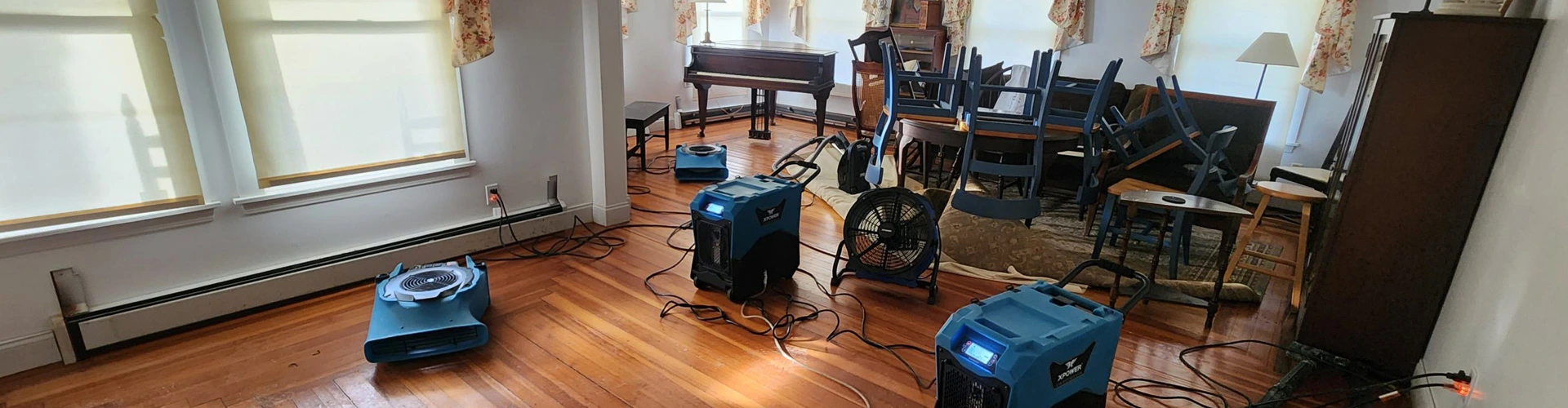
- Air Movers: Push air across wet surfaces, speeding up evaporation and drying.
- Dehumidifiers: Pull moisture from the air, stopping condensation and further damage.
- Moisture Meters: Check inside walls and floors to confirm every layer is dry before repairs start.
We don’t leave until every trace of water is gone. That’s the only way to keep mold and rot from taking over later.
What We Find After Water Leaves the Basement
After the visible water is gone, the real problems often show up. Drywall, insulation, and wood framing hold onto moisture long after surfaces look dry. Mold grows in hidden spaces, and wood softens or warps. Electrical systems exposed to water become unpredictable and dangerous. We check every layer, from the slab to the ceiling, because missing hidden damage only leads to bigger repairs down the road.
Concrete absorbs water, holding it deep inside. Over time, this leads to cracks and weak spots that threaten the foundation. Wet insulation never dries out properly and keeps framing damp, feeding mold and rot. We remove and replace what can’t be saved, making sure the structure is solid before moving forward in Bedford properties.
How We Dry and Treat Every Surface After Flooding
With the water gone, drying and treatment begin. We set up air movers to keep air circulating across every wet surface, then run industrial dehumidifiers to pull moisture from the air. Antimicrobial treatments go on exposed framing and drywall to stop mold before it starts. Moisture levels get checked daily, and wet insulation comes out so nothing stays damp behind the walls.
- Controlled Air Circulation: Air movers target wet spots, drying floors, walls, and furniture efficiently.
- Dehumidification: Continuous operation keeps humidity low and prevents new condensation.
- Antimicrobial Treatment: Stops mold and bacteria from spreading during the drying phase.
- Moisture Monitoring: Daily checks ensure nothing is missed and drying stays on track.
- Insulation Removal: Wet insulation is replaced to keep framing dry and safe.
We don’t rush this step. Every surface gets checked and treated, so the basement is ready for repairs. Not just a quick cover-up.
Restoring Basements and Preventing Future Floods
Once everything is dry and treated, repairs start. Damaged drywall comes out and gets replaced. Warped flooring is removed, and new materials go in after the subfloor is confirmed dry. Electrical work is handled by licensed pros if outlets or wiring were affected. Foundation cracks are sealed, and we recommend drainage fixes if needed to keep water out next time. Our team handles every step, so you’re not left coordinating multiple contractors or wondering what’s next.
Let's Get Your Basement Back to Normal
Flooding doesn't wait, and neither should you. Call 978-778-6676 or schedule an appointment with Leal Cleaning & Restoration Inc. to start the restoration process.