
Flooded Basement Restoration in Brookline
Rain doesn't ask for permission, and when it pours, water finds the weak spots in any basement. In Brookline, storms can dump several inches in a single afternoon, and older homes with tired drainage systems take the hit first. Gutters overflow, sump pumps stall, and groundwater rises faster than the soil can handle. Foundation cracks let water slip through, spreading across floors and soaking into drywall. Mold follows close behind, and for properties throughout the area, these risks can be even more pronounced due to local soil conditions and the age of many homes.
Seasonal shifts push and pull the soil around Brookline homes, pressing against foundation walls and opening gaps that aren't always visible. After a heavy rain, water pools near the house instead of draining away. Downspouts that end too close or yards that slope toward the basement set the stage for trouble. Even storms that seem mild can leave basements wet if the property isn't set up to move water away. The real issue often isn't the rain. It's how the ground and drainage respond.
How We Spot Water Problems Before They Spread
Basement water doesn't always arrive with a rush. Sometimes it creeps in quietly, leaving behind subtle signs. Noticing these early makes all the difference.
- Damp Spots on Walls or Floors: Wet patches or discoloration that linger after rain signal water is finding a way inside.
- Musty Smells: That stale, earthy odor sticks around even when everything looks dry on the surface.
- Efflorescence: White, chalky streaks on concrete show where water has seeped through and left minerals behind.
- Warped Baseboards or Trim: Swollen or buckled wood points to moisture working its way up from the floor or behind the walls.
- Puddles Near the Foundation: Water that collects outside after storms and refuses to drain is a clear warning sign.
These clues mean water is already inside or about to break through. Letting them slide only gives moisture more time to dig in. When these signs show up, it's time for a closer look before the next storm rolls through, especially for homeowners in Brookline where older foundations are common.
Our Rapid Response for Basement Flooding
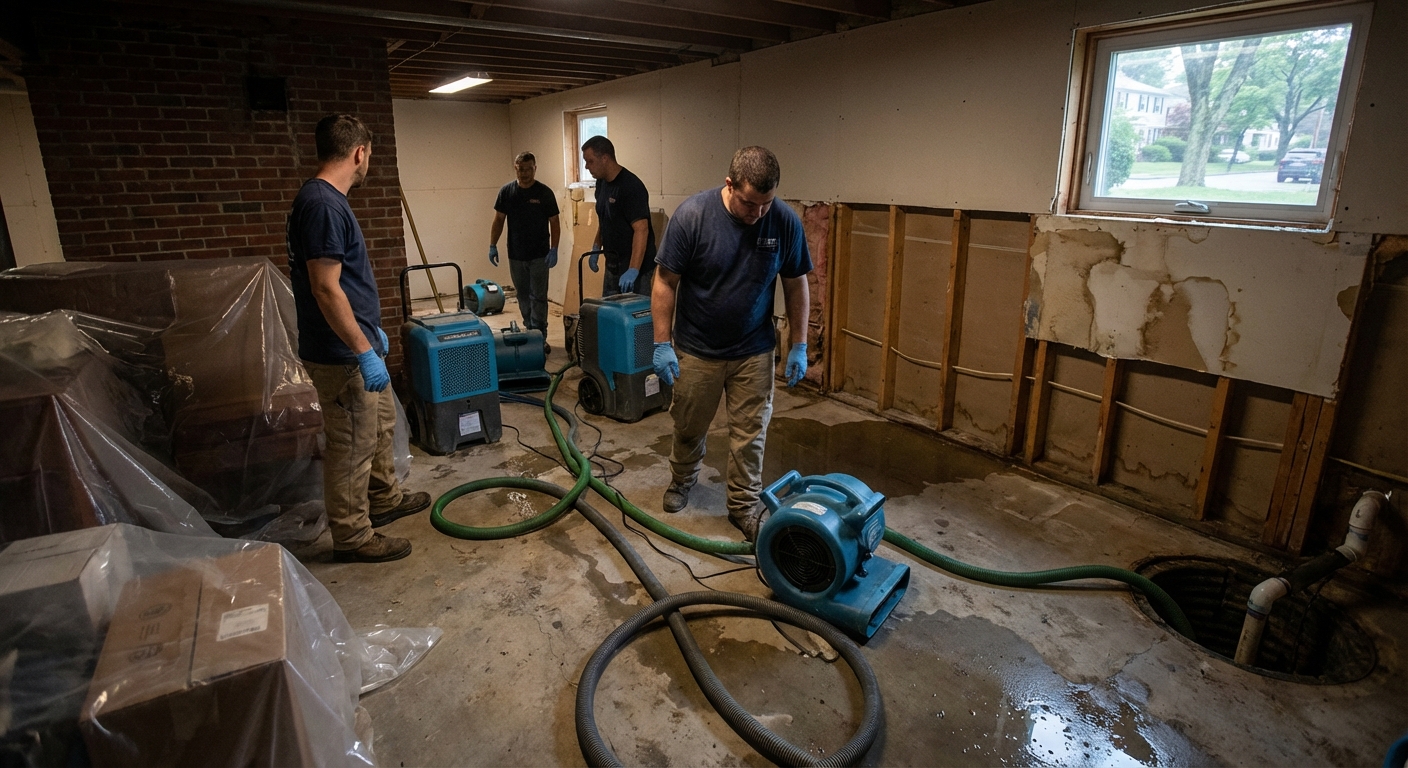
Floodwater doesn't wait, and neither do we. As soon as water starts pooling in your basement, the risk of mold, weakened materials, and ruined belongings climbs. Our team moves fast, bringing industrial pumps and extraction gear to clear out water—whether it's a shallow puddle or several feet deep. Quick action keeps the damage contained and the cleanup manageable.
After the main water is gone, we use wet vacuums and specialized tools to pull moisture from carpets, padding, and porous surfaces. Acting quickly protects both your property and the structure itself. We've handled basement floods across Brookline and know how to get water out without missing a step.
How We Dry Basements for Good
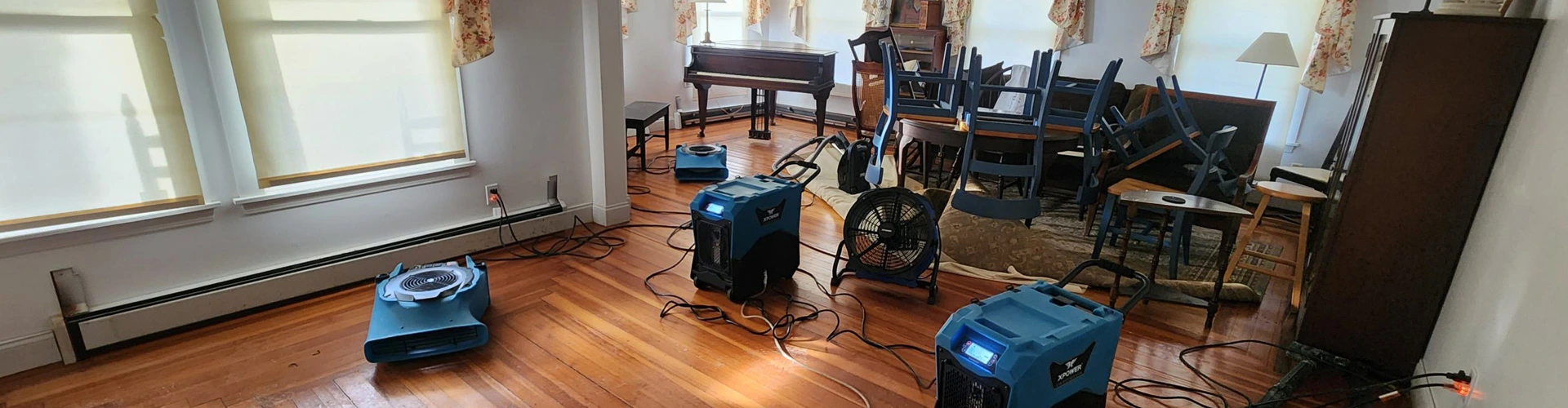
When the standing water is gone, hidden moisture still lingers in walls, floors, and the air. That's where mold and rot start if left unchecked. We bring in commercial dehumidifiers and air movers, working together to pull moisture from every surface and keep air circulating. This isn't a job for household fans. Structural drying needs the right equipment and constant attention to humidity levels.
We check moisture in walls, floors, and even ceiling joists, making sure nothing gets missed. Some materials hold water longer, and if they're not fully dry, problems show up weeks later. Our process is thorough and steady, focused on getting your basement back to a safe, dry state as soon as possible. Many Brookline residents appreciate this attention to detail, as older homes in the area often have hidden moisture traps.
What Our Structural Drying Process Covers
- Moisture Mapping: We measure throughout the basement to find hidden wet spots that need extra care.
- Air Movement: High-velocity fans push air across damp surfaces, speeding up evaporation and stopping humidity from settling.
- Dehumidification: Industrial units pull moisture from the air, keeping it from soaking back into walls and floors.
- Temperature Control: We set the right conditions for drying without risking damage to your home's materials.
- Daily Monitoring: Progress gets tracked with moisture meters, and we adjust equipment until everything is truly dry.
Depending on how much water got in and what materials were hit, this can take several days. We don't rush or cut corners. Leaving moisture behind only leads to bigger headaches later. Leal Cleaning & Restoration Inc. stays on-site until every part of your basement is dry and safe.
Restoring What Water Damaged
With the basement dry, repairs come next. Waterlogged drywall gets cut out and replaced. Baseboards, trim, and insulation that soaked up moisture rarely make it. We remove what's damaged, treat any mold, and rebuild so your basement looks and works like it should. This isn't just about appearances. It's about making sure your home stays solid and healthy.
Flooring often takes the brunt. Carpet and padding that sat in water for more than a day usually need to be replaced. Tile and vinyl sometimes survive if the subfloor stayed dry. We check everything and let you know what's worth saving. Our goal is to restore your basement without unnecessary demolition, but we never leave behind materials that could cause trouble later. We've handled restorations throughout Brookline, adapting our approach to each property's unique needs.
How We Help Prevent Future Floods
One flood doesn't have to lead to another. There are practical steps that make a real difference in keeping water out next time storms hit.
- Extend Downspouts Away From the Foundation: Directing gutter runoff at least six feet from the house keeps water from pooling near basement walls.
- Seal Foundation Cracks: Even small gaps let water in during heavy rain, so sealing them early blocks future leaks.
- Regrade Your Yard: Adjusting the slope around your home sends water away from the foundation instead of toward it.
- Add a French Drain: This underground system redirects water before it can build up near your basement.
These changes don't make a home flood-proof, but they stack the odds in your favor. Homeowners who take these steps after a flood often avoid repeat problems. It's a smart move if you've already dealt with water once, especially in Brookline where heavy rains are common.
Let's Get Your Basement Back in Shape
Basement flooding doesn't fix itself, and waiting only makes the damage worse. Whether you're dealing with standing water right now or trying to dry out after a storm, we'll help you get your space back to normal. Call Leal Cleaning & Restoration Inc. at 978-778-6676 or schedule an appointment to get started.