
Flooded Basement Restoration in Reading
Water in the basement never waits for a good moment. A sudden downpour, melting snow, or a burst pipe can turn storage space into a mess in no time. Once water gets in, it seeps into walls, floors, and anything stored below. The longer it lingers, the more damage it causes. Mold takes hold, wood warps, and the foundation suffers. We don’t waste time. Our team removes the water, dries what can be saved, and clears out what can’t. Every step is planned and direct, so your basement gets back to normal without uncertainty or delay. Storm damage cleanup is a constant need across properties in Reading, making fast action essential.

How We Identify the Source of Basement Flooding
Flooding rarely comes from just one cause, and it’s not always obvious. Sometimes a storm dumps water faster than the ground can handle. Other times, a slow leak or aging drainage system lets moisture creep in until the basement gives way. We look for the real reason water found its way inside, not just the symptoms.
- Heavy Rainfall and Snowmelt: Water pools around the foundation and slips through cracks when the ground can’t keep up.
- Clogged or Broken Gutters: Overflowing gutters dump water right next to your house, making it easy for moisture to find a path inside.
- Sump Pump Failure: When the pump quits, water rises through the floor with nowhere else to go.
- Cracked Foundation Walls: Even hairline cracks let groundwater push through when outside soil is saturated.
- Sewer Backups: Blocked or overloaded lines send wastewater back into the basement, especially after storms.
Older homes in Reading often face these problems as foundations settle and drainage systems age. We’ve handled every scenario, from sudden floods to slow leaks, and we always start by pinpointing what went wrong. That way, repairs last and future flooding is less likely.
Spotting Moisture Before It Turns Into a Flood
While some floods arrive with a rush of water, others build up quietly. Subtle warning signs can show up long before you see standing water. Noticing these early makes a real difference, especially for homeowners in Reading where basement moisture is a recurring concern.
- Musty Odors: A persistent damp smell signals trapped moisture, even if the floor looks dry.
- Discolored Walls or Floors: Stains and dark patches reveal where water has seeped in or condensation has settled.
- Peeling Paint or Efflorescence: White, powdery residue on concrete means water is moving through and leaving minerals behind.
- Warped Baseboards or Buckling Floors: Swollen wood points to hidden leaks or ongoing dampness.
- Visible Mold Growth: Black or green spots on surfaces show that moisture levels are too high for safety.
We check for these signs during every inspection. When we find them, we trace the problem to its source and address it directly. Ignoring these clues only lets water dig in deeper, so we act before the damage spreads.
Our Emergency Water Removal Process
When a basement floods, waiting isn’t an option. Water spreads fast, soaking into drywall, insulation, and anything it touches. We arrive with pumps and extractors ready, clearing out standing water from every corner. No delays, no shortcuts. Once the water is gone, we can see what needs attention next.
Speed is critical. Water weakens wood, rusts metal, and creates the right conditions for mold. Our team has handled everything from burst pipes to sewer backups, using equipment built for high-volume removal. We don’t leave until the basement is clear and ready for drying.
Drying and Salvaging What Matters
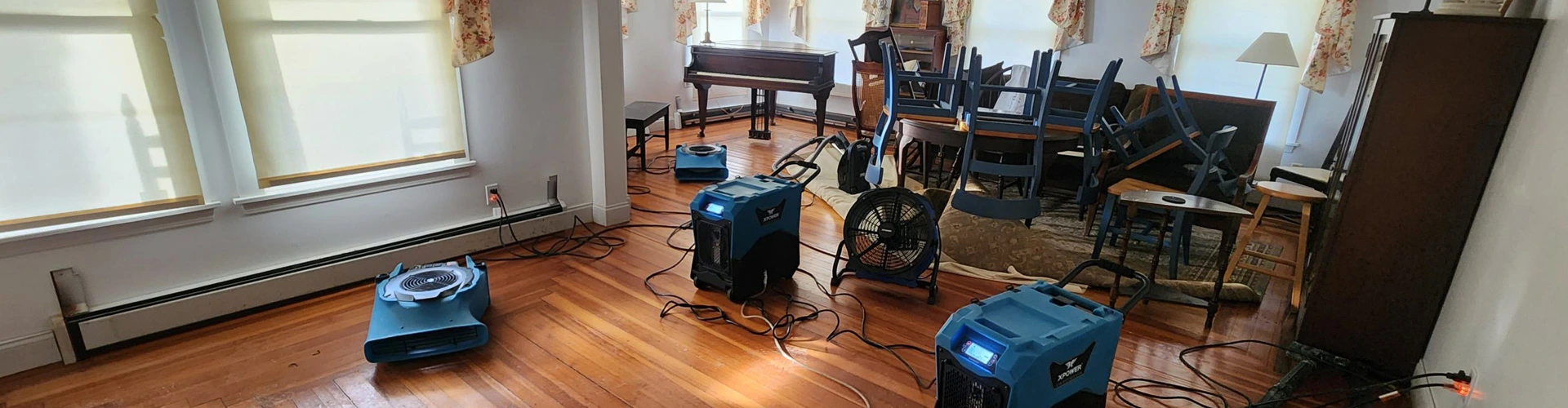
When soaked insulation, damp framing, and wet flooring remain, the job isn’t finished. If these materials stay wet, they rot, warp, or become a breeding ground for mold. Using industrial fans, dehumidifiers, and moisture meters, we pull moisture from every surface the flood touched.
Insulation acts like a sponge, holding water deep inside. We check every section and remove what can’t be saved. Framing gets dried in place when possible, but we monitor it closely for hidden damage. Flooring, whether concrete, tile, or wood, gets dried to safe levels. We don’t rush this step. Drying takes patience, and skipping it only leads to bigger repairs later. Our team manages the process from start to finish, making sure your basement is truly dry before moving forward. During the rainy season in Reading, this thorough approach is especially important to prevent recurring issues.
Clearing Out Damaged Materials for a Fresh Start
Some things just can’t be saved after a flood. When materials lose their structure or become contaminated, they need to go. We remove everything that’s beyond repair, so nothing dangerous or unsanitary stays behind.
- Soaked Drywall: Once it’s saturated, drywall crumbles and can’t support repairs.
- Wet Insulation: Flooded insulation breaks down and rarely dries out properly.
- Damaged Flooring: Carpet, padding, and some laminates or hardwoods don’t recover from heavy water exposure.
- Contaminated Materials: Anything touched by sewer water or outside floodwater is removed for health and safety.
- Warped Baseboards and Trim: Swollen or distorted wood trim isn’t worth saving and can hide mold.
We haul debris off-site and dispose of it responsibly. No piles left behind, no lingering mess. Once the space is cleared, we clean and disinfect so repairs can begin on a solid foundation.
Upgrades We Recommend to Prevent Future Floods
When the immediate damage is handled, we look at what can be done to keep water out for good. Drainage upgrades make a real difference, and we help homeowners choose what fits their property best. For homes near Reading, root overgrowth and shifting soil can also impact drainage, so we factor these local challenges into our recommendations.
- Interior Drain Tile Systems: These collect water along the foundation and direct it safely away.
- Exterior Grading Improvements: Properly sloped ground keeps rainwater from pooling near the house.
- Gutter and Downspout Extensions: Moving roof runoff farther from the foundation reduces seepage risk.
- Backwater Valves: These stop sewer lines from backing up during storms or municipal overflows.
We walk through each option, explaining what it does and why it matters. Every home is different, so we customize solutions to fit the property and the homeowner’s needs. The goal is always the same. Keep water out and protect your basement for the long haul.
Let's Get Your Basement Dry and Safe Again
Basement flooding hits hard, but it doesn't have to leave lasting damage. We respond fast, remove the water, dry everything out, and take care of repairs so your space is safe again. Call Leal Cleaning & Restoration Inc. at 978-778-6676 or schedule an appointment to get started.