
Flooded Basement Restoration in Haverhill
Water in a basement never arrives with a warning. One day the floor is dry, the next you’re stepping into puddles. Rain pushes past clogged gutters. Snowmelt finds cracks in old foundations. Sump pumps stall out when you need them most. Pipes split open in the cold. Once water gets in, it spreads fast, soaking boxes, furniture, and walls. Damage doesn’t pause for anyone, especially in Haverhill where older homes are common.

Many Haverhill homes, especially the older ones, face shifting foundations that open up new gaps every year. Poor grading sends runoff straight toward the house. Downspouts dump water right at the base. Basement windows leak under pressure from heavy storms. Even a trickle, left unchecked, can turn into a recurring headache that never really goes away.
What Sets Off Basement Flooding in Local Homes
Basements below ground level are always at risk, but the real trouble starts when aging construction meets a sudden downpour or a burst pipe. Floods rarely make a grand entrance. They creep in, building up until you’re left with soaked floors and no easy fix in sight.
- Foundation Cracks: Gaps in concrete let groundwater slip inside during storms or thaw cycles.
- Failed Sump Pumps: Equipment breakdowns or power loss leave basements exposed when water rises.
- Clogged Gutters and Downspouts: Overflowing water collects at the foundation, working its way inside.
- Poor Grading: Lawns that slope toward the house funnel water right where you don’t want it.
Flooding can be a one-time event or a seasonal battle. The real solution comes from pinpointing the source and stopping it at the root. Our emergency response always starts with a thorough inspection to track down how water got in and what needs to change.
How Water Wrecks Basement Materials
When water hits a basement, it doesn’t just pool on the floor. It seeps into drywall, insulation, wood, and even concrete. Porous materials soak up moisture quickly. Once they’re wet, they stay that way unless you dry them out the right way. Mold sets in, wood starts to rot, and the structure weakens from the inside out.
Carpet and padding trap water deep inside. Drywall draws moisture up from the floor. Wood framing swells and loses strength. Concrete holds dampness for weeks, leaving a musty smell that lingers. The longer water sits, the more it hides behind walls and under floors, turning a surface problem into a much bigger mess for Haverhill property owners.
- Drywall and Insulation: Quickly lose strength and start to crumble after soaking up water.
- Carpet and Padding: Trap moisture, creating a perfect spot for mold and bacteria to grow.
- Wood Framing: Warps and weakens as water seeps into the grain.
- Concrete Floors and Walls: Hold onto moisture, causing long-term dampness and odor.
- Stored Items and Furniture: Suffer stains, warping, and permanent loss if not moved out fast.
Surface drying isn’t enough. We check behind baseboards, inside wall cavities, and under flooring to make sure nothing gets missed. Any trapped moisture keeps working against your home, long after the visible water is gone.
How We Remove Water Fast in Haverhill Basements
Standing water needs to go, quickly. Every extra hour means more damage and higher repair costs. Our team brings in truck-mounted extractors and portable pumps to clear out water fast. High-capacity equipment handles large spaces in a fraction of the time it would take with basic tools.
After the main water is out, we pull moisture from carpets, padding, and other materials. Surfaces get wiped down and debris is cleared away. The goal is to get as much water out as possible before drying starts. We also check for hidden pockets and contamination, making sure nothing is left behind. Whether the cause is a storm
Our Approach to Drying and Dehumidifying Basements
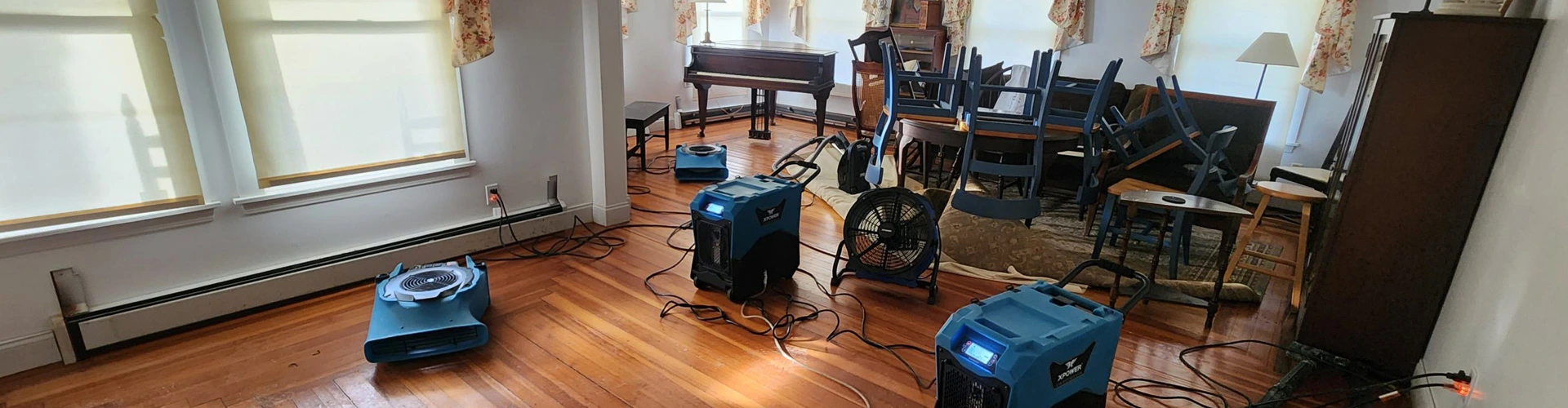
With the water gone, drying the structure becomes the focus. We set up industrial fans to move air across every wet surface. Dehumidifiers pull moisture from the air and deep inside materials. Moisture meters track progress, so we know when the job is truly done.
- High-Velocity Air Movers: Push air across floors, walls, and furniture to speed up drying.
- Commercial Dehumidifiers: Remove moisture from the air, stopping it from settling back in.
- Moisture Meters: Check water content in walls and floors to confirm dryness.
- Thermal Imaging: Finds hidden dampness behind walls and under floors.
- Controlled Ventilation: Keeps airflow balanced to avoid new problems like condensation.
Drying a basement takes patience and the right tools. We don’t pull equipment until moisture levels are back to normal. Rushing this step leaves hidden dampness that causes trouble later. Our process ensures the space is dry, stable, and ready for repairs.
Restoring Basements After Water Damage
Once the basement is dry, repairs begin. Damaged drywall comes out. Warped baseboards and ruined flooring get removed. We rebuild what water destroyed, making sure every fix is solid and lasting. Restoration isn’t just about looks. It’s about solving the problems that let water in the first place. Cracks get sealed, drainage gets improved, and weak spots are reinforced. If the flood revealed bigger issues, we tackle those too.
Our team manages everything from minor repairs to full rebuilds. We coordinate with your insurance, document the damage, and keep you informed at every step. Whether it’s patching a wall or gutting the whole space, we have the crew and equipment to get it done without dragging out the process.
How We Help Prevent Future Basement Floods
When the repairs are finished, prevention comes next. We help homeowners spot weak points and make upgrades that keep water out for good. That could mean adding a backup sump pump, regrading the yard, or sealing up foundation cracks. Small changes now can save you from major repairs down the line, especially in flood-prone Haverhill neighborhoods.
- Sump Pump Installation and Backup Systems: Keep basements protected even during power outages or equipment failures.
- Foundation Crack Sealing: Blocks groundwater from sneaking through concrete gaps.
- Improved Grading and Drainage: Sends water away from the house before it can cause trouble.
- Gutter and Downspout Upgrades: Make sure rainwater flows away instead of pooling near the basement.
- Waterproofing Coatings: Add extra protection to basement walls and floors.
We’ve seen homeowners deal with repeat flooding until the right fixes are in place. Once prevention measures are installed, the cycle stops. Addressing the real cause keeps water out for good.
Let's Get Your Basement Back to Normal
Flooded basements don't fix themselves. The longer you wait, the worse the damage gets. We respond fast, remove the water, dry everything out, and restore what was lost. Call Leal Cleaning & Restoration Inc. at 978-778-6676 or schedule an appointment to get started.