
Flooded Basement Restoration in Belmont
Water finds its way into basements when drainage fails, and in Belmont, older homes face this problem more than most. Gutters that dump water next to the foundation, sump pumps that can’t keep up, and cracks in basement walls all give water an easy path inside. After a heavy rain, runoff collects at the lowest point—your basement floor. Even a small gap around a window or a bit of poor grading outside can let water seep in, and when storms hit, the pressure builds fast. Sewer backups add another layer of trouble, especially in neighborhoods with aging combined drainage systems.
How We Spot Water Damage Before It Gets Worse
Basement water damage rarely starts with a dramatic flood. More often, it creeps in quietly. A musty odor lingers, paint peels near the floor, or you notice a chalky residue on the concrete. These are the first signs that water has been sitting where it shouldn’t. Mold grows behind walls, insulation gets soggy, and wood swells out of sight. By the time you see warped floors or rust on your furnace, the problem has already spread.
- Wet or Stained Walls: Discoloration near the baseboards or seams signals water soaking through from outside or below.
- Warped or Buckling Floors: Wood and laminate floors swell and lift after repeated moisture exposure.
- Mold or Mildew Odor: Persistent earthy smells point to hidden growth behind drywall or under flooring.
- Efflorescence on Concrete: White, powdery deposits show where water has evaporated and left minerals behind.
- Rust on Metal Fixtures: Corrosion on water heaters or shelving means moisture has lingered too long.
Ignoring these warnings lets water damage spread deeper into framing, insulation, and wiring. Acting quickly keeps repairs manageable and prevents bigger headaches down the line.
What Happens When We Remove Standing Water
When a basement fills with water, speed and precision matter. We arrive with pumps and extractors ready to clear out standing water, no matter how deep. The longer water sits, the more it seeps into drywall, wood, and insulation. Our team checks the source—whether it’s rainwater or a sewer backup—so we know what precautions to take. Truck-mounted extractors and portable pumps handle everything from shallow puddles to several inches of water.
After the main water is gone, we use wet vacuums to pull moisture from carpets, padding, and hidden corners. Water hides under stairs, behind walls, and along seams. We don’t stop until every pocket is dry. Homeowners are often surprised by how much water remains after the obvious flood is gone, but we know where to look and how to get it out.
Why We Disinfect After Every Flood
When contaminated water enters a basement, cleaning isn’t enough. We treat every affected surface with antimicrobial solutions to eliminate bacteria and viruses. Rainwater brings in dirt and debris, but sewage backup carries far more dangerous contaminants. Our process covers every material and surface that came in contact with floodwater.
- Concrete Floors and Walls: Scrubbed and disinfected to remove anything absorbed into the surface.
- Wood Framing and Studs: Treated to stop rot and prevent mold inside wall cavities.
- Metal Fixtures and Appliances: Cleaned thoroughly to prevent corrosion and remove residue.
- HVAC Ducts and Vents: Inspected and cleaned if water reached them, stopping mold from spreading through the air.
- Personal Belongings: Salvageable items cleaned with methods matched to their material and level of exposure.
We don’t move on to repairs until every surface is safe. This step protects your family and keeps future problems from taking root.
Drying Out Every Inch Before Repairs Begin
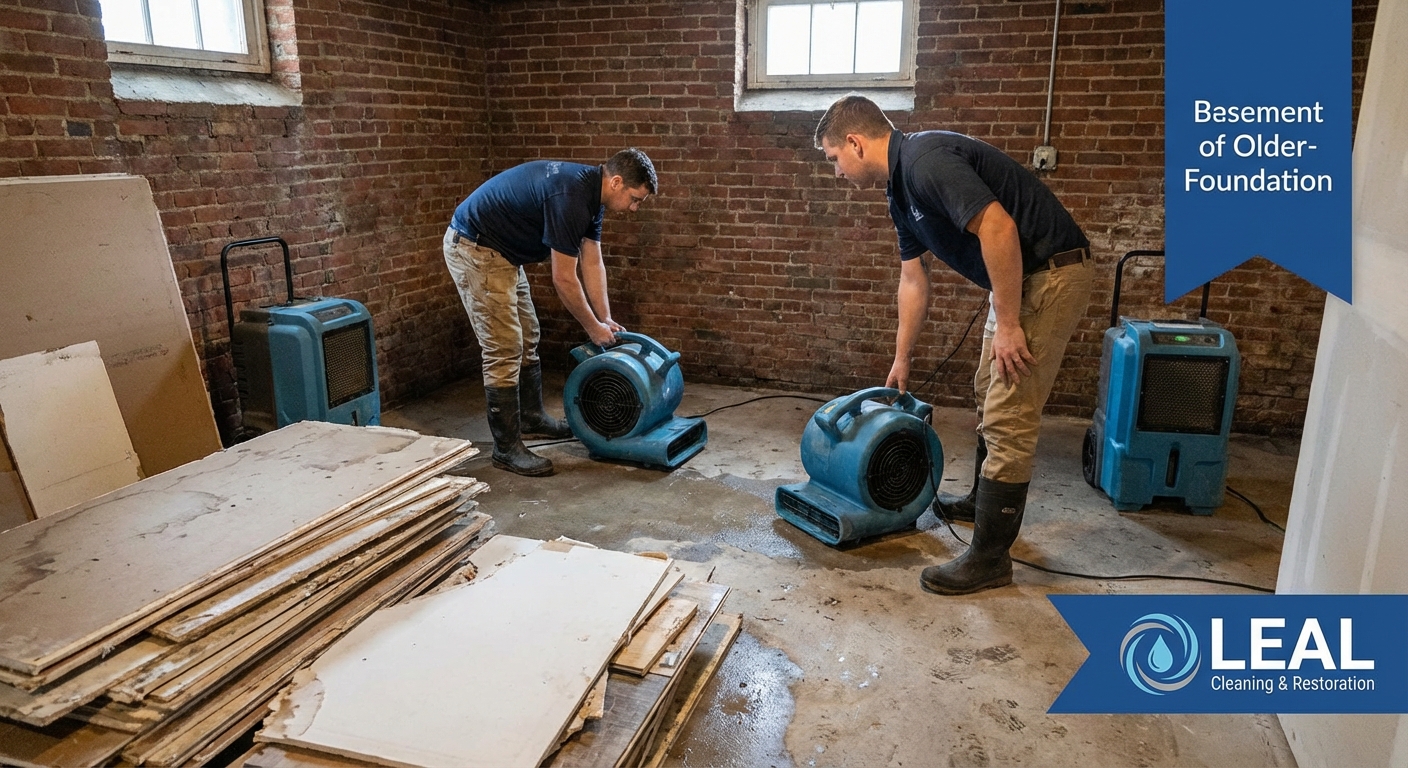
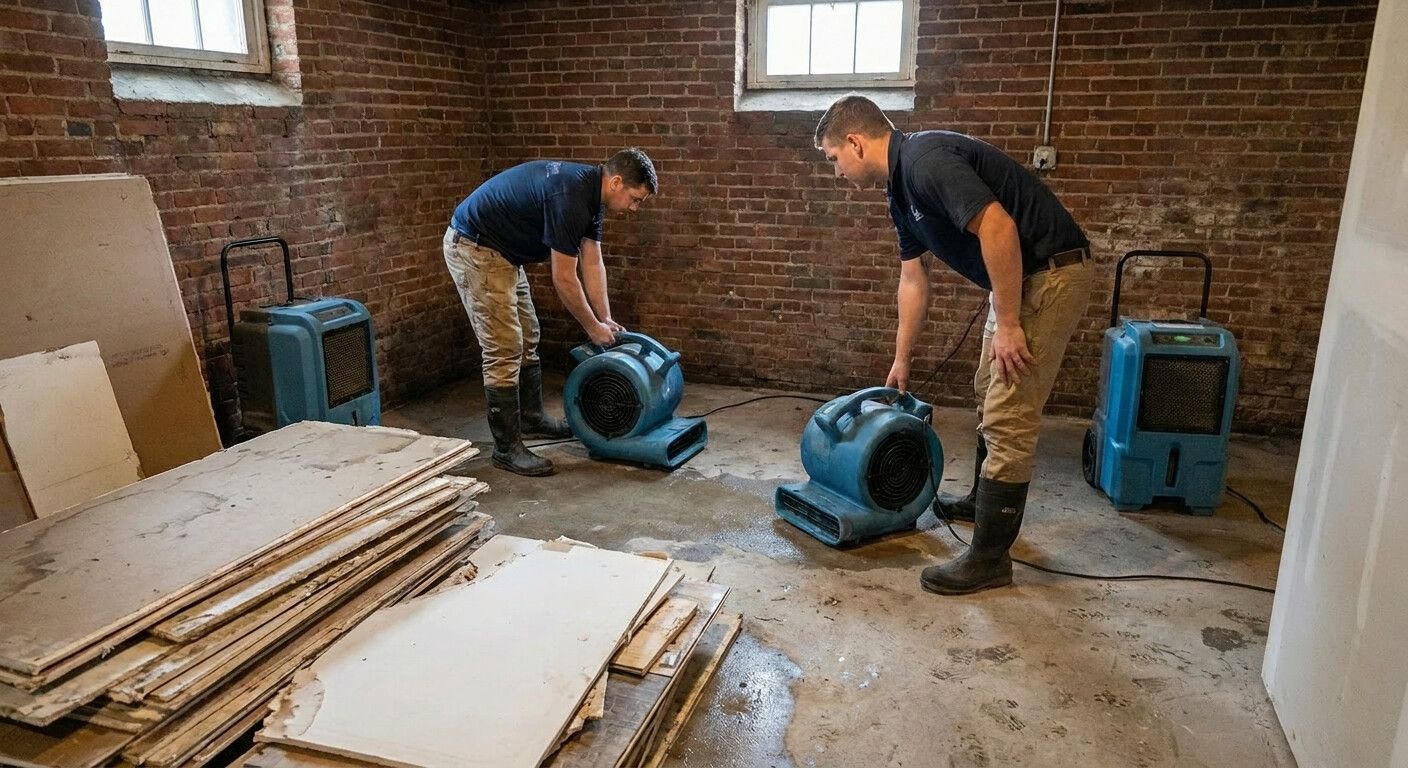
When the water is gone and surfaces are clean, drying becomes the focus. Industrial dehumidifiers and air movers run around the clock, pulling moisture from concrete, wood, and drywall. Basements hold onto water longer than most people expect, especially below ground where air circulation is limited and humidity lingers. We track moisture levels daily, using meters to check inside walls and under floors. Repairs only start when readings show everything is truly dry.
Skipping or rushing this step leads to warped floors, mold outbreaks, and structural issues that show up months later. Our team has seen homes where moisture hid in framing for weeks, causing new problems long after the flood. We keep equipment running until every reading is clear, making sure your basement is ready for the next phase.
How We Restore and Protect Your Basement
With everything dry and disinfected, we move to repairs. Damaged drywall comes out and is replaced with new panels. Flooring that swelled or buckled gets removed and updated. Wet insulation is swapped for fresh material, restoring both comfort and energy efficiency. We don’t just cover up water damage—we remove it completely and rebuild so it won’t return.
- Drywall Replacement: Damaged sections cut out and new panels installed to match your existing finish.
- Flooring Repairs: Warped wood, ruined tile, or soaked carpet and padding replaced with new materials.
- Insulation Replacement: Wet insulation removed and new material installed to keep your basement efficient.
- Baseboard and Trim Work: Swollen or rotted trim replaced for a clean, finished look.
- Foundation Crack Sealing: Gaps and cracks sealed to block future water entry.
We also recommend upgrades like sump pump installation or improved drainage if your basement is at risk. Belmont’s older homes and unpredictable weather make prevention a smart investment.
Let's Get Your Basement Back to Normal
Water damage doesn't wait, and neither should you. Call Leal Cleaning & Restoration Inc. at 978-778-6676 or schedule an appointment to start the restoration process.