
Flooded Basement Restoration in Cambridge
Water in the basement throws everything off. It seeps through cracks, backs up from drains, or pours in during a storm. Once inside, it doesn’t just pool on the floor. It soaks into walls, ruins stored belongings, and sets off a chain of problems that don’t always show up right away. Mold, warped floors, and hidden rot follow fast if you don’t act, especially in Cambridge homes where older construction can make basements more vulnerable.
How We Tackle Basement Flooding in Cambridge Homes
Basement flooding in Cambridge isn’t rare. Older homes often lack modern waterproofing, and heavy rain can overwhelm drainage in minutes. Gutters clog, downspouts dump water too close to the house, and sump pumps fail when you need them most. Sewer backups hit when city systems can’t keep up. With every storm, water finds the weak spots. Foundation cracks, window wells, or low-lying yard corners. When the ground stays saturated after snowmelt or days of rain, pressure builds and forces water through any opening it can find. We see these patterns across the region, and we know how to spot the warning signs before they turn into bigger headaches.
Spotting the Damage Before It Spreads
Hidden water damage rarely announces itself. Instead, it leaves subtle clues that most people overlook until the problem grows. A musty smell lingers even after you air things out. Stains creep up walls or across floors. Paint bubbles or flakes, and a white, powdery residue appears on concrete. Flooring starts to buckle or feel soft. Mold shows up in corners or behind stored boxes. Metal fixtures rust. These aren’t just cosmetic issues. They signal deeper trouble. Moisture trapped behind walls or under floors creates the perfect environment for mold and structural decay. When these signs show up, it’s time for a thorough inspection and a plan to stop the damage in its tracks.
- Musty Odors: Persistent damp smells that stick around even after cleaning.
- Discolored Walls or Floors: Stains or dark patches that mark where water has lingered.
- Peeling Paint or Efflorescence: Bubbling paint or white residue that signals moisture inside the walls.
- Warped or Buckled Flooring: Raised or soft spots that point to water beneath the surface.
- Mold Growth: Visible patches on walls, corners, or stored items that thrive in dampness.
- Rust on Metal Fixtures: Corrosion on heaters, shelves, or pipes after exposure to moisture.
Our Emergency Water Removal Process
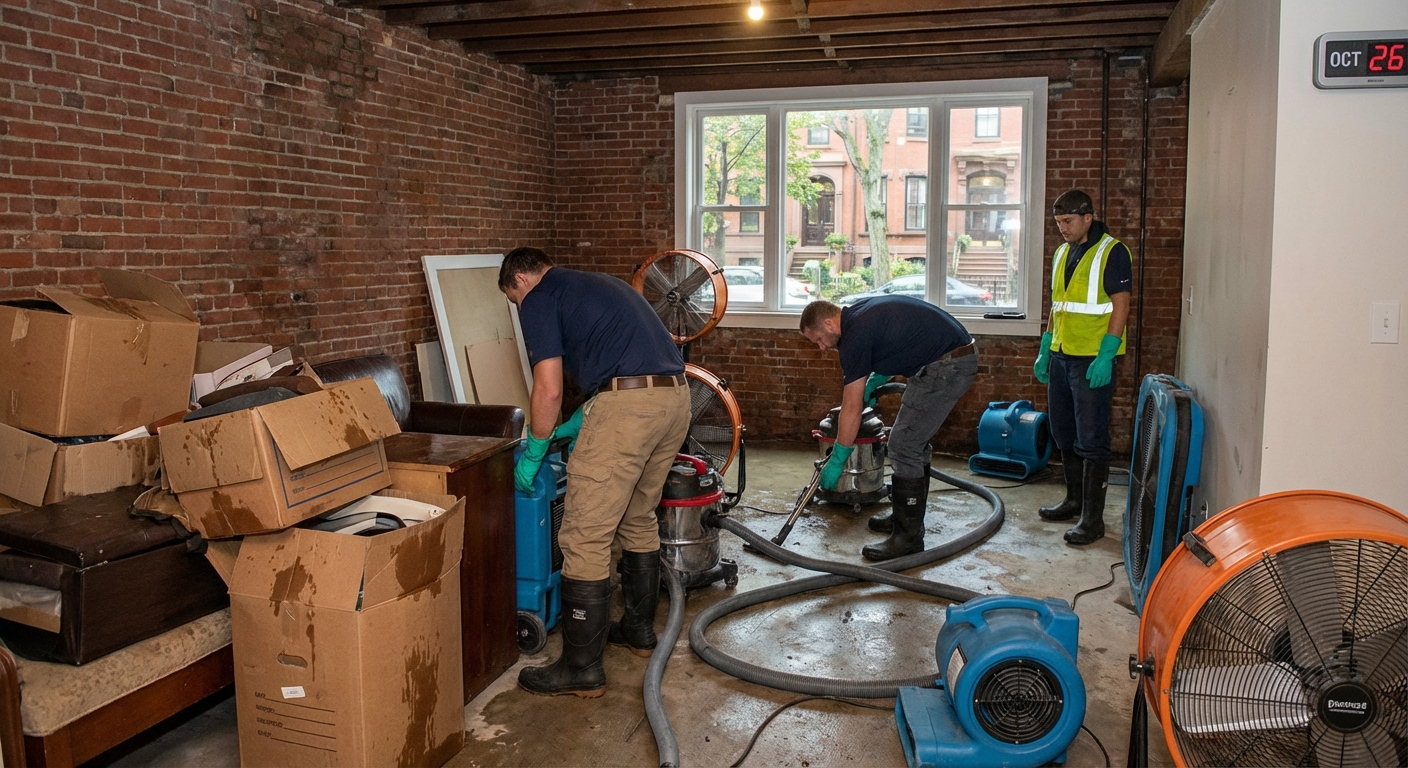
When a basement floods, every minute counts. Water spreads quickly, soaking into everything it touches. We move fast. Removing standing water, clearing out debris, and starting the drying process before mold and rot can set in. Our team brings the right equipment and the experience to handle any source of flooding, whether it’s a burst pipe, failed sump pump, or a storm that overwhelmed your drainage. Many Cambridge residents have relied on our experience during severe weather events.
- Water Extraction: Pumps and vacuums pull out standing water from every corner.
- Debris Removal: Damaged materials and unsalvageable belongings are cleared out to prevent further contamination.
- Surface Cleaning: We scrub floors, walls, and fixtures to remove dirt and contaminants left by floodwater.
- Initial Moisture Assessment: Every wall, floor, and hidden space gets checked to see how far the water traveled.
Getting the water out is only the start. We focus on stopping the spread of damage, making sure nothing is left behind to cause problems later.
Drying Out and Controlling Moisture
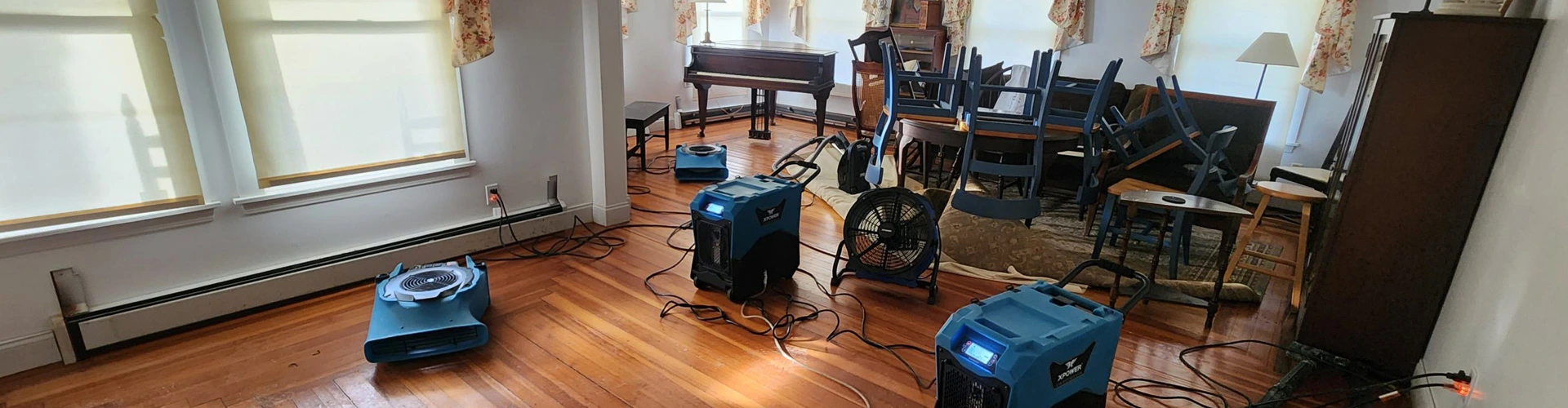
After the water’s gone, moisture still hides in places you can’t see. It seeps into drywall, insulation, and wood framing. If it stays, mold and structural issues follow. We use industrial dehumidifiers, air movers, and moisture meters to track every bit of dampness. Drying isn’t a guessing game. We monitor humidity, check inside wall cavities, and keep airflow moving until everything is truly dry. This process can take days, depending on how much water got in and how long it sat. Skipping steps or rushing only leads to bigger repairs down the line.
We also look for the source of the problem. Drainage issues, foundation cracks, and poor ventilation all contribute to recurring dampness. Our team identifies these risks and helps you address them, so you’re not dealing with the same mess again next season. Preventing future basement flooding is especially important for Cambridge homeowners, given the region’s frequent storms and older infrastructure.
Restoring Your Basement After Water Damage
Once the basement is dry, repairs begin. Water ruins drywall, insulation, flooring, and trim. Some materials can be saved if dried quickly, but most need replacement after prolonged exposure. We handle every step, from demolition to the final coat of paint, so you don’t have to juggle multiple contractors or worry about missed details.
- Drywall Replacement: Damaged sections are cut out and replaced to match your existing walls.
- Insulation Removal and Reinstallation: Soaked insulation is pulled out and replaced with fresh material.
- Flooring Repairs: Warped wood, damaged tile, or ruined carpet gets swapped for new, durable flooring.
- Trim and Baseboard Replacement: Rotted or stained trim is replaced for a clean, finished look.
- Painting and Finishing: Repaired areas are sealed and painted to blend seamlessly with the rest of your basement.
Our goal is to restore your basement to a safe, usable space. No shortcuts, no lingering issues.
How We Help Prevent Future Basement Floods
With the cleanup done, we turn our attention to prevention. Gutters and downspouts need regular cleaning, and water should drain well away from your foundation. Grading matters. Yards that slope toward the house invite trouble. Sump pumps need to be tested before storm season, and battery backups keep them running during outages. Foundation cracks should be sealed, and waterproofing may be necessary in high-risk areas. Plumbing maintenance catches leaks before they become disasters. We walk you through these steps, offering practical fixes that fit your home and budget, so you’re not left dealing with repeat flooding or surprise repairs.
Let's Get Your Basement Back to Normal
Flooded basements don't fix themselves, and waiting only makes things worse. Whether you're dealing with standing water, hidden moisture, or repairs after a flood, we're here to help. Call 978-778-6676 or schedule an appointment to get your basement restored the right way.