
Flooded Basement Restoration in Arlington
Water in the basement never arrives quietly. It seeps into walls, ruins what you store, and leaves behind a mess that can turn your home into a hazard zone. The longer it sits, the more it spreads, so acting quickly isn’t just smart, it’s necessary for Arlington homeowners facing unpredictable weather.
Why Arlington Homeowners Call Us When Basements Flood
Storms roll through, and suddenly the basement floor is underwater. Sometimes it’s a burst pipe after a cold snap, or a sump pump that gives out just when you need it. Even a small crack in the foundation can let water in, especially after heavy rain. We see it all: old homes with tired plumbing, newer builds with drainage that can’t keep up, and everything in between. When water finds a way in, it doesn’t care how new your house is.
- Heavy Rainfall and Poor Drainage: Gutters that overflow or downspouts that dump water near the foundation send moisture straight into the basement.
- Burst or Leaking Pipes: Pipes fail without warning, flooding the lowest level in minutes.
- Sump Pump Failures: When pumps stop, water rises fast and fills the space before you know it.
- Foundation Cracks: Even hairline cracks let groundwater push through after storms or snowmelt.
- Sewer Backups: Overloaded municipal systems push wastewater up through basement drains.
Flooding doesn’t discriminate. Whether it’s a sudden downpour or a slow leak, the result is the same: water where it doesn’t belong, and a basement that needs immediate attention.
What We See When Water Sits Too Long
When water lingers, problems multiply. Mold starts to grow in less than two days. Air turns musty. Bacteria from floodwater settle into every crack and corner. The longer the delay, the harder it gets to make the space safe again.
- Mold Growth: Mold spreads quickly in damp conditions, filling the air with spores that trigger allergies and breathing issues.
- Bacteria and Pathogens: Floodwater brings in germs from outside, sometimes even sewage, putting your health at risk.
- Structural Weakening: Wood, drywall, and insulation lose strength as they soak up moisture, making the basement unsafe.
- Pest Infestations: Dampness draws in insects and rodents looking for shelter and water.
We’ve walked into basements where the smell alone tells the story: mold on the walls, soggy boxes, and air that’s tough to breathe. Quick action keeps these problems from taking over.
How We Remove Water and Stop the Damage
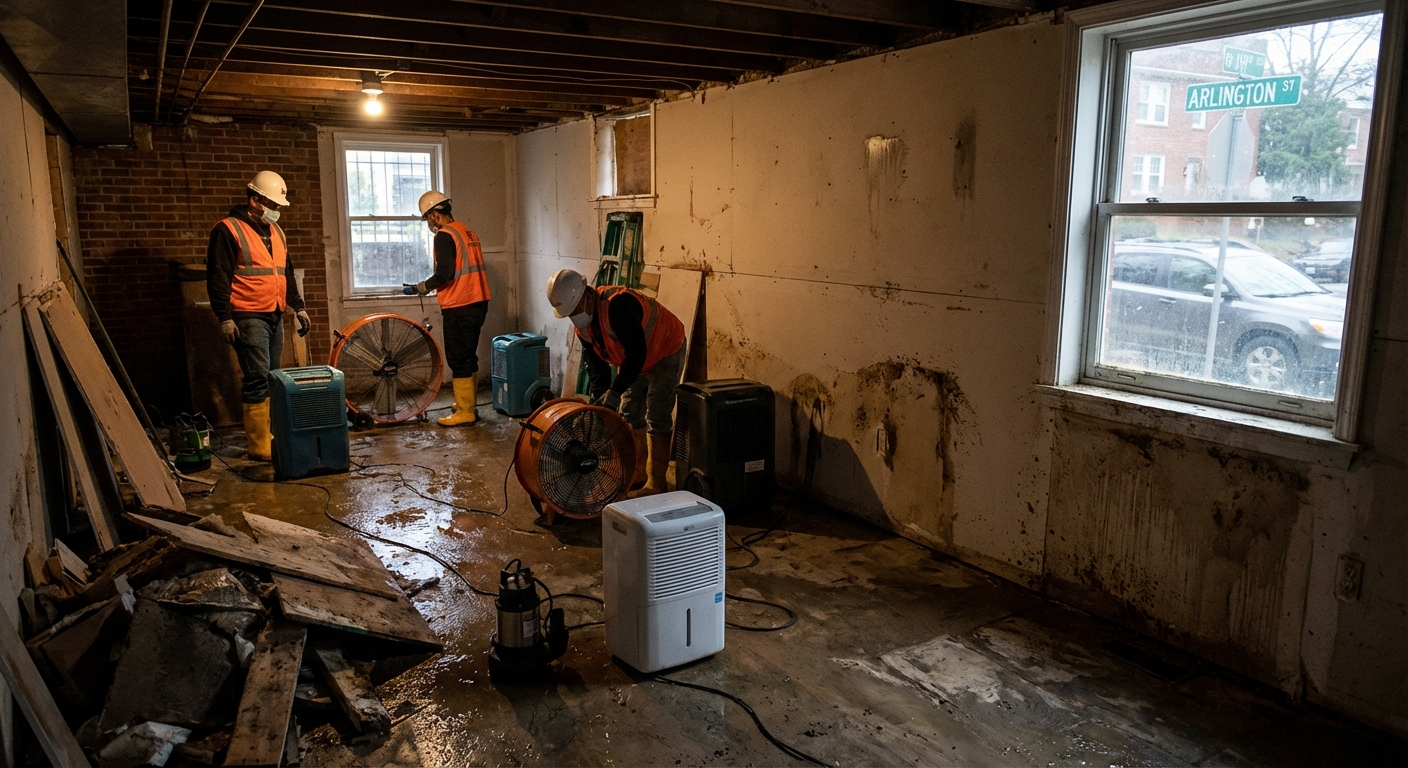
When we arrive, the first step is getting the water out, fast. Industrial pumps pull out standing water, and wet vacuums handle what’s left in carpets and corners. Every minute matters, because water keeps moving deeper into floors and walls the longer it stays. Our team has restored countless Arlington basements after severe storms and plumbing failures.
- Submersible Pumps: These clear out large pools of water quickly, getting the basement back to a workable state.
- Wet Vacuums: We use these for carpets, padding, and spots where water hides.
- Moisture Meters: Our team checks behind walls and under floors to find hidden dampness.
- Air Movers and Fans: High-powered fans push air across wet surfaces, speeding up drying and stopping moisture from settling in.
We don’t just focus on what’s visible. Moisture hides in places you can’t see, so we check every inch to make sure nothing gets missed. That’s how we prevent future water damage and rot.
What Gets Hit Hardest by Basement Floods
Some materials bounce back after a flood, but others don’t stand a chance. Drywall crumbles, carpet padding turns into a soggy mess, and wood warps out of shape. Stored belongings: boxes, furniture, electronics, often take the worst of it, especially if water sits for more than a day.
- Drywall and Insulation: These soak up water fast and lose their strength, making replacement the only safe option.
- Carpeting and Padding: Padding holds onto moisture, turning into a breeding ground for mold and bacteria.
- Wood Framing and Flooring: Wood swells and weakens, sometimes beyond repair if it stays wet too long.
- Stored Belongings: Items kept in basements rarely survive prolonged exposure to water.
We sort through everything, deciding what can be saved and what needs to go. The goal is to protect your home and your health, not just clear out the mess.
Our Approach to Drying and Preventing Mold
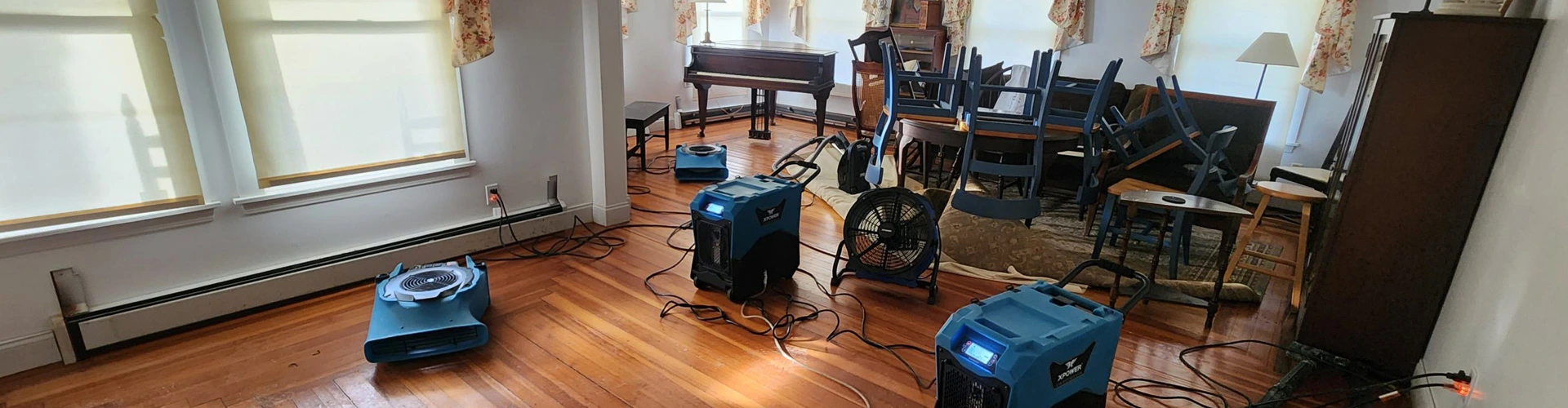
Once the water’s gone, drying begins. Industrial dehumidifiers pull moisture from the air, while fans keep it moving across every surface. We monitor moisture levels daily, adjusting equipment as needed to make sure nothing gets left damp. Sealing off the area helps us control temperature and airflow, speeding up the process and stopping mold before it starts.
- Dehumidifiers: These machines draw water out of the air and materials, lowering humidity fast.
- Air Movers: Fans keep air circulating, drying out walls, floors, and ceilings.
- Moisture Monitoring: We track progress every day to ensure safe dryness before repairs begin.
- Controlled Environment: Isolating the space helps us dry it out faster and more thoroughly.
Drying isn’t a guessing game. We use real numbers and daily checks to make sure your basement is ready for the next step. Many Arlington residents rely on our thorough approach to prevent future mold outbreaks.
Restoration That Lasts
With everything dry, we move to repairs. Damaged drywall comes out, new flooring goes in, and every surface gets cleaned and disinfected. Sometimes it’s a simple fix, other times, it means rebuilding sections of wall or replacing insulation. We handle the entire process, keeping you informed and making sure the job is done right. No shortcuts, no hidden damage left behind. Our restoration work stands up to Arlington’s unpredictable weather and future storms.
Let's Get Your Basement Back to Normal
Flooding doesn't wait, and neither should you. Call 978-778-6676 or schedule an appointment to get your basement dried out and restored.