
Flooded Basement Restoration in Medford
Standing in a basement with water creeping across the floor, you see more than just a mess. Boxes soak through, drywall sags, and the air turns heavy with damp. Water doesn’t wait for an invitation—it finds the weak spots, seeps into insulation, and settles behind walls. Mold and rot follow quickly if nothing’s done, especially in homes throughout Medford where seasonal storms are common.
How We Tackle the Source of Basement Floods
Basement floods rarely come from just one cause. In Medford, older homes and shifting ground set the stage, but it’s the combination of heavy rain, tired sump pumps, and foundation cracks that push water inside. Sometimes a pipe bursts without warning. Other times, runoff overwhelms drainage or a sump pump fails right when it’s needed. Pinpointing the source is the first step we take, because stopping the water matters as much as cleaning it up.
- Heavy Rainstorms and Poor Drainage: Water finds its way in when gutters overflow or the ground slopes toward the house.
- Failed Sump Pumps: Older pumps quit or lose power, leaving basements exposed during storms.
- Cracked Foundation Walls: Soil pressure and freeze-thaw cycles open gaps that let groundwater seep through.
- Burst or Leaking Pipes: Frozen or corroded pipes can flood a basement in minutes.
- Backed-Up Sewer Lines: Clogs or city overflow push water back through basement drains.
We’ve seen every scenario, from unnoticed foundation cracks to water heaters that let go overnight. No matter the cause, our focus is always on stopping the water and moving fast to limit the damage.
What Sets Our Cleanup Apart
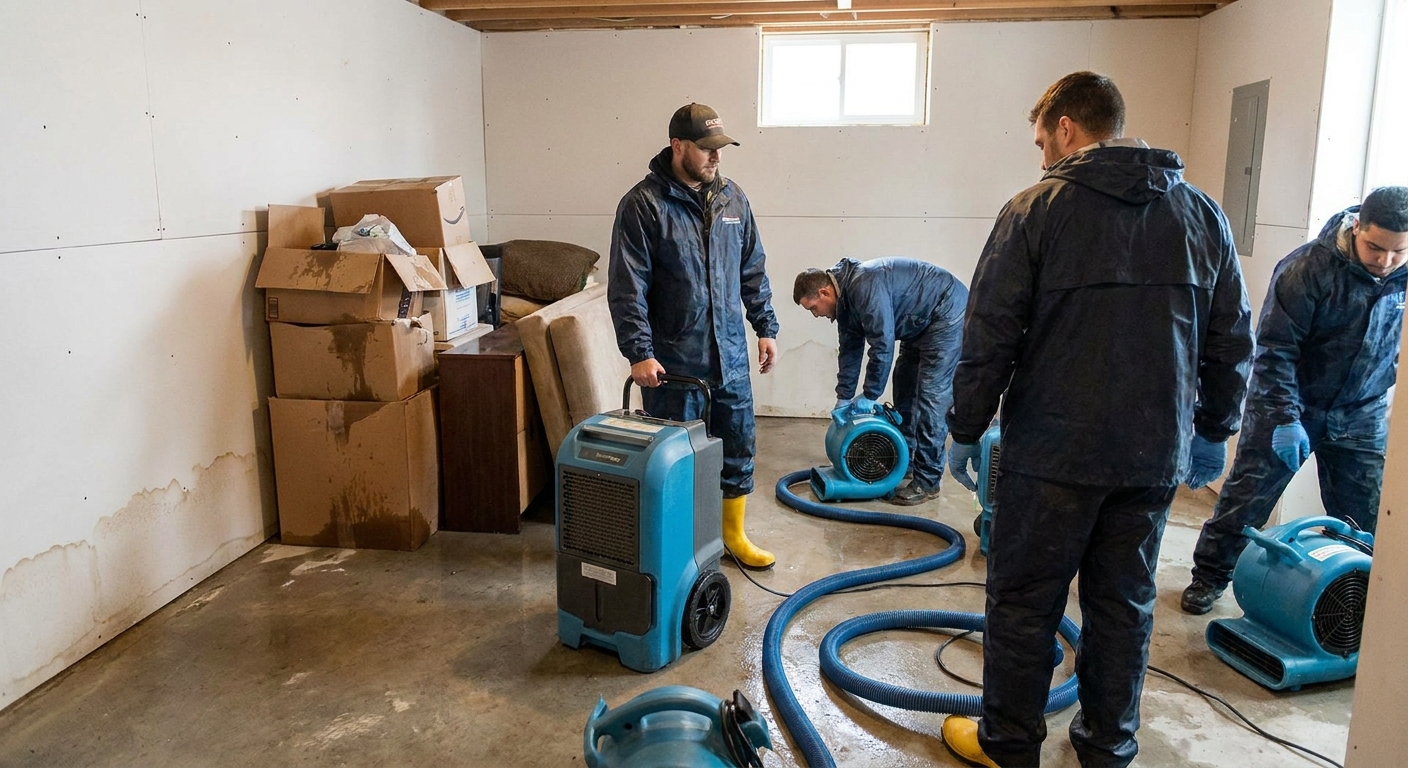
Arriving on site, we don’t just start pulling water. Our team checks every corner, tracks how far the water spread, and identifies what’s been hit hardest. Cleanup isn’t about speed alone. It’s about precision. We use high-volume pumps for standing water, then switch to extraction vacuums for carpets and low spots. Moisture meters show us what’s soaked beneath the surface, even when it looks dry.
- Initial Walkthrough and Damage Check: We map out the water’s path and spot hidden trouble areas.
- Water Extraction with Pumps and Vacuums: Fast removal keeps damage from spreading deeper.
- Moisture Detection in Walls and Floors: We find damp spots that could turn into mold later.
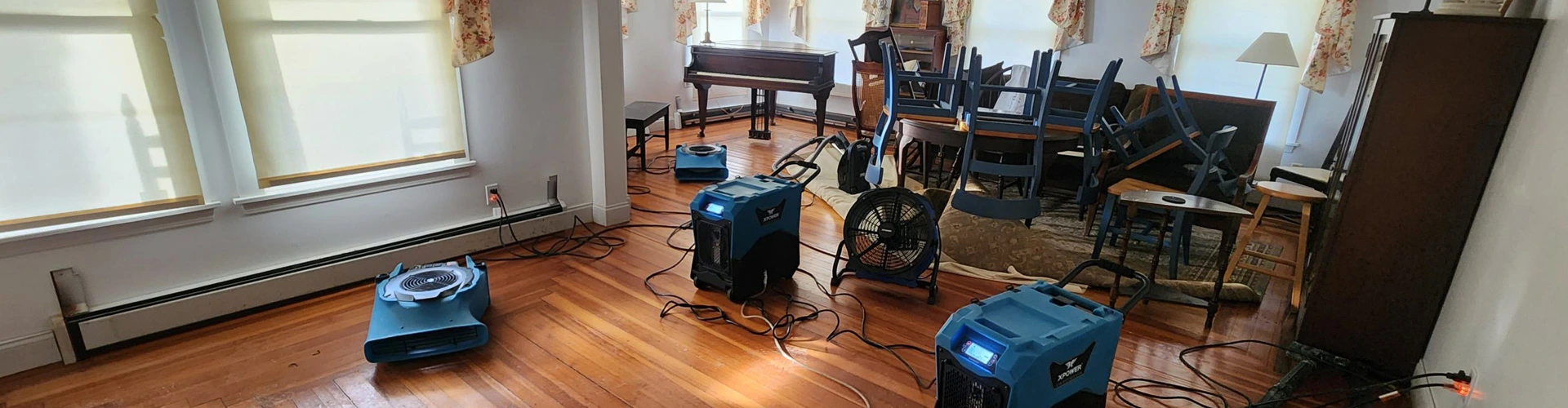
- Drying Setup with Air Movers and Dehumidifiers: Equipment runs until every surface reaches safe moisture levels.
- Removal of Unsalvageable Materials: Anything too damaged—insulation, drywall, flooring—gets taken out and hauled away.
We don’t leave until the basement is dry, safe, and ready for repairs. That means checking humidity, confirming airflow, and making sure nothing wet is left behind walls or under floors.
Drying Every Inch, Not Just the Surface
When water’s gone, the real work begins. Air movers and dehumidifiers run around the clock, targeting every damp spot. Corners, behind water heaters, under stairs. We monitor moisture readings daily, shifting equipment as needed. Drying isn’t guesswork. If moisture lingers, mold and odor follow. We stay on it until every reading is right, because missing a spot means problems return later. Many Medford basements benefit from this thorough approach, especially after heavy rainfall.
Restoring What Water Damaged
With the basement dry, we turn to repairs. Some drywall can’t be saved if water climbed too high. Insulation that soaked up moisture gets replaced. Flooring that buckled or warped comes out. Wood framing is checked closely. If it dried quickly, it might stay, but we never take chances. Damaged sections are removed, framing is treated, and new materials go in. We haul away debris, leaving no piles behind. The goal is a basement that’s solid, safe, and ready for use again.
Solving Persistent Moisture Issues
When a basement looks dry but still feels damp, hidden moisture is usually the culprit. Mold, musty smells, and slow wood rot can start behind walls or under slabs where air doesn’t reach. We keep dehumidifiers running longer if needed, and recheck moisture in studs, concrete, and subfloors until everything stabilizes. Sometimes, we pull baseboards or drill small holes to get airflow behind walls. Staying ahead of hidden moisture keeps mold from taking hold and saves you from bigger repairs down the line.
How We Help Prevent the Next Flood
After cleanup, we walk through what caused the flood and what can be done to lower the risk next time. Sometimes a new sump pump or rerouted downspout is enough. Other times, sealing cracks, improving drainage, or adding a backup battery system makes the difference. Our team has helped many Medford homeowners implement these upgrades for lasting protection.
- Install or Upgrade Your Sump Pump: Reliable pumps with battery backups keep water out during storms and outages.
- Seal Foundation Cracks and Gaps: Closing small openings stops groundwater from sneaking in.
- Improve Exterior Grading and Drainage: Proper slope and clear gutters keep water away from your foundation.
- Add a Backwater Valve to Sewer Lines: Stops city backups from reaching your basement.
- Inspect Pipes and Water Heaters Regularly: Spotting wear early prevents sudden floods.
We point out the risks we see and recommend upgrades that fit your home and budget. A small fix now can save you from another flood and a bigger bill later.
Let's Get Your Basement Back in Shape
Water damage doesn't fix itself. The longer it sits, the worse it gets. Whether you're dealing with emergency basement cleanup or trying to prevent the next flood, Leal Cleaning & Restoration Inc. has the crew and equipment to handle it right. Call 978-778-6676 or schedule an appointment to get your space dry and safe again.