
Flooded Basement Restoration in Saugus
Water finds its way in when drainage can’t keep up. Gutters clog, sump pumps stall, and the ground outside pushes water straight toward your foundation. In Saugus, older homes face this more than most. Drainage systems built decades ago rarely match up to today’s storms. When the soil slopes the wrong way, every downpour becomes a test. Basements here don’t just get damp; they fill up fast, especially when heavy rain hits and the runoff has nowhere else to go.

Cracks in foundation walls, gaps around windows, and old utility penetrations all become open doors for water. Even a small breach lets moisture seep in, and once the ground is saturated, pressure builds. Water doesn’t wait for an invitation. Failed French drains, broken downspouts, and unexpected sewer backups have all turned dry basements into disaster zones overnight. The damage starts immediately, and waiting only makes things worse.
How We Spot Water Problems Fast
Sometimes, the first sign is subtle—a faint musty odor or a damp patch that lingers after rain. Other times, you step downstairs and find water pooling where it shouldn’t be. No matter how it starts, the warning signs are clear if you know what to look for.
- Wet Spots on Basement Floors: These show up as dark patches or puddles after storms or snowmelt, signaling water is getting in somewhere.
- Water Stains on Walls: Streaks or discoloration on concrete or drywall point to ongoing leaks or seepage.
- Peeling Paint or Efflorescence: Bubbling paint or white, powdery residue means moisture is pushing through from the outside.
- Warped Baseboards or Trim: Swollen or buckled wood along the floor signals repeated exposure to water.
- Mold Growth or Musty Odors: Persistent smells or visible mold patches are a clear sign moisture has been around too long.
Ignoring these issues leads to bigger headaches. Mold, rot, and even structural problems can result. We check every inch, from corners to seams, to pinpoint where water is sneaking in and what needs to be done to stop it.
Our Emergency Water Removal Process
When water fills a basement, every minute counts. Floors, walls, and anything stored below grade start soaking up moisture right away. Our team arrives with industrial pumps and extraction gear built for speed and thoroughness. We don’t just clear visible water. We pull moisture from carpet pads, subfloors, and wall cavities before it spreads deeper.
Standard shop vacs and mops can’t handle this kind of job. We use truck-mounted extractors and submersible pumps that move large volumes without tearing up your space. Once the standing water is gone, we map out where moisture lingers and target those spots. Each basement is different, but the goal is always the same: get it dry before mold and rot set in. Storm damage cleanup is a constant need across properties in Saugus, so our team is prepared for the unique challenges local basements present.
Drying Materials the Right Way
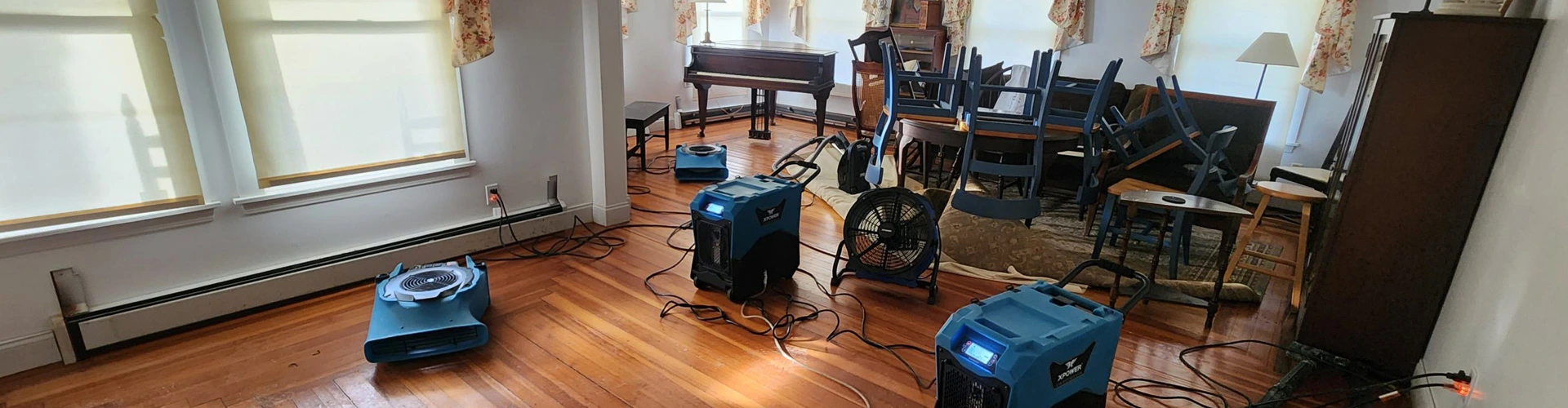
Even after pumping out water, concrete, wood, and drywall hold onto moisture. Humidity hides in places you can’t see. That’s why we bring in air movers, dehumidifiers, and thermal cameras to track and speed up drying. Equipment placement matters. Air needs to move across wet surfaces, not just blow around the room.
- High-Velocity Air Movers: These push air across damp areas, helping moisture evaporate quickly and reducing the risk of mold.
- Commercial Dehumidifiers: They pull water from the air, lowering humidity and helping materials dry out fully.
- Moisture Meters and Thermal Cameras: We use these to check progress and find hidden wet spots inside walls or under floors.
- Wall Cavity Drying: Specialized tools let us dry inside walls without unnecessary demolition, saving time and money.
Rushing this step causes more harm than good. We monitor moisture levels daily, adjusting equipment as needed. Only when readings confirm everything is dry do we move on. Skipping this process invites mold and long-term damage that’s far more expensive to fix.
What We Remove and Why It Matters
Some materials just can’t be saved. Soaked drywall loses strength, carpet padding turns into a breeding ground for bacteria, and stored belongings often take the brunt of the damage. We sort what can be salvaged from what needs to go, handling removal and disposal so you don’t have to worry about it.
- Damaged Flooring: Laminate swells, hardwood warps, and carpet traps contamination. These usually need to be pulled up and replaced.
- Wet Insulation: Once insulation gets wet, it loses effectiveness and can harbor mold, so we remove it completely.
- Ruined Drywall: Sections that can’t be dried in place are cut out and disposed of to prevent future problems.
- Contaminated Personal Items: Boxes, furniture, and keepsakes that can’t be cleaned safely are removed to protect your health.
We handle the heavy lifting, bagging, and cleanup, leaving your basement ready for repairs. Not just a temporary fix. We’ve handled removals everywhere from backyards to tight spaces around basement flood restoration, so you can trust our experience with local homes.
How We Help You Prevent the Next Flood
When the immediate mess is gone, we turn our attention to what caused it. Drainage, grading, sump pumps, and foundation cracks all play a role. Sometimes, a simple fix like clearing a drain or extending a downspout solves the problem. Other times, bigger changes are needed, such as installing a backup sump pump or sealing up foundation gaps.
- Sump Pump Installation or Replacement: Keeps water moving out before it can collect and cause damage.
- Foundation Crack Sealing: Blocks water from sneaking through concrete walls or floors.
- Exterior Grading Adjustments: Directs rainwater away from your home, reducing the risk of future flooding.
- Gutter and Downspout Extensions: Moves roof runoff farther from your foundation, keeping the soil around your home drier.
- Interior Drainage Systems: Channels water to a sump basin before it ever reaches your basement floor.
Investing in prevention saves money and stress down the line. We walk you through every option, explain what fits your property, and help you make the right call. Our work doesn’t end when the basement is dry. We help you keep it that way for years to come in Saugus.
Let's Get Your Basement Back
Flooded basements don't fix themselves. The longer water sits, the worse the damage gets. Call 978-778-6676 or schedule an appointment to get your basement pumped, dried, and restored the right way.