
Flooded Basement Restoration in Lynnfield
Basement flooding doesn’t wait for a convenient moment. Sump pumps fail—sometimes the power cuts out, sometimes the float switch jams, and sometimes the motor just gives up. Water rises fast, and before you know it, you’re dealing with soaked floors and ruined storage. Most homes in Lynnfield don’t have backup systems, so when the main pump stops during a storm, water finds its way in. The longer it sits, the more damage it does, turning a simple cleanup into a major restoration job.
How We Spot Water Damage Before It Spreads
Even when water isn’t obvious, it leaves a trail. You might notice a musty odor that lingers, or see stains creeping up from the baseboards. Sometimes, the only clue is a patch of warped trim or a faint white powder on the concrete. These aren’t just cosmetic issues. They’re warnings that water is working its way deeper into your basement. We look for these early signs every time we step into a job, because catching them now means less demolition and faster recovery.
- Discoloration on Walls or Floors: Brown or yellow marks near the foundation show water has been present for a while.
- Efflorescence or White Powder: Chalky residue signals that moisture is evaporating through concrete, leaving minerals behind.
- Warped Baseboards or Trim: Swelling and separation from the wall point to hidden moisture in the wood.
- Damp or Musty Odors: Persistent smells are a sign that water is trapped somewhere, even if you can’t see it.
- Cracks in Foundation Walls: Small gaps let water seep in, especially after heavy rain or snowmelt.
We check behind boxes, under carpets, and along every seam. Water hides in places most people overlook. By finding it early, we keep mold from spreading and protect your basement from bigger problems.
Our Emergency Response When Water Hits
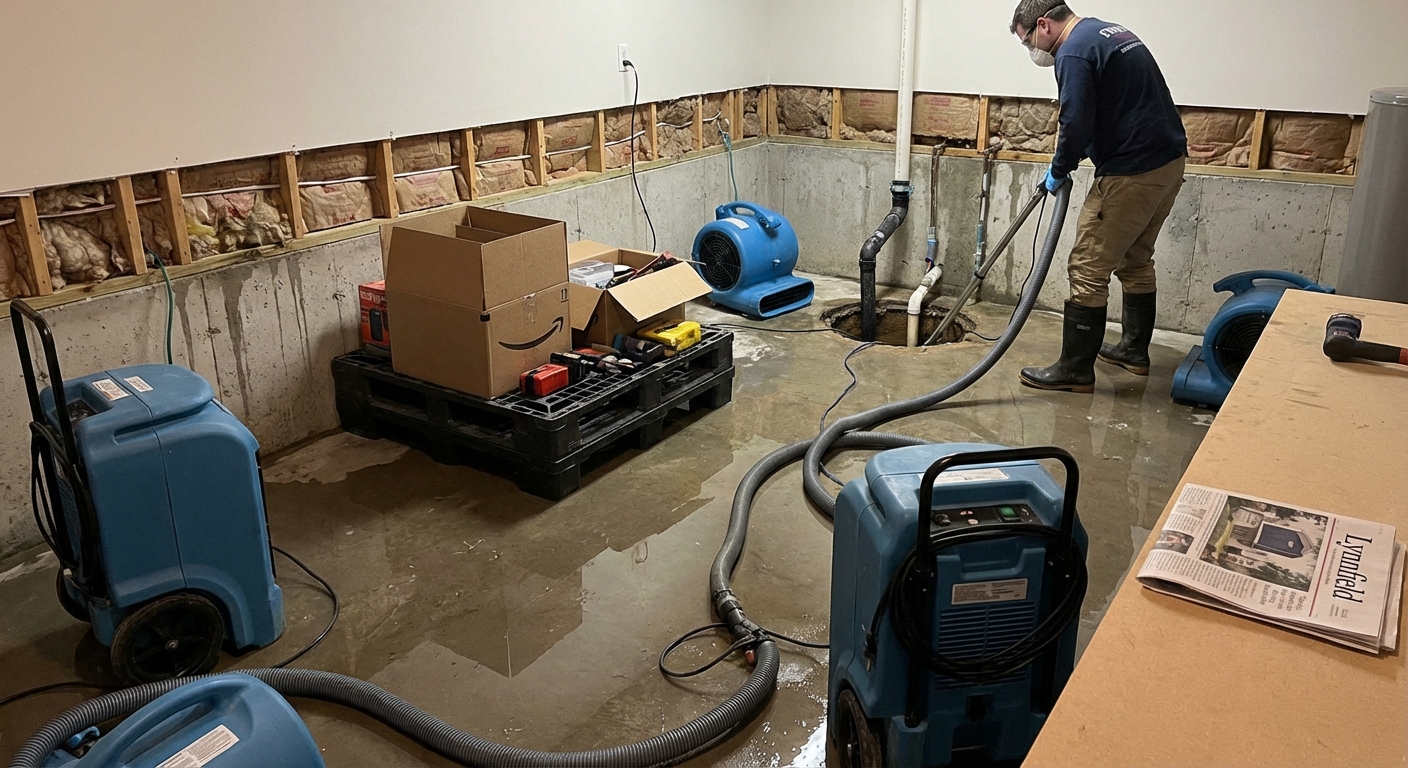
Storms don’t care about schedules, and neither do we. When you call, we answer, no matter the hour. Our team moves quickly, because every minute counts once water starts soaking into drywall and subflooring. We don’t just show up; we come ready to stop the source, whether it’s a failed pump, a burst pipe, or water pushing through the foundation. Extraction starts right away, using industrial pumps and vacuums to pull out every drop we can reach. We don’t leave puddles behind or hope things dry on their own. Every gallon removed now means less damage later.
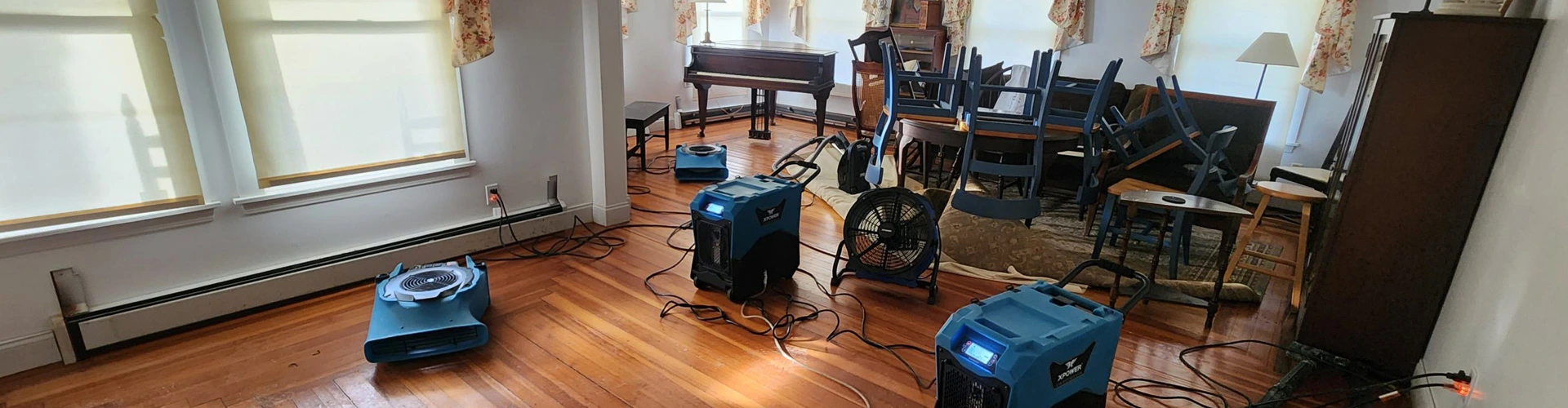
After extraction, we set up drying equipment. High-powered fans and dehumidifiers run nonstop, pulling moisture from walls, floors, and the air. We track humidity and adjust as needed, because proper drying isn’t a one-day job. Rushing this step leads to mold and lingering damage. Our approach keeps restoration costs down and protects your home for the long haul.
How We Dry Out Every Material
Surface water is only part of the problem. Drywall, wood, and concrete all hold moisture long after the floor looks dry. With moisture meters, we check inside walls and under flooring. Relying on guesses isn’t good enough. If readings are high, we keep drying. Mold can start in less than two days if materials stay damp, so we don’t take chances.
- Drywall and Insulation: These soak up water fast and need targeted airflow to dry without tearing everything out.
- Wood Framing and Studs: Structural wood dries slowly and can warp or rot if left damp.
- Concrete Floors and Foundations: Porous concrete traps water deep inside, so we use dehumidifiers for days to pull it out.
- Carpet and Padding: Padding almost never dries fully and usually needs to be removed to prevent odor and mold.
- Subflooring: Hidden moisture under carpet or tile can weaken your structure if ignored.
We combine dehumidifiers and air movers to force moisture out of every corner. This thorough approach keeps hidden damage from showing up months later. Our experience in Lynnfield means we know where water hides and how to get it out for good.
Safe Removal of Contaminated Water and Materials
Floodwater isn’t just rain. It can carry bacteria, chemicals, and waste. We treat every job with the right safety gear and strict disposal methods. Anything that can’t be cleaned—soaked drywall, ruined insulation, waterlogged carpet—gets bagged and hauled away. We disinfect every surface the water touched, scrubbing floors, treating wood, and wiping down walls. Sometimes, water pools behind walls or under stairs, so we use thermal cameras to find and dry these hidden spots. This level of detail keeps your home safe and prevents future problems.
What We Recommend to Prevent Future Floods
Once the basement is dry, we talk about real solutions. Upgrades like battery backup sump pumps, better drainage, and sealing foundation cracks make a difference. These changes cost less than another round of water damage and give you control over what happens when the next storm hits.
- Battery Backup Sump Pumps: Keep water moving even during power outages, which is when most floods start.
- French Drains and Exterior Grading: Move water away from your foundation before it can seep inside.
- Foundation Crack Sealing: Block water from entering through small gaps that grow over time.
- Dehumidifiers for Ongoing Moisture Control: Maintain low humidity to stop mold and dampness year-round.
- Improved Gutter and Downspout Systems: Direct roof runoff away from your home, easing pressure on your foundation.
We’ve seen homeowners deal with repeat floods until these upgrades are in place. Once done, the basement stays dry. It’s about making sure water has nowhere to go but away from your home.
Let's Get Your Basement Back to Normal
Water damage doesn't fix itself, and waiting only makes it worse. Whether you're dealing with a sump pump failure, a cracked foundation, or standing water from a storm, we'll handle the cleanup, drying, and restoration from start to finish. Call us at 978-778-6676 or schedule an appointment to get your basement dry and safe again.