
Flooded Basement Restoration in Chelsea
Water in the basement never waits for an invitation. A sudden downpour, melting snow, or a pipe that gives out in the night—any of these can turn a dry basement into a waterlogged headache. Once water gets in, it spreads quickly, soaking floors, walls, and anything stored below ground. The mess doesn’t just stop at puddles; it seeps into every material it touches, leaving behind more than just a cleanup job for Chelsea homeowners and property managers.
In Chelsea, older homes often face the brunt of these problems. Foundations shift and crack as years pass. Drains clog, sump pumps fail, and even newer homes aren’t immune if the ground slopes the wrong way or gutters dump water too close to the house. Water always finds the lowest point, and that’s usually your basement. When it arrives, it doesn’t care about timing. Storms, thaws, or a burst pipe can all trigger a flood, and the longer water sits, the more damage it causes.
How We Identify the Source of Basement Flooding
When water shows up in a basement, it rarely announces its entry. Sometimes the cause is obvious, but often, the real problem hides until a storm or thaw exposes it. Our team looks for the usual suspects and tracks down the weak spots that let water in.
- Foundation Cracks: Even hairline gaps in concrete can let water seep through during heavy rain or snowmelt.
- Failed Sump Pumps: Pumps that quit or can’t keep up allow water to back up fast, especially during storms.
- Clogged Gutters and Downspouts: Overflowing gutters send water straight to the foundation instead of away from the house.
- Poor Grading: Soil sloping toward the house channels water right into basement walls.
- Burst Pipes or Water Heater Leaks: Plumbing failures can flood a basement in minutes, no matter the season.
We’ve seen these issues in every corner of Chelsea, from spring thaws to winter pipe bursts. The pattern is clear: water finds the path of least resistance, and it only takes one weak spot to start a flood.
What We Look for After Basement Flooding
After the water recedes, the real inspection begins. Not every sign of damage jumps out at first glance. We check for the obvious and the hidden, making sure nothing gets missed.
- Standing Water or Puddles: Any water left behind signals a bigger problem below the surface.
- Damp or Discolored Walls: Stains, dark patches, or walls that feel cold and wet point to lingering moisture.
- Warped or Buckling Floors: Flooring that lifts or separates often means water soaked in deep.
- Musty Smell: Persistent odors tell us moisture is still trapped somewhere.
- Mold Growth: Spots on walls, floors, or stored items show where water sat too long.
Surface dryness doesn’t guarantee safety. Materials can stay wet inside for days or weeks, and that’s when mold takes hold and wood starts to rot. We’ve opened up walls that looked fine, only to find soaked insulation and hidden damage behind them.
Our Approach to Emergency Water Removal
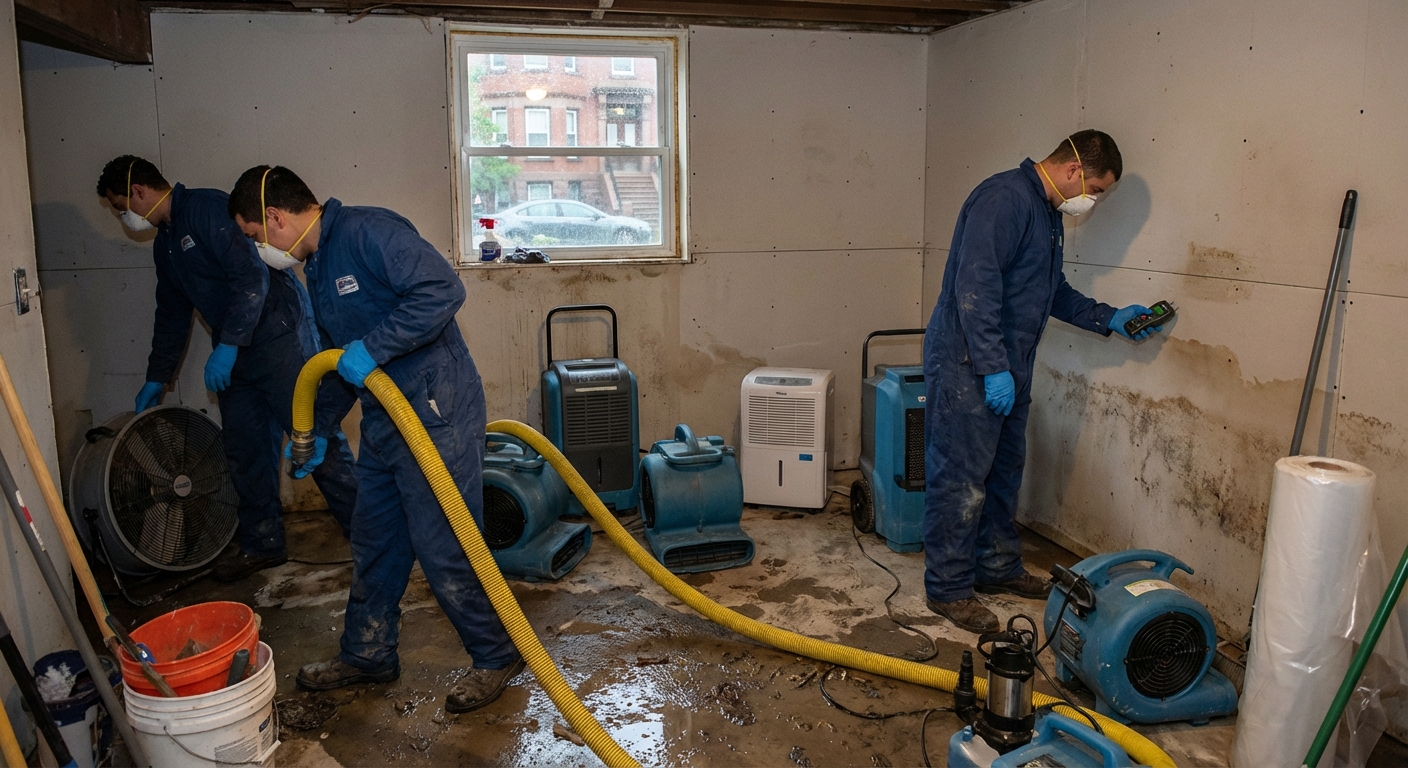
When we arrive, action starts immediately. There’s no waiting around. We assess the scene, stop any active leaks, and begin removing water with pumps and extractors. Every hour counts. Water that lingers keeps moving deeper into floors, walls, and stored belongings.
Once standing water is gone, we target moisture in carpets, padding, and porous materials. If water reached crawl spaces or crept behind walls, we open those areas to dry them out completely. Nothing gets left to fester or grow mold. We handle the cleanup, work with your insurance if needed, and document everything so you’re covered from start to finish.
How We Dry Out Basements and Structural Materials
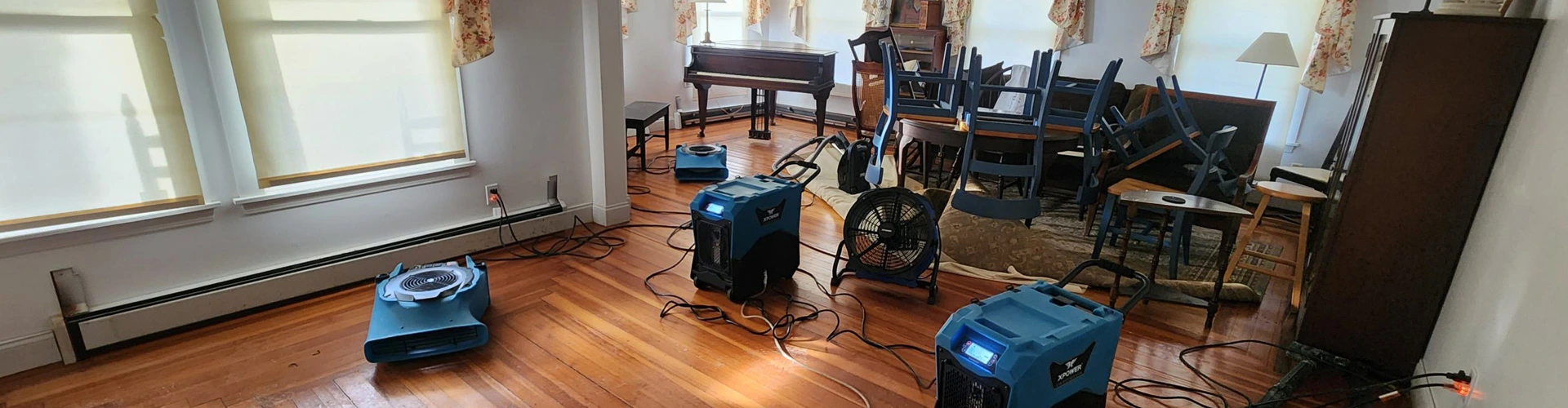
With the water out, drying begins in earnest. Fans and open windows won’t cut it. Concrete, drywall, and wood hold moisture deep inside. We bring in industrial dehumidifiers and air movers to pull water from every layer, not just the surface.
Walls get special attention. We check behind drywall and insulation, removing anything too wet to save. Studs and foundations are dried before any rebuilding starts. Floors get the same care. Carpet and padding come up if they’re soaked, and hardwood gets dried in place when possible. Structural drying takes time, and we monitor moisture levels throughout to ensure nothing is rushed or overlooked. Our team manages the entire process, so you never have to wonder if the job is truly finished. This thorough approach is especially important for Chelsea properties where older construction can hide moisture in unexpected places.
Restoring Your Basement After Water Damage
Once everything is dry, we move on to restoration. This isn’t just patchwork. It’s a full rebuild where needed, returning your basement to its original condition or better. We handle every step, from replacing drywall and flooring to repainting and finishing touches.
- Drywall Replacement: Damaged sections are cut out and replaced with new panels that blend seamlessly.
- Flooring Reinstallation: Carpet, tile, or laminate goes back in only after the subfloor is completely dry and inspected.
- Baseboard and Trim Work: Any water-damaged trim is replaced for a clean, finished look.
- Painting and Finishing: Fresh paint restores the space to its original appearance.
- Mold Remediation: If mold appeared, we remove it thoroughly and treat the area to keep it from returning.
We don’t leave jobs half-done or patched together. Every repair is handled with care, so your basement is safe, clean, and ready for use again. Our team coordinates the entire process, from water removal to the final coat of paint.
How We Help Prevent Future Basement Floods
When a basement floods once, it’s time to address the root cause. We work with homeowners to identify vulnerabilities and make changes that keep water out for good. Some solutions are straightforward, while others require more effort, but the payoff is a dry basement even during the worst weather.
- Sump Pump Installation or Replacement: Reliable pumps move water out before it can build up.
- Foundation Sealing: Sealing cracks and gaps blocks water from sneaking through walls.
- Improved Drainage Systems: French drains or better grading send water away from the house.
- Gutter and Downspout Extensions: Directing water farther from the foundation stops pooling near basement walls.
- Backup Power for Sump Pumps: Battery backups keep pumps running even when the power goes out.
We’ve seen homes go from repeated floods to years of dryness after these upgrades. Fixing drainage and sealing foundations makes a real difference, and we guide you through every step to make sure the problem doesn’t return for Chelsea residents.
Let's Get Your Basement Dry and Safe Again
Flooded basements don't fix themselves. Water damage spreads, mold grows, and repairs get more expensive the longer you wait. We're here to pull the water out, dry everything down, and restore your space so it's safe to use again. Call 978-778-6676 or schedule an appointment with Leal Cleaning & Restoration Inc. to get started.