
Flooded Basement Restoration in Marlborough
Water in the basement never arrives quietly. A sudden storm, a burst pipe, or a sump pump that gives out at the wrong moment—each one leaves you with soaked floors, damp walls, and a mess that spreads fast. Once water gets in, it doesn’t stop at the surface. It seeps into every crack, saturates insulation, and lingers in places you can’t see. Restoration isn’t just about removing puddles; it’s about making sure every inch is dry and safe for the long haul, especially for Marlborough homeowners facing unpredictable weather.
Why Basements Flood and How We Respond
Flooding rarely comes from a single source. Sometimes heavy rain pushes water against the foundation, overwhelming gutters and drains. Other times, a sump pump fails just as groundwater rises, or a sewer line backs up and sends waste where it doesn’t belong. Even a small leak from a washing machine hose or water heater can turn into inches of standing water overnight. When we arrive, we look for the real cause, not just the obvious mess, so you don’t face the same disaster twice.
- Heavy Rain and Drainage Issues: Water collects around the foundation when gutters clog or the yard slopes toward the house.
- Sump Pump Failures: Pumps that lose power or break down leave groundwater with nowhere to go.
- Burst or Leaking Pipes: Supply lines and appliances can fail suddenly, flooding the lowest part of your home.
- Sewer Backups: Blocked or overloaded sewer lines push wastewater into the basement first.
- Foundation Cracks and Window Wells: Old cracks or poorly sealed window wells let water seep in during storms or snowmelt.
When multiple problems hit at once, such as a storm, a power outage, and a failed sump pump, the water comes in faster than most people can react. We’ve seen basements fill up in minutes. The sooner the source is found and stopped, the less damage you’ll face down the line.
What We Do First When Water Hits
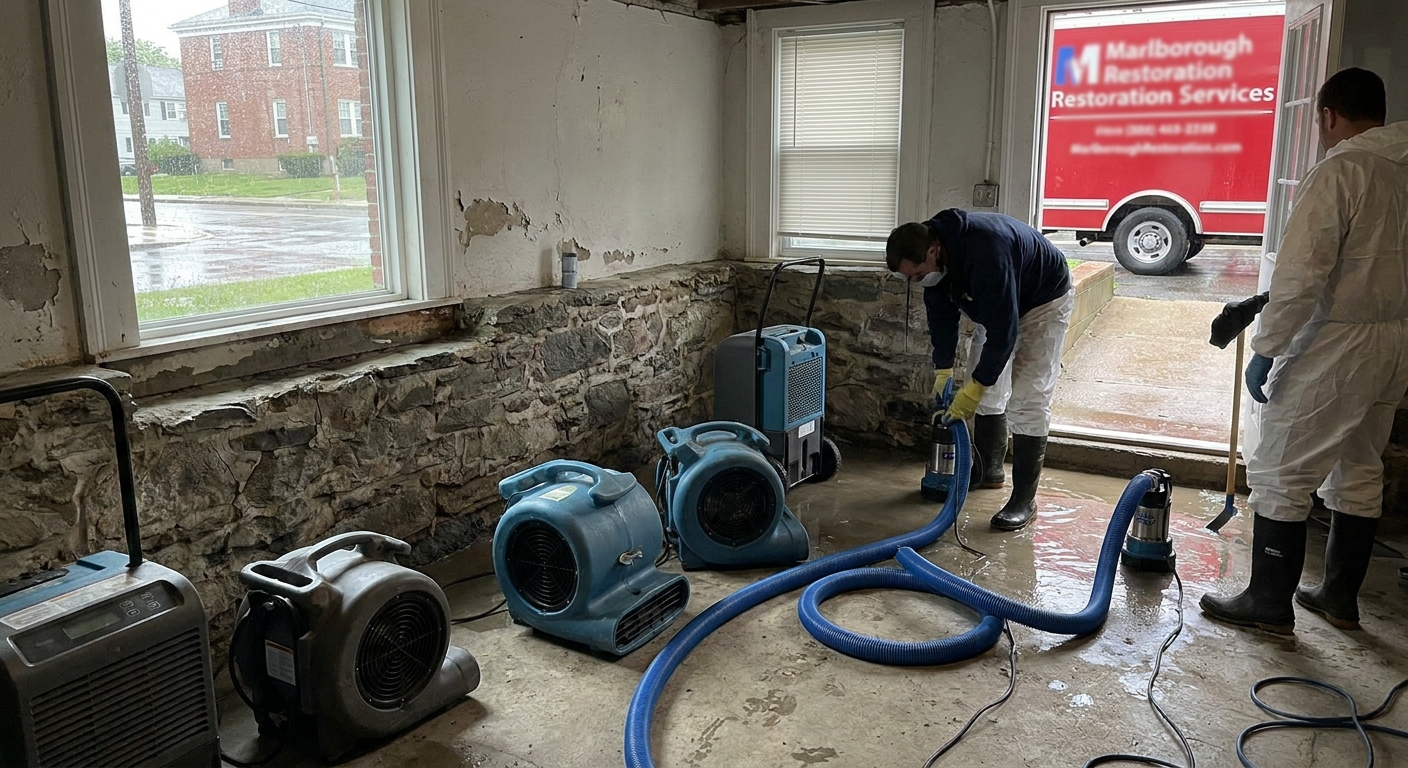
With water rising, the first move is always safety. Electricity gets shut off to the affected area, and we check for any ongoing leaks or hazards. If water is still coming in, we track it to the source and stop it, whether that means turning off the main valve or calling in a plumber. Salvageable items get moved out of harm’s way, and we document the damage before cleanup begins. This isn’t a job for a mop and bucket; standing water needs professional extraction and fast action to keep things from getting worse. Flooded basement restoration in Marlborough often requires specialized equipment due to local building layouts.
Delays only make things harder. Wet drywall, soaked insulation, and damp wood start to break down quickly. We’ve pulled up carpet that looked dry on top but was saturated underneath. The longer water sits, the deeper it goes. That’s why we start cleanup as soon as we’re on site, not hours later when it’s convenient.
How We Remove Water and Dry Everything Out
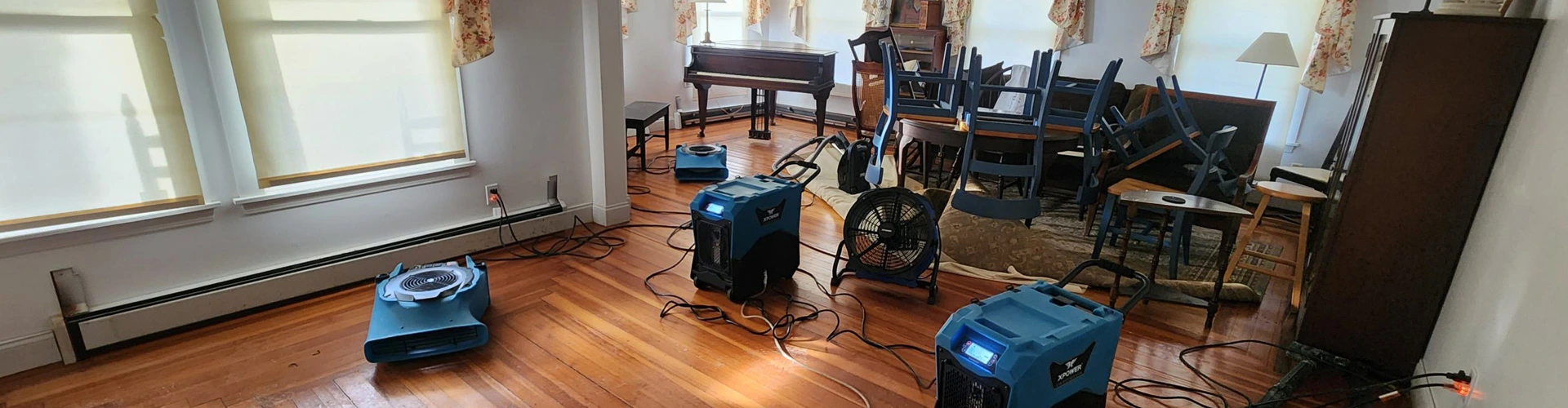
Once the source is under control, we bring in the right equipment for the job. Industrial pumps and extractors pull out standing water quickly, without spreading it around or damaging floors further. Air movers and commercial dehumidifiers go to work next, drying out floors, walls, and anything else that got wet. Opening a window won’t cut it. Real drying means pulling moisture from deep inside materials, not just the surface.
- Pumps and Extractors: Remove standing water fast, keeping damage from spreading.
- High-Velocity Air Movers: Push air across wet surfaces to speed up evaporation and dry materials thoroughly.
- Commercial Dehumidifiers: Pull moisture from the air, stopping it from settling back into walls or floors.
- Moisture Monitoring Tools: Track humidity and moisture levels to confirm when everything is truly dry.
Concrete, drywall, and wood all hold water long after the surface looks dry. We use meters to check every layer and don’t stop until the readings show it’s safe to rebuild. Many Marlborough basements feature older construction, which can complicate the drying process.
Finding and Fixing Hidden Moisture
When water gets into a basement, it rarely stays where you can see it. Moisture hides behind baseboards, under flooring, and inside wall cavities. Using thermal cameras and moisture meters, we check every spot that could trap water. If we find damp insulation or soaked subflooring, we open it up and dry it out before mold or rot can take hold.
This step separates a real restoration from a quick cleanup. We’ve uncovered hidden damage that would have turned into a major mold problem within weeks. Skipping this inspection means risking repairs that cost far more down the road, especially in Marlborough homes where older materials are common.
Restoring and Rebuilding After Flooding
With everything dry, we move on to repairs. Damaged drywall, ruined insulation, and flooring that can’t be saved all come out. Wood framing gets treated to prevent mold, and anything compromised is replaced. Carpet and padding rarely survive a flood. They trap water and break down fast. We rebuild walls, reinstall baseboards, and restore your basement to its original condition, using materials that can handle future moisture.
- Drywall and Insulation Replacement: Wet materials lose strength and effectiveness, so we remove and replace them.
- Flooring Removal and Reinstallation: Carpet, laminate, and some tile need to come out if water sat too long.
- Mold Prevention Treatments: We treat wood and other porous materials before closing up walls or floors.
- Structural Repairs: Damaged joists, studs, or beams get fixed or replaced to keep your home safe.
We don’t just cover up damage and hope for the best. Every step is checked and double-checked, so you’re not left with hidden problems that show up months later.
How We Help You Prevent Future Floods
After restoration, we focus on keeping your basement dry for good. We review what caused the flooding and recommend practical fixes. Sometimes that means adding a battery backup to your sump pump, sealing foundation cracks, or improving drainage around your home. Upgrading old plumbing or rerouting downspouts can make a big difference. For some, water alarms or automatic shutoff valves add peace of mind. Others choose waterproof flooring or keep storage off the ground. Every solution is customized to your space and what went wrong the first time, with special consideration for Marlborough’s unique weather patterns.
Get Help With Flooded Basement Cleanup Today
Water damage doesn't wait. If your basement flooded, call 978-778-6676 or schedule an appointment with Leal Cleaning & Restoration Inc. to get the water out and the space dried fast.