
Flooded Basement Restoration in Wellesley
Water in the basement never arrives quietly. It seeps through cracks, creeps under doors, and soaks everything it touches. Once it’s in, it lingers, ruining drywall, swelling floors, and leaving behind a mess that won’t dry out on its own. Our team steps in with the right tools and experience to clear out the water, dry every surface, and address the real reason it happened in the first place for many Wellesley homeowners.
How We Tackle the Causes of Basement Flooding
Storms roll through Massachusetts, and basements in Wellesley often take the hit. Gutters overflow, sump pumps stall, and foundation cracks widen with every freeze and thaw. Each of these issues opens the door for water to find its way inside, and it rarely stops at just a puddle.
- Heavy Rainfall or Snowmelt: Water collects around the foundation when drainage can’t keep up, pushing moisture through weak spots.
- Failed Sump Pumps: Older or overloaded pumps give out during storms, leaving basements exposed to rising water.
- Cracked Foundation Walls: Even hairline cracks let groundwater seep in, especially after cycles of freezing and thawing.
- Clogged Gutters and Downspouts: Overflow sends water straight down the exterior walls, pooling at the base and leaking inside.
- Sewer Backups: Overloaded municipal systems force wastewater back into basements during heavy rain.
We don’t just clean up the aftermath. Our crew inspects for the underlying cause, so you’re not left dealing with the same headache after the next storm.
What We Do First After a Flood
When water fills a basement, safety comes first. Power needs to be shut off before anyone steps in, and every move after that has to be deliberate. We document the scene, protect what can be saved, and get to work on extraction without delay.
- Turn Off Electricity: Power is cut to the affected area to eliminate shock risks before cleanup begins.
- Document the Damage: Photos and videos are taken for insurance, capturing the full extent before anything is moved.
- Remove Salvageable Items: Furniture, boxes, and valuables are pulled out of harm’s way as quickly as possible.
- Call for Professional Water Extraction: Industrial pumps and vacuums clear out water that buckets and mops can’t touch.
- Start Ventilation: Windows and doors are opened when conditions allow, helping air move through and slow down further damage.
We move fast because water spreads through drywall, insulation, and subfloors in hours. Delays turn a manageable cleanup into a major rebuild, especially in Wellesley homes where finished basements are common.
Our Approach to Safe Water Removal
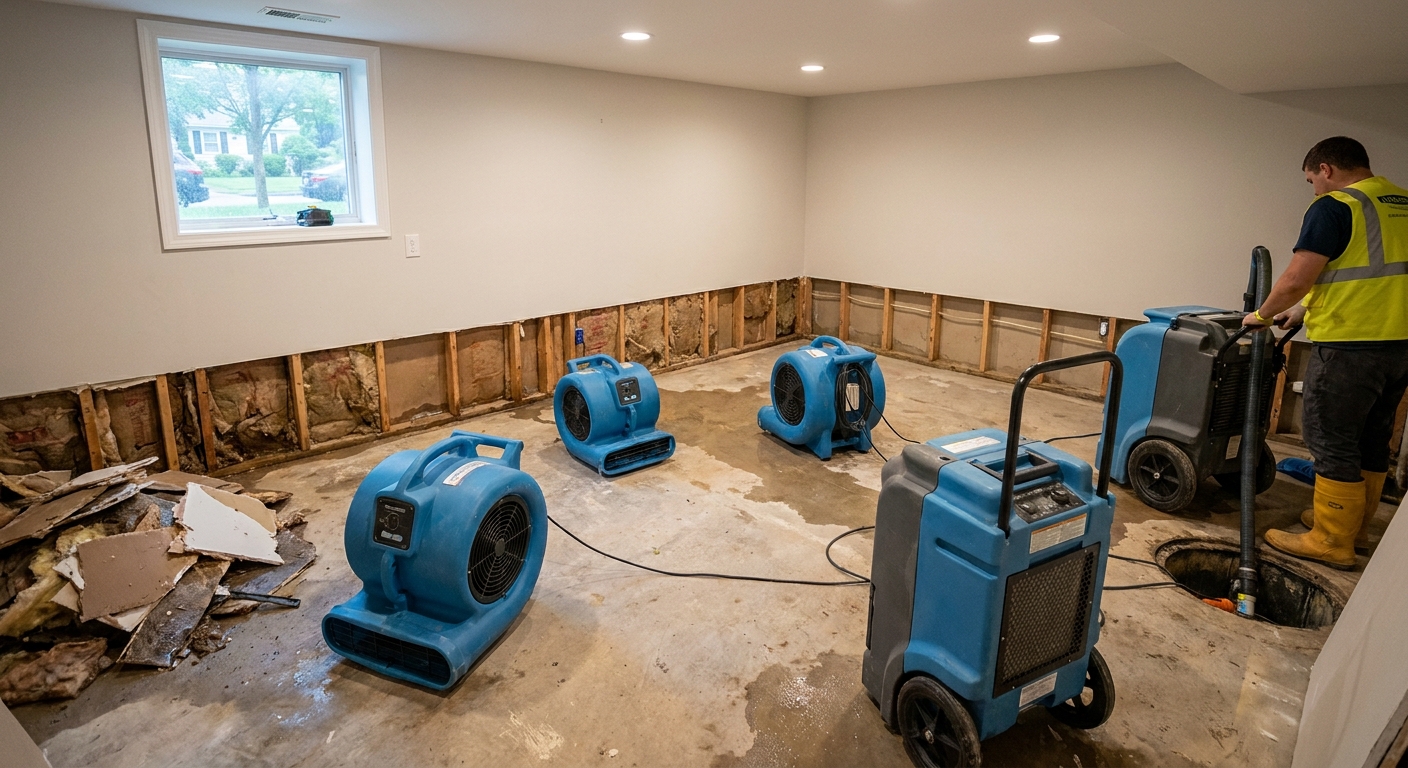
When a basement floods, the job demands more than basic tools. We bring submersible pumps for deep water, extraction units for smaller pools, and enough airflow to keep moisture from settling back in. Every inch gets checked, under stairs, behind baseboards, and inside carpet fibers, because missed moisture breeds mold in less than two days.
Planning matters. We trace the water’s path, identify what’s been soaked, and decide what can be dried versus what needs to go. This approach keeps the process efficient and thorough, so nothing gets overlooked.
How We Dry Out Floors and Walls
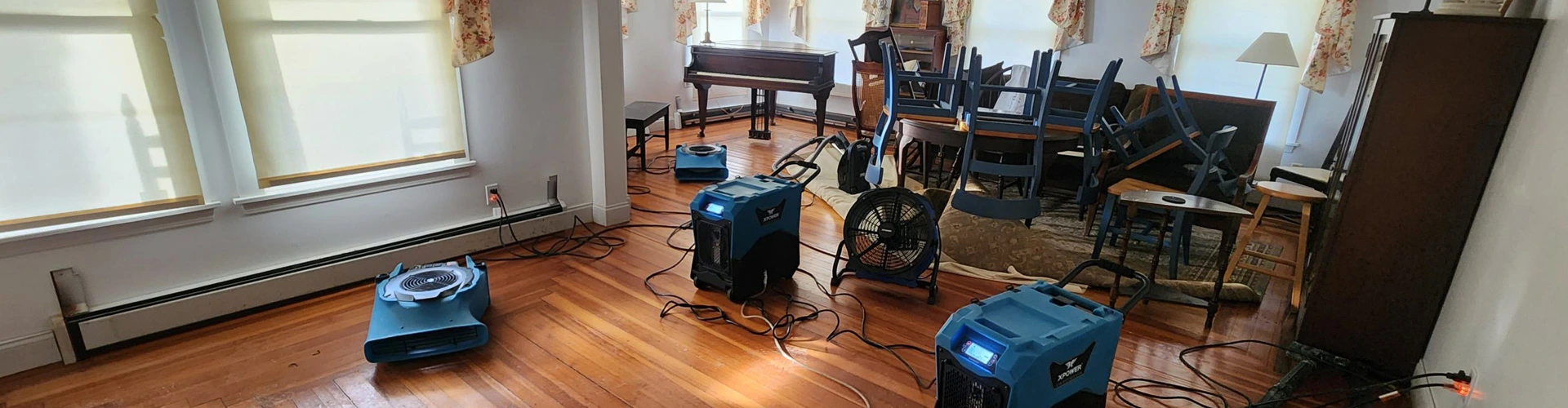
After the water’s gone, moisture still hides in concrete, behind drywall, and inside insulation. Drying out a basement takes more than a few fans. We use commercial dehumidifiers, high-velocity air movers, and moisture meters to pull water from every surface and track progress until the job’s done.
- High-Velocity Air Movers: These push air across damp surfaces, speeding up evaporation and reaching hidden pockets.
- Commercial Dehumidifiers: Machines that pull moisture from the air, stopping it from settling back into walls and floors.
- Moisture Meters: Tools that confirm when materials are truly dry, not just dry to the touch.
- Removal of Wet Materials: Soaked drywall, insulation, and baseboards are taken out when they can’t be saved.
We monitor every step, adjusting equipment and checking moisture levels daily. Skipping this process leads to mold, warped floors, and bigger problems later for Wellesley residents who want lasting results.
Preventing Repeat Floods with Lasting Solutions
Once the basement is dry, the next step is making sure it stays that way. Floods follow the same weak spots every time, so we help you shore up those vulnerabilities before the next storm hits.
- Install or Replace Sump Pumps: Reliable pumps with battery backups keep water out, even during outages.
- Seal Foundation Cracks: Waterproofing stops groundwater from sneaking through basement walls.
- Improve Exterior Grading: Adjusting the slope around your home directs water away from the foundation.
- Add Gutter Extensions: Downspouts that carry water several feet from the house prevent pooling at the base.
- Install Backwater Valves: These block sewer backups from entering your basement during heavy rain.
We’ve seen homes flood year after year until these fixes were made. Cleanup is only half the job. Prevention keeps you from repeating the cycle, especially in Wellesley neighborhoods prone to heavy rain.
Restoring Your Basement to Full Use
With the water gone and the source addressed, restoration begins. Damaged drywall comes out, baseboards are replaced, and any warped subflooring is reset. We rebuild what was lost, making sure the space is safe, clean, and ready for whatever you need, whether that’s storage, living space, or utilities.
Our work doesn’t stop at the surface. We check for mold behind walls, treat affected areas, and confirm air quality before sealing anything up. Carpeting that’s been soaked usually needs to be replaced, and insulation that sat underwater is removed to prevent future issues. The goal is a basement that’s dry, solid, and built to last.
Let's Get Your Basement Back in Shape
Flooded basements don't fix themselves, and waiting only makes the damage worse. Call 978-778-6676 or schedule an appointment to start your restoration today.