
Flooded Basement Restoration in Peabody
Water in the basement never announces itself. One day the floor is dry, the next you’re stepping into a cold puddle. Gutters clog, sump pumps quit, or a pipe splits behind a wall you haven’t looked at in years. In older homes around Peabody, even a quick downpour can overwhelm drainage and send water straight through the foundation. The result is always the same: ruined storage, soaked walls, and a space you can’t use until it’s fixed.
Why We See Basements Flood in Peabody Homes
When storms roll through and the ground can’t keep up, water pushes through every weak spot. Mortar crumbles, foundations shift, and the pressure finds its way inside. In Peabody, this happens after heavy rain, fast snowmelt, or when city drains back up. The source changes, but the outcome doesn’t: standing water, ruined belongings, and a mess that spreads fast.
- Heavy Rainfall: Soaks the ground and forces water through cracks or seams in the foundation.
- Failed Sump Pumps: Quit during storms or lose power, leaving water nowhere to go.
- Cracked Foundations: Let groundwater seep in slowly, then flood in during wet seasons.
- Sewer Backups: Push contaminated water up through floor drains when municipal systems overflow.
- Burst Pipes: Freeze or corrode, dumping water into walls and across floors.
Once water gets in, it spreads. Concrete absorbs it. Drywall pulls it higher. Wood swells. Wait too long, and mold starts growing behind the scenes. The longer it sits, the more damage you’ll find.
How We Remove Water Fast
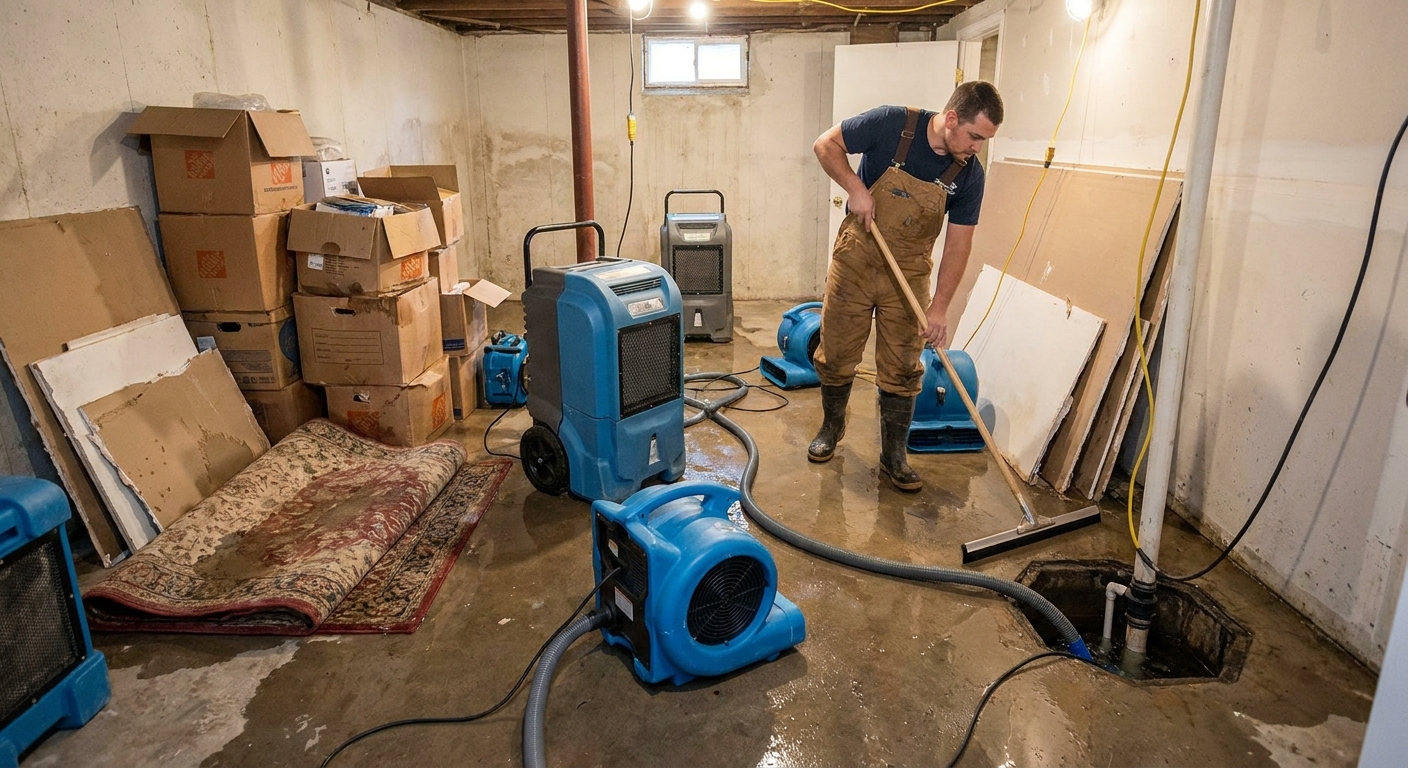
Speed matters when water covers your basement floor. Our team arrives with industrial pumps and extraction gear that clear out inches, or feet, of water quickly. We don’t just skim the surface. Appliances get moved, rugs come up, and every corner gets checked for hidden moisture. If sewage is involved, we handle it with full protection and proper disposal. This isn’t a job for a shop vac. It’s a full-scale extraction that gets your basement ready for drying.
Our Approach to Drying and Cleanup
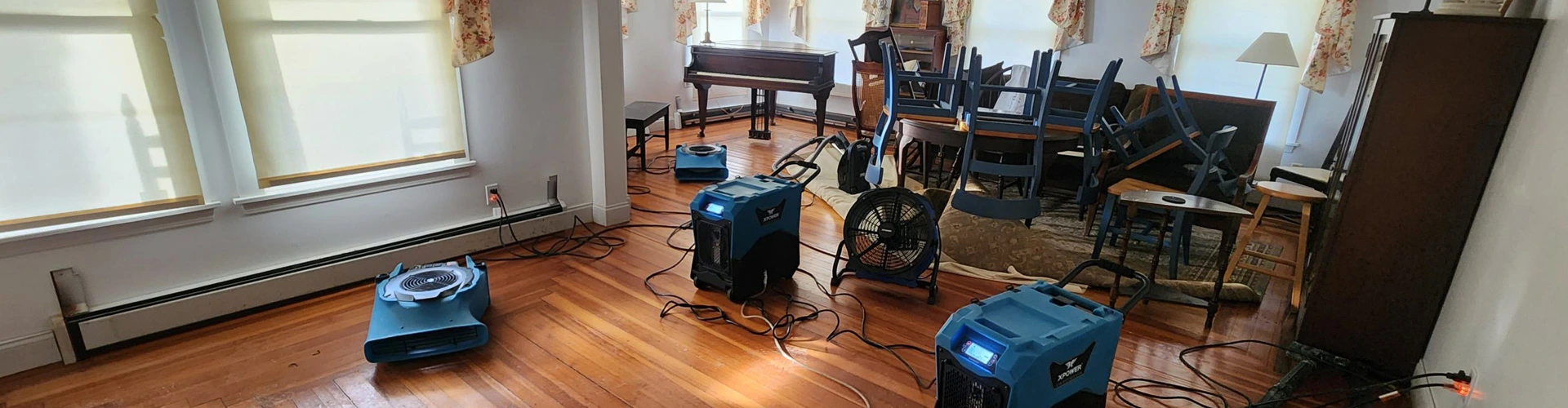
With the water gone, drying starts right away. We set up high-powered fans, dehumidifiers, and air movers to pull moisture from concrete, wood, and insulation. It’s not about waiting for things to air out. Every step is measured and monitored. Moisture meters track what you can’t see, and we adjust equipment as needed to make sure nothing stays damp.
- Air Movers: Push air across floors and walls to speed up evaporation and stop moisture from settling.
- Dehumidifiers: Remove water vapor from the air for faster, more complete drying.
- Moisture Meters: Check for hidden dampness in walls, floors, and framing so nothing gets missed.
- Antimicrobial Treatments: Applied to exposed surfaces to stop bacteria and mold before they start.
- Debris Removal: Take out ruined drywall, insulation, and anything too damaged to keep.
Drying can take a few days, depending on how much water got in and what materials were hit. We keep checking progress and don’t move on until every reading comes back dry.
What We Do to Stop Long-Term Damage
When moisture lingers, it eats away at your home from the inside out. We check every surface, test hidden spots, and treat anything at risk. Mold only needs a little water and a dark corner to take hold. If insulation is soaked, it comes out. If drywall stayed wet, we cut it away. Our team doesn’t leave anything behind that could cause trouble down the line.
How We Restore What Matters
Some things can be saved, others can’t. Drywall that’s soft or crumbling gets replaced. Wood that’s warped or lost strength comes out. Carpet padding that’s been underwater doesn’t stay. We sort what can be salvaged and what needs to go, then handle both. If framing is still solid, we treat and keep it. If only the bottom of a wall is damaged, we patch just that section. Tile floors often survive, but laminate and carpet usually don’t. The goal is a basement that’s safe, dry, and ready to use. We’ve handled flooded basement restoration everywhere from finished basements to tight spaces around Peabody neighborhoods.
Steps We Take to Keep Basements Dry
After restoration, we look at what caused the flood and what can be done to prevent it next time. Sometimes it’s as simple as a backup sump pump or sealing a few cracks. Other times, it means regrading soil or adding a dehumidifier to keep humidity down. We walk you through the options and handle the work that makes sense for your home, especially for properties in Peabody where groundwater issues are common.
- Sump Pump Upgrades: Install battery backups so pumps keep working during outages.
- Foundation Sealing: Fill cracks and apply waterproof coatings to block future leaks.
- Improved Drainage: Redirect downspouts and reshape yard grading to move water away from the house.
- Dehumidifier Installation: Keep basement air dry year-round to stop condensation and dampness.
- Regular Maintenance: Clean gutters, test pumps, and check pipes before problems start.
Let's Get Your Basement Back
Flooded basements don't fix themselves. The longer water sits, the worse it gets. We handle everything from emergency water removal to full drying and restoration, and we do it without leaving a mess behind. Call 978-778-6676 or schedule an appointment to get your space back in working order with Leal Cleaning & Restoration Inc.