
Ipswich
When water damage strikes an Ipswich property, the clock starts ticking immediately. Whether it's from a burst pipe, flooding, or hidden mold growth, the aftermath requires specialized water damage restoration that goes far beyond simply mopping up puddles. Residents throughout the historic neighborhoods along County Street and businesses near Town Hall understand that Massachusetts weather patterns create unique challenges, from ice dam leaks in winter to humidity-driven mold in summer. That's why choosing experienced professionals who understand both the science of restoration and the specific needs of Ipswich properties makes all the difference. The right response in those critical first 24 hours can mean the difference between a manageable repair and catastrophic structural damage that affects your property for years to come.
Why Speed Matters When You Need Emergency Restoration Services Ipswich
Water doesn't wait for business hours, and neither should your response. Every minute that passes after water intrusion allows moisture to penetrate deeper into building materials, creating conditions that accelerate both structural deterioration and microbial growth. Emergency restoration services exist precisely because this narrow window of opportunity demands immediate action, not next-week appointments. Properties near the Ipswich River or close to Plum Island Sound face additional moisture challenges that can compound standard water damage scenarios. The difference between calling within the first hour versus waiting until morning can literally determine whether hardwood floors can be saved or need complete replacement, whether drywall requires spot treatment or full removal, and whether your insurance claim documentation starts strong or faces complications from delayed mitigation efforts.
We've seen countless Ipswich homeowners underestimate how quickly water migrates through wall cavities and subfloors. What appears as surface dampness in your kitchen often signals far more extensive saturation in spaces you can't see without specialized detection equipment. Professional emergency teams arrive equipped with thermal imaging cameras, moisture meters calibrated to different building materials, and industrial extraction systems that remove water exponentially faster than household wet vacuums. This technological advantage paired with trained assessment skills means problems get identified and addressed before they evolve into secondary disasters. The goal isn't just removing visible water but creating conditions that prevent the hidden damage that emerges weeks later when you notice that musty smell or see those telltale ceiling stains appearing in rooms that seemed perfectly dry.
Understanding the Full Scope of Mold Remediation Ipswich Demands
Mold remediation is far more complex than simple cleaning because it requires addressing both visible growth and underlying moisture sources. Properties throughout Ipswich's older housing stock, particularly historic homes near Great Neck, often contain materials and ventilation systems that weren't designed with modern moisture control standards. Effective mold remediation involves containment strategies, air filtration systems, material removal based on contamination levels, and post-remediation verification.
The health implications make proper remediation critical, especially for children, elderly residents, and those with respiratory conditions. Most fungal activity occurs inside wall cavities, beneath flooring, or within HVAC ductwork where air distributes spores throughout living spaces. Professional remediation creates negative air pressure zones, uses HEPA filtration, removes contaminated materials following EPA protocols, and verifies spore counts have returned to normal levels.
- Thermal imaging reveals moisture patterns invisible to the naked eye
- Industrial dehumidification systems calibrated to specific square footage and humidity levels
- Antimicrobial treatments formulated for different surface materials and contamination types
- Documentation protocols that satisfy insurance requirements and protect your claim
How Fire Damage Restoration Ipswich Extends Beyond Visible Destruction
Fire damage creates a cascade of destruction that extends far beyond charred materials and smoke-stained walls. Fire damage restoration involves addressing thermal damage, smoke penetration, soot residue chemistry, water damage from firefighting efforts, and the persistent odors that permeate everything porous materials touch. Properties near Ipswich's downtown commercial district or in densely settled neighborhoods face additional challenges when fire affects adjoining structures or when smoke migrates through shared walls and attics. The restoration process demands expertise across multiple disciplines because different materials require completely different cleaning approaches, structural components need engineering assessment before reconstruction begins, and occupants face genuine health risks from particulate matter and chemical residues that linger long after visible damage gets addressed.
Smoke damage proves particularly insidious because combustion creates acidic residues that actively corrode metals, etch glass, and permanently discolor fabrics if not addressed within specific timeframes. Different fire types produce different smoke chemistry: protein fires create nearly invisible but incredibly smelly residues, synthetic material fires produce oily soot that smears when touched, and high-heat fires leave dry, powdery ash that contains concentrated contaminants. Professional restoration begins with identifying which smoke types affected which areas, then applying appropriate cleaning methods ranging from dry chemical sponges for light soot to media blasting for heavily contaminated masonry. HVAC systems require complete cleaning since ductwork acts as a distribution highway for smoke particles, and contents restoration involves specialized techniques for electronics, documents, textiles, and other items where standard cleaning would cause additional damage. The goal throughout is returning your property to pre-loss condition, not just making it look superficially better while underlying damage continues progressing.
What Makes Ipswich Water Damage Cleanup Different From Standard Cleaning
Many property owners initially underestimate what Ipswich water damage cleanup actually involves, assuming it's essentially aggressive housecleaning with fans. Professional water damage cleanup represents a systematic process grounded in building science, microbiology, and materials engineering. It begins with damage assessment using calibrated instruments that measure moisture content in different materials, continues through water classification (clean, gray, or black based on contamination levels), involves strategic equipment placement based on psychrometric calculations, and concludes with verification that materials have returned to acceptable dry standards. Properties throughout Ipswich face specific challenges depending on location: those near wetlands deal with groundwater intrusion containing organic matter, coastal-adjacent properties face salt-contaminated flooding that requires specialized treatment, and urban properties encounter supply line failures that release water under pressure into wall cavities and ceiling spaces.
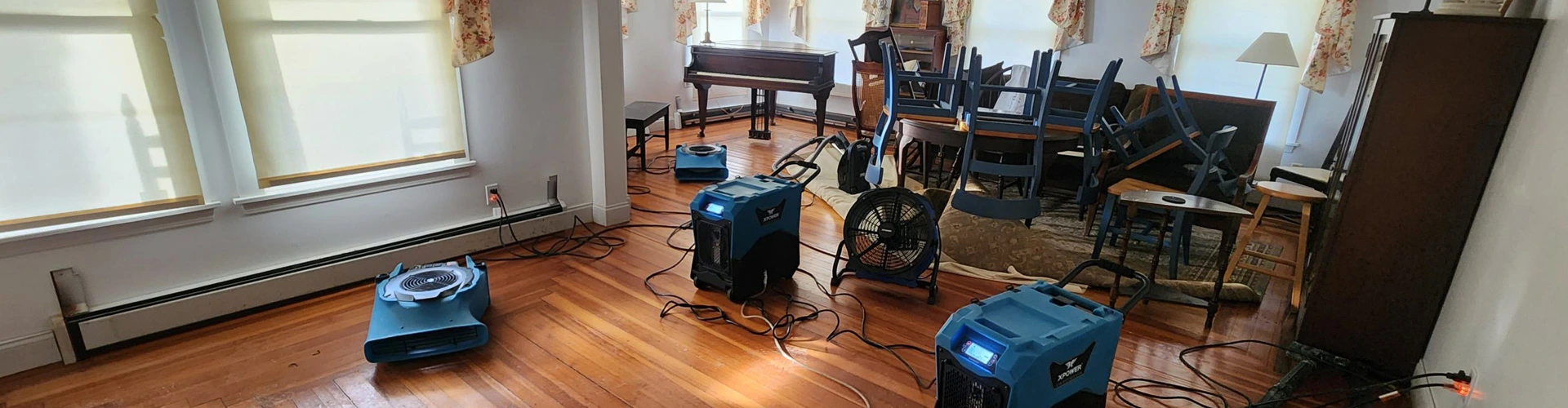
The extraction and drying process follows scientific principles about how water moves through different materials and how environmental conditions affect evaporation rates. Hardwood floors require completely different drying protocols than carpet over concrete, and historic plaster walls demand gentler approaches than modern drywall that tolerates aggressive dehumidification. Professional teams position air movers to create optimal airflow patterns that promote evaporation without driving moisture deeper into assemblies, place dehumidifiers based on cubic footage calculations that ensure adequate moisture removal capacity, and monitor progress with repeated moisture readings that document drying trajectories. This data-driven approach means decisions about when materials are actually dry enough for reconstruction rest on objective measurements rather than subjective feel, preventing the premature enclosure that traps residual moisture and creates ideal mold growth conditions weeks or months after you thought the problem was resolved.
Find Reliable Support Throughout Ipswich Neighborhoods
We proudly serve properties throughout Ipswich, from the historic homes along High Street to businesses near the Ipswich Riverwalk, and from residential neighborhoods around Crane Beach to commercial properties throughout the downtown district. Use the map below to see our service coverage and understand how quickly we can respond when you need immediate assistance with restoration challenges.
Preventing Problems Before They Require Water Damage Restoration Ipswich
While professional restoration services exist for when disasters strike, smart property management focuses heavily on prevention strategies that reduce the likelihood of needing emergency intervention. Understanding your property's specific vulnerabilities based on age, construction type, location, and mechanical systems allows targeted maintenance that addresses problems during their manageable stage rather than after they've evolved into crises. Ipswich properties face seasonal challenges that create predictable stress points: spring brings snowmelt and heavy rain that test drainage systems and foundation waterproofing, summer humidity challenges dehumidification capacity and promotes mold in poorly ventilated spaces, fall leaf accumulation clogs gutters and creates ice dam precursors, and winter freeze-thaw cycles stress plumbing and test building envelope integrity.
- Schedule annual plumbing inspections focusing on supply line condition, connection integrity, and appliance hose replacement
- Maintain gutters and downspouts ensuring water discharges at least six feet from foundation walls
- Test sump pumps quarterly and install battery backup systems for power outage protection
- Monitor indoor humidity keeping levels between 30-50% to prevent condensation and mold growth
- Inspect roof flashings, valleys, and penetrations annually addressing minor issues before they become leak sources
These preventive measures work because they address the most common failure points before small issues cascade into major damage events. Plumbing supply lines have finite service lives, and the rubber washing machine hoses in many Ipswich homes are years beyond their recommended replacement interval, representing burst risks that could flood your home with hundreds of gallons before the main shutoff gets closed. Gutters clogged with leaves and debris overflow during rainstorms, directing water directly against foundation walls where it finds entry through cracks or overwhelms exterior waterproofing systems. Sump pumps fail at the worst possible moment—during heavy rain when they're working hardest—making testing and backup power critical for properties with basement living spaces or finished lower levels. Indoor humidity above 60% creates surface condensation that enables mold growth within 24-48 hours, while levels below 30% damage wood and create comfort issues, making monitoring and control essential year-round. Roof maintenance prevents the slow leaks that cause hidden damage for months before visible staining alerts you to problems that have already compromised insulation, framing, and interior finishes.
Questions Ipswich Property Owners Ask About Restoration Services
How quickly does mold start growing after water damage occurs in an Ipswich property?
Mold spores transition from dormant to actively growing within 24-48 hours given adequate moisture, organic material, and temperature conditions. This rapid timeline makes immediate water extraction and drying absolutely critical, particularly in Ipswich's humid coastal climate where ambient moisture already creates conditions favorable to fungal growth. Professional restoration teams understand this narrow window and prioritize rapid moisture removal using industrial equipment that extracts water and reduces humidity far faster than residential dehumidifiers, preventing the environmental conditions mold requires for colonization. Properties that receive professional intervention within the first 24 hours dramatically reduce mold risk compared to those where mitigation gets delayed even by a single day.
Does homeowners insurance typically cover water damage restoration costs for Ipswich properties?
Coverage depends entirely on the water source and your specific policy terms. Sudden and accidental discharge from plumbing systems, appliance failures, and roof leaks from storm damage typically receive coverage under standard homeowners policies, while flooding from external sources requires separate flood insurance, and maintenance-related failures often face coverage denials. The key to successful claims involves immediate documentation photographing damage extent, maintaining detailed chronologies of discovery and mitigation efforts, preserving damaged materials for adjuster inspection when required, and working with restoration companies experienced in insurance protocols who provide the scientific documentation adjusters need. Many Ipswich properties near water features or in flood-prone areas carry additional flood policies through NFIP, creating layered coverage that addresses different damage scenarios.
Can I stay in my Ipswich home during the restoration process or do I need temporary housing?
This decision depends on damage extent, contamination levels, and which areas require active restoration. Minor water damage confined to one area often allows continued occupancy with equipment running in affected spaces, while major damage requiring extensive demolition, significant mold remediation, or black water contamination typically necessitates temporary relocation for both safety and to allow unimpeded work progress. Fire damage almost always requires temporary housing due to structural concerns, air quality issues, and the invasive nature of smoke remediation and reconstruction. Professional restoration companies assess habitability as part of initial evaluations, and many insurance policies include additional living expense coverage that reimburses temporary housing costs when your Ipswich property becomes uninhabitable due to covered losses, making relocation financially manageable during the restoration period.
Getting the Expert Help Your Ipswich Property Deserves
Water damage, mold growth, and fire disasters don't follow convenient schedules, and neither should your access to professional restoration services. The expertise, equipment, and rapid response protocols that Leal Cleaning & Restoration brings to every project ensure your Ipswich property receives the comprehensive attention these complex situations demand. From the initial emergency call through final verification that your property has returned to safe, dry, pre-loss condition, having experienced professionals managing every phase protects both your immediate safety and your property's long-term value. The restoration process involves too many technical decisions, specialized procedures, and critical timing windows to approach casually or delay while researching options.
Don't let water damage, mold concerns, or fire aftermath overwhelm you. Contact Leal Cleaning & Restoration now to schedule an immediate assessment or call 978-778-6676 any time, day or night, for the emergency restoration services your Ipswich property needs right now.