
Flooded Basement Restoration in Westwood
Water in the basement never gives you a heads-up. One day the floor is dry, the next you’re wading through cold, murky water with no idea where it started. Foundation cracks, failed sump pumps, or a sudden storm—each one can turn a finished basement into a mess in minutes. Wait too long, and the damage multiplies. Mold creeps in, drywall softens, and floors buckle. Quick action isn’t just smart. It’s the only way to keep things from getting worse, especially for homes in Westwood where heavy rains can overwhelm older drainage systems.
Why Basements Flood and How We Stop It
Floods don’t always come from the sky. Sometimes a sump pump gives out during a storm, or a pipe bursts behind a wall. Other times, water sneaks in through cracks you never noticed. When gutters overflow or the ground slopes toward your house, water collects right where you don’t want it. We see these problems all the time, and each one needs a different fix.
- Heavy Rain and Poor Drainage: Water gathers at the foundation when gutters clog or the yard slopes the wrong way.
- Sewer Backups: City lines can’t keep up during storms, sending water and sewage back through your drains.
- Cracked Foundation Walls: Even hairline cracks let water seep in until pressure builds and the basement floods.
- Failed Sump Pump: When the pump quits, water fills the basement fast with nowhere else to go.
- Burst Pipes or Water Heater Leaks: Old pipes or rusted tanks split open, flooding the space in minutes.
Sometimes water creeps in slowly, other times it pours in all at once. Either way, the longer it sits, the more damage it does. We move fast because every hour counts.
How We Spot Trouble Before It Spreads
Basement problems rarely start with a full flood. More often, it’s a damp patch on the wall, a musty smell, or a puddle that keeps coming back. These early signs are easy to miss, but they’re the first hint that something’s wrong. Acting on them early saves you from bigger repairs down the line, and in Westwood, catching these issues quickly can prevent widespread water damage.
- Standing Water: Any puddle means something failed and needs attention right away.
- Wet or Soft Drywall: Damp walls or crumbling spots point to hidden leaks behind the surface.
- Musty or Moldy Odors: That smell signals mold is already growing, even if you can’t see it yet.
- Stains or Discoloration: Water leaves marks that show exactly where it traveled.
- Warped Flooring or Baseboards: Wood swells and bends when it soaks up water, and it won’t flatten out on its own.
Ignoring these signs only gives water and mold more time to spread. We’ve seen basements that looked fine on the outside turn into major restoration jobs because the first warnings got brushed off. When something feels off, it usually is. Getting it checked early makes all the difference.
Our Water Extraction Approach
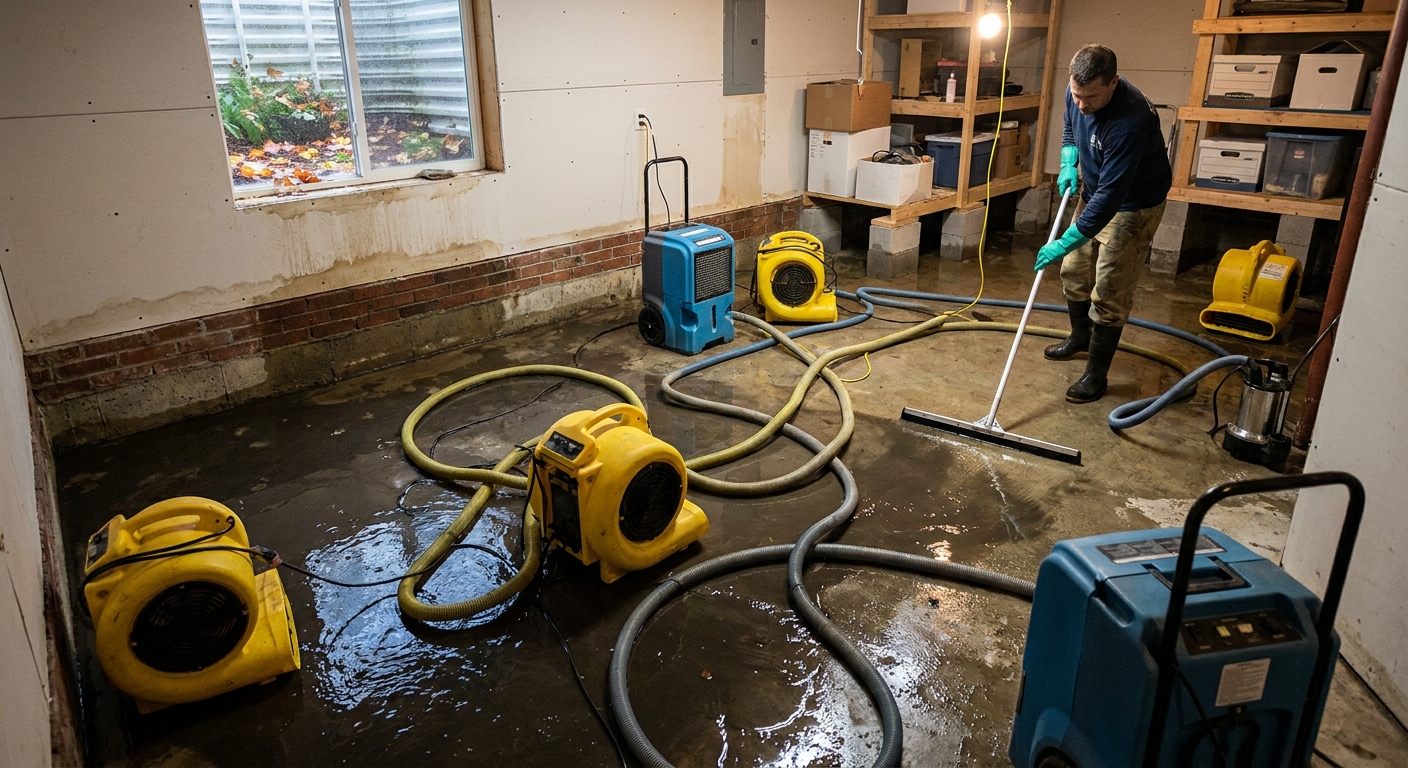
When water fills a basement, mops and buckets won’t cut it. We bring in commercial pumps and extractors that move water out fast, without pushing it deeper into walls or floors. The sooner we start, the less chance there is for lasting damage or mold growth.
Visible water is just the start. Moisture hides in carpet pads, subfloors, and behind drywall. Standard vacuums can’t reach it. Our team uses truck-mounted extractors and portable pumps to pull water from deep inside every material. This isn’t a one-size-fits-all job. Each basement needs a custom approach, and we adjust our tools and methods to match the situation. Many Westwood homeowners appreciate our ability to adapt to the unique layouts and construction styles found throughout the area.
How We Dry Out Every Inch
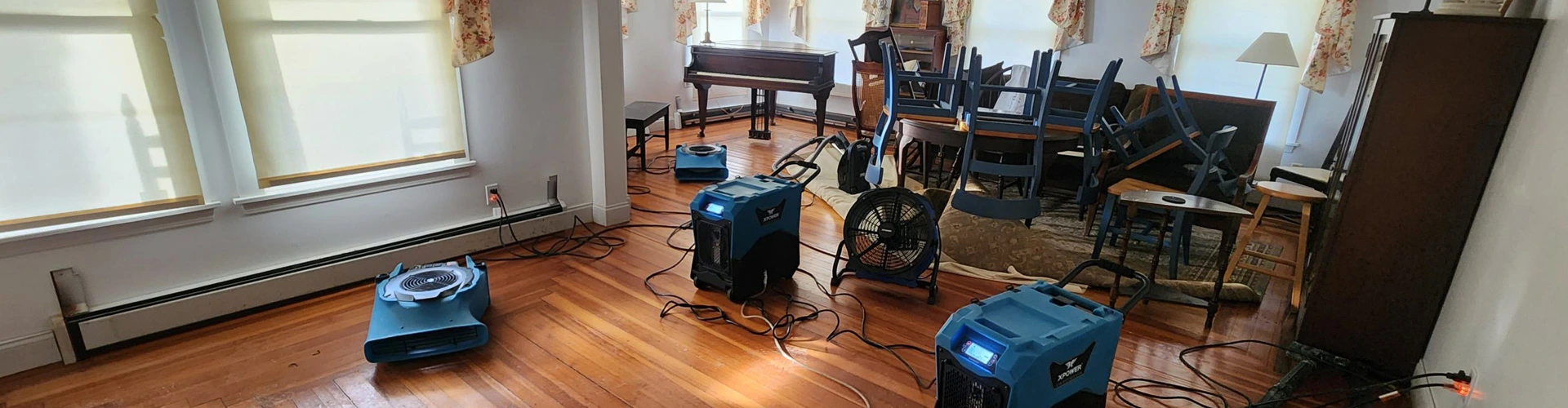
Once the water’s gone, the real work begins. Drying out a basement takes more than just opening a window. We set up industrial dehumidifiers and air movers to pull moisture from every surface, running them around the clock until readings show the space is truly dry. Humidity drops fast with the right setup, and that’s what keeps mold from taking hold.
We rely on moisture meters and infrared cameras to track hidden damp spots. Some materials dry quickly, while others need more time. Our team checks progress daily, moving equipment and adjusting airflow as needed. Rushing this step or skipping it leads to mold and lingering odors. We stay on it until the job’s done right.
Stopping Mold Before It Starts
When water sits, mold moves in. It doesn’t wait for an invitation. Within two days, spores start spreading through drywall, insulation, and wood. The only way to stop it is to control moisture and treat every area that got wet. Mold prevention isn’t an extra. It’s built into every restoration job we take on.
- Remove Wet Materials Quickly: Soaked carpet, padding, and drywall come out before mold can take hold.
- Run Dehumidifiers and Fans Constantly: Steady airflow and low humidity keep spores from settling and growing.
- Apply Antimicrobial Treatments: Specialized cleaners stop mold in its tracks and protect treated surfaces.
- Inspect Hidden Spaces: Water travels behind walls and under floors, so we check everywhere mold could hide.
Every flooded basement gets treated as a potential mold site. Even if you can’t see it, the risk is there. Our team handles prevention as part of the job, not as an afterthought. This is especially important for Westwood properties, where older basements can be more susceptible to hidden moisture and mold growth.
Restoring Your Basement from Start to Finish
Getting rid of water and drying the air is only part of the process. Repairs come next. Replacing drywall, fixing floors, and making sure everything works the way it should. We handle the rebuild from start to finish, so you’re not left juggling contractors or waiting for someone else to finish the job.
Drywall goes up, floors get replaced, and any plumbing or electrical issues that caused the flood are fixed for good. We stay on the project until your basement is safe, clean, and ready for use again. That’s how we make sure you’re not dealing with the same problem twice. Our Westwood flooded basement restoration team is dedicated to delivering results that last.
Let's Get Your Basement Dry and Safe Again
Flooded basements don't wait, and neither should you. Call Leal Cleaning & Restoration Inc. at 978-778-6676 or schedule an appointment to start the restoration process.